Let us start with the number, because that is what you came for. The range most people use when tipping a barber is 15 to 20 percent of the service price. Twenty percent has become the everyday default. Fifteen is fine. More than twenty is a thank-you for something above and beyond.
That is the whole rule. The rest of this post is the math, worked out on real prices, and the awkward situations that the rule does not cover.
One thing up front: this is general etiquette, not a policy at our shop. Nobody at Jonny the Barber is going to look at your tip, and nobody will treat you differently next time. Tipping is your call. We just want you to have the numbers so you are not doing arithmetic at the counter.
The math on our menu
Our prices start at the numbers below, and each barber sets their own rate — you see it on the booking page before you confirm. So the figures here are starting points. If your barber’s rate is a little higher, scale up a little.
- Classic, from $25: 15% is $3.75. 20% is $5. Most people round to $5.
- Classic & Beard, from $35: 15% is $5.25. 20% is $7. Rounding to $7 or $8 is common.
- Hot Towel Shave, from $25: same as a Classic — $4 to $5.
- Edge Up, from $12: 20% is $2.40. Most people give $2 or $3. Rounding up a small service is normal, and nobody expects you to hand over forty cents.
- House Calls, from $225: 15% is $33.75, 20% is $45. More on house calls below, because the math is a little different there.
The full menu, with what each service includes, is on the services page.

Why the range is 15 to 20
A tip on a haircut works like a tip in a restaurant: it is a thank-you for personal service, scaled to the price. Fifteen percent used to be the standard across most services; over the last couple of decades, twenty has become the number people reach for without thinking. Both are within the normal range today.
A few things nudge it higher:
- A difficult job. Fixing someone else’s bad cut, a very thick head of hair, or a cut that took a lot longer than usual.
- A last-minute favor. Your barber squeezed you in before close or opened a slot that was not there.
- A kid who made it hard. If your four-year-old spent the appointment trying to escape, your barber earned the extra.
- A regular relationship. Plenty of regulars tip a little more because they want their barber to keep a slot for them.
And a few things are fair reasons to go lower: a cut that clearly was not what you asked for, a barber who rushed, or service that was careless. But in that case, the more useful thing is to say something — more on that below.
The awkward cases, answered
“Do I tip on an Edge Up?”
Yes, if you tip on everything else. It is a ten- to fifteen-minute service, and the tip is small — a couple of dollars. Our edge up explainer covers what you are getting for it.
“Do I tip on my kid’s haircut?”
Yes, the same way. Kids’ cuts at our shops cost the same as an adult cut, because they take the same chair time — about thirty minutes, from $25. So the tip is the same, too. If your child was nervous and your barber took extra time to get them through it, that is exactly the situation the top of the range is for. Our kids’ haircuts in Tonawanda post has more on what a kids’ cut involves.
“Do I tip the owner?”
Older etiquette said you did not tip the owner of a shop, on the idea that they set the prices and keep the profit. That rule has largely faded. Most people now simply tip whoever cut their hair, whoever that is. If you are not sure, tip. Nobody has ever been offended by it.
“Do I tip if I use a discount or a deal?”
Etiquette guides generally say to tip on the full, undiscounted price, because your barber did the full job. That is a good rule of thumb.
“Cash or card?”
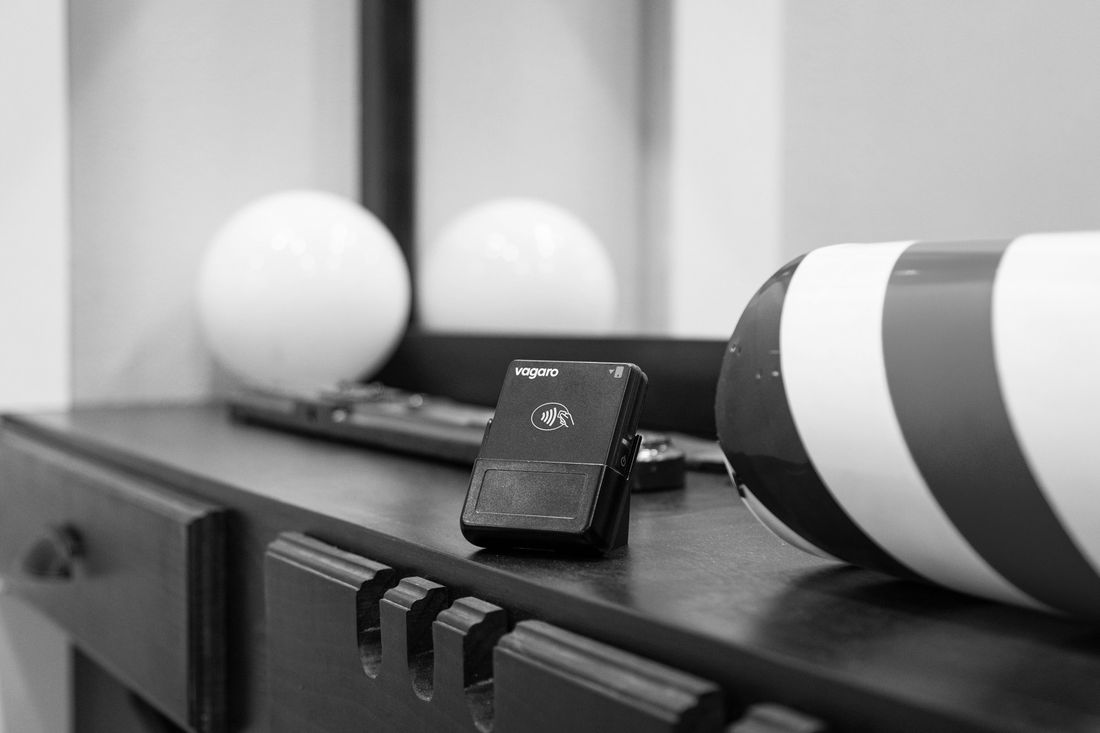
Either is fine wherever both are accepted. Some people prefer cash because it goes straight to the person who cut their hair; others find card easier. If you are not sure how to add a tip when you pay, just ask at the counter. It is a completely normal question.
“What if I did not like the cut?”
Say so, in the chair, before you pay. A good barber would much rather fix it in two minutes than have you leave unhappy. If it is fixed, tip as normal. If it is not something that can be fixed today, it is reasonable to tip less — but the more useful thing is to tell your barber specifically what went wrong so next time is right. Our guide on how to fix a bad haircut covers what can and cannot be rescued.
“Do I tip on a free or comped service?”
Yes. If a barber fixes something at no charge or throws in a quick clean-up, a tip is a good way to say thanks for the time.
House calls are different
Our House Calls start at $225 and cover home, office or hotel anywhere in Western New York. The percentage math gives you $34 to $45. In practice, the right tip depends on what the call involved:
- One person, one cut: the percentage on the price is reasonable.
- A wedding party or group: many people tip per person cut, in line with a normal shop haircut, and add a little for the travel and setup.
- A house call for someone who cannot easily get to a shop (an elderly relative, someone recovering at home): whatever you think is fair. The barber knows it is a different kind of job.
If you are arranging a group visit for an event, our private parties page is the place to start.
Holidays and regulars
If you see the same barber every few weeks, a common habit is an extra tip around the holidays — often roughly the price of one haircut, given at your last visit of the year. It is not required. It is just a nice way to thank someone who has kept you looking right all year.
The same goes for a big occasion. If your barber made sure you looked sharp for your wedding, a graduation or a job interview, a bigger tip on that visit says thank you without having to say much.
Tipping on a budget
If money is tight, here is the honest version: a smaller tip given every time is better than a big tip given never. Rounding a $25 cut up to $28 or $30 is a perfectly normal, perfectly respectable tip. Nobody in the shop is keeping score.
And if you genuinely cannot tip this time, being a good client is worth something too: show up on time, cancel early if you cannot make it, and tell people where you get your hair cut.
The cheat sheet
- $12 Edge Up: $2–$3
- $25 Classic or Hot Towel Shave: $4–$5
- $35 Classic & Beard: $6–$7
- $225 House Call: $35–$45, or per person for a group
- Holiday thank-you for a regular barber: optional, often around the price of one cut
These use our starting prices. If your barber’s rate is higher, the same 15 to 20 percent applies.
The other half of being a good client
Tipping is the part people worry about. But barbers will tell you the things that matter just as much cost nothing at all:
- Show up on time. A late start pushes back everyone else that day.
- Cancel early if you cannot make it, so someone else can have the slot.
- Say what you want before the cut, not after. And speak up in the chair if something is off.
- Book the same barber. It makes their job easier and your haircut better.
- Tell your friends. Word of mouth is still how most barbers build a full book.
A note on licensing, since you are paying
Whatever you tip, you should be paying a licensed barber. In New York, barbers are licensed by the Department of State. At our Tonawanda shop, Dorian Mayham is a master barber, and Sam Balesteri and Zaid Blasiny are licensed New York State barbers. You can see all three on the Tonawanda page.
The Tonawanda shop
578 Delaware St., Tonawanda, NY 14150. Open Tuesday through Friday 7AM to 7PM, and Saturday 8AM to 1PM. Closed Sunday and Monday. Walk-ins are welcome; appointments are encouraged.
Book online and you will see your barber’s exact rate before you confirm — which makes the tip math easy before you even walk in. Or call 716-389-0192. New to the shop? Our Tonawanda barber shop guide walks through a first visit.
The bottom line
Fifteen to twenty percent, rounded to something easy. Tip on the full price. Tip on kids’ cuts and edge ups too. Give a bit more when someone goes out of their way. And if the cut was not right, say so before you pay — that does more good than any tip ever will.