First: put down the clippers.
The single most common way a bad haircut becomes a terrible haircut is someone trying to fix it themselves at 11PM in a bathroom mirror. We see the results every week. So before anything else, take a breath. A bad haircut is a temporary problem with a predictable timeline. Handled right, most are fixable the same week, and almost all of them stop being noticeable much faster than you think.
We are going to go through this the way an emergency room would: assess, stabilize, treat, recover.
Step 1: Assess — what kind of bad is it?
Not every bad haircut is the same problem. Look in a mirror, with a hand mirror for the back, in good light, and work out which of these you are dealing with. It changes everything about what happens next.
Uneven
One side is longer than the other, the top is lopsided, or there is a step where there should be a blend. Usually fixable today, often by taking a little more off the long side.
Too short in one spot
A clipper went in too deep, there is a patch near the crown, or the neckline was pushed too high. Partly fixable today — the rest of the cut can be blended down to hide it — and the rest is a matter of waiting.
Too short everywhere
It is even, it is just much shorter than you wanted. Not fixable by cutting. Only time fixes this one. The good news is that even, short hair looks intentional, and it grows back evenly.
Wrong style
You asked for a taper and got a high skin fade. You wanted texture and got a blunt bowl. Sometimes fixable, depending on how much length is left to work with.
Bad outline
The cut is fine, but the hairline, the ears or the neckline look messy or crooked. The easiest fix there is — ten to fifteen minutes with an edger and a razor.
Step 2: Stabilize — what to do in the first 24 hours
- Do not cut it yourself. Home fixes almost always take more off than needed, and the back of your head is a place you cannot see.
- Wash it and let it dry naturally. A fresh cut, especially one with product in it, often looks worse in the shop than it does the next morning. Hair settles.
- Take photos, front, sides and back. They will help whoever fixes it.
- If it was at a shop, go back. Most barbers will fix their own cut, and they should be given the chance. Be specific about what is wrong.
- If you would rather not go back, book someone else and tell them exactly what happened. Barbers fix other people’s cuts all the time; nobody will judge you.
Step 3: Treat — what a barber can actually do
For uneven cuts
Your barber evens out the long side, rebalances the top, and blends any step so it reads as one shape. You will lose a little length overall, but the result looks deliberate.
For a short patch
The trick is blending. A barber takes the surrounding hair down just enough that the short patch stops being an obvious hole and becomes part of the gradient. On the sides, that often means turning a mistake into a cleaner fade or taper. On top, it can mean adding texture so the uneven length disappears into it.
For the wrong style
If you got a fade that is higher than you wanted, the honest answer is that a barber cannot put the length back. What they can do is clean up the blend and shape the top so the overall look works, then plan the grow-out with you so you end up where you wanted to be in a few weeks.
For a bad outline
This is exactly what our Edge Up is for: edging and a neck shave, ten to fifteen minutes, from $12. A crooked neckline or wobbly temples are fixed in minutes. Our edge up explainer goes through it.
Step 4: Recover — the grow-out
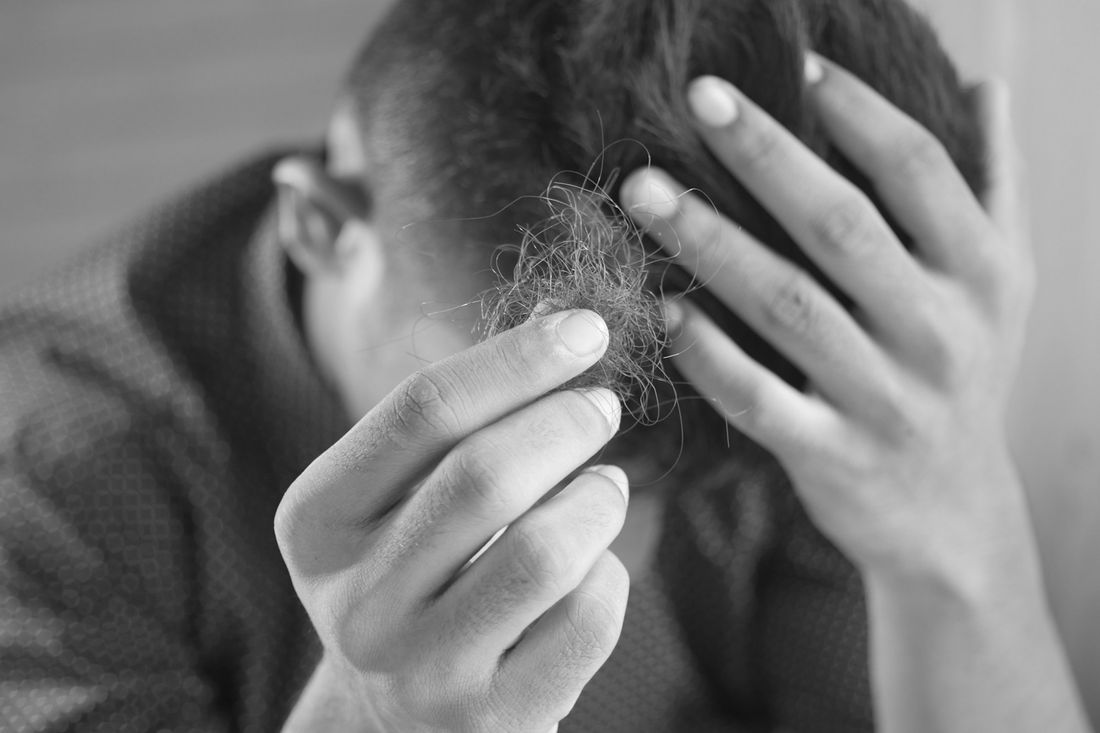
Hair grows roughly half an inch a month, give or take. That sounds slow, but most bad haircuts only need a small fraction of that to stop being noticeable. Here is a rough timeline:
- Days 1–3: the worst it will look. Hair is still settling, and you are looking at it more closely than anyone else ever will.
- Week 1: the hard edges soften. Clipper lines blur. Most people around you have stopped noticing.
- Weeks 2–3: short patches start to blend in on their own. This is the ideal time for a clean-up cut that evens everything out.
- Weeks 4–6: for most bad cuts, this is when you can have a proper haircut in the style you actually wanted.
The grow-out plan
If you are trying to grow out of something specific — a fade that was too high, a top that was too short — tell your barber the goal. The usual approach is to keep cleaning the sides and the outline while leaving the top alone, so the top catches up. Each visit, the shape gets closer to what you wanted.
Hiding it in the meantime
- A little texture product can hide unevenness on top better than a slick, shiny one, which shows every line.
- Push it a different direction. A bad part or a cowlick often disappears when you style the top forward or to the other side.
- A clean outline makes everything else look more deliberate. Even if the top is wrong, a sharp neckline helps.
- A hat is fine. Everyone has worn one for this reason.
- Grow the beard a little, if you have one. It draws attention down and away from the top.
How to avoid the next one
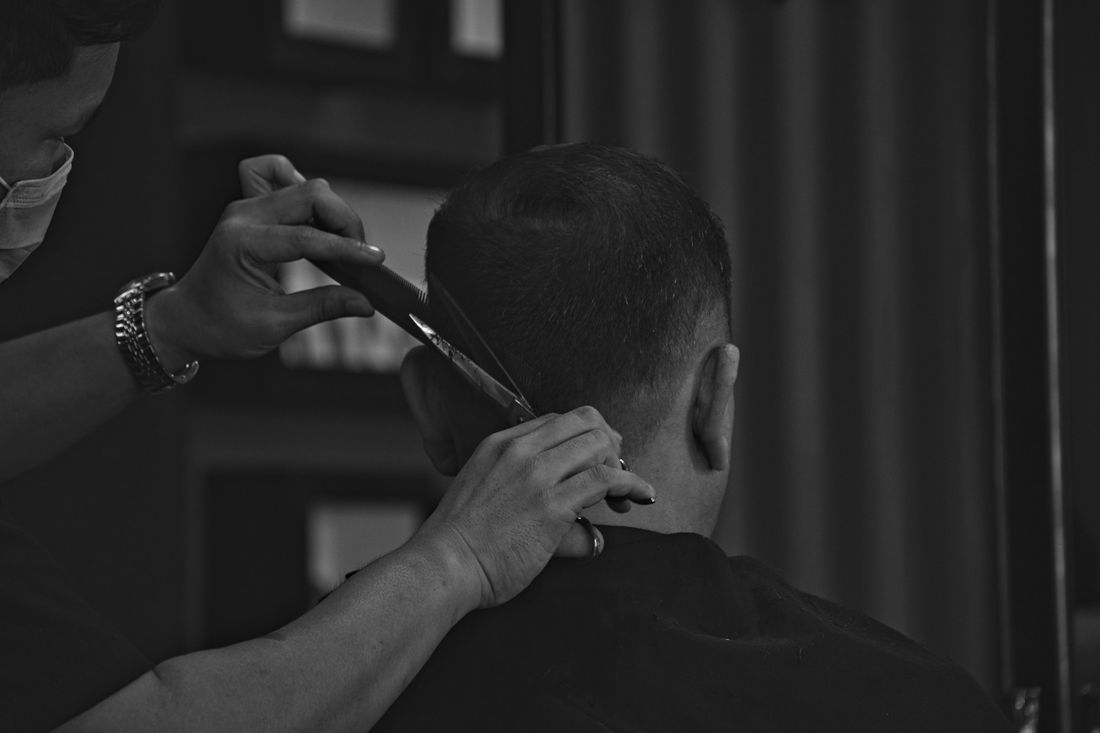
Most bad haircuts come down to one of three things: unclear instructions, a barber who did not ask, or a style that does not suit your hair. You can fix all three.
- Say what you do not want. “Not too short on top” is clearer than any style name.
- Bring a photo, and say what you like in it. “I like how the sides blend” is useful. “Make me look like him” is not.
- Use guard numbers if you know them. If you do not, describe it: “short enough to see some skin at the bottom.”
- Watch the first few minutes. If something looks wrong early, say so. It is much easier to stop than to undo.
- Stick with one barber. A barber who knows your head is far less likely to surprise you.
- Pick a cut that grows out forgivingly while you rebuild trust. Our list of low-maintenance haircuts for men is a good place to start.
And whoever you go to, make sure they are licensed. In New York, barbers are licensed through the Department of State — it is a minimum standard, and it is reasonable to expect it.
About home clipper cuts
A lot of the “bad haircuts” we fix were home cuts. If you cut your own hair or your kids’ hair, that is completely fine, and plenty of people do. The common trouble spots are the back of the neck, around the ears, and anywhere you had to use a mirror. If you are bringing a home cut in to be cleaned up, tell your barber what guard you used. It saves a lot of guessing.
For kids specifically, our kids’ fade explainer covers how fades grow out, which helps if a home fade has gone a bit sideways.
Questions to ask your barber when you sit down
- “Can this be evened out today, or does it need to grow?” An honest answer saves you a second disappointment.
- “How short will you need to go to blend it?” Know before the clippers start.
- “What is the plan for the next few weeks?” A good barber will give you a grow-out schedule.
Should you tip on a fix?
If a barber fixes their own mistake, a tip is up to you; plenty of people still leave one as a thank-you for making it right. If a barber is fixing someone else’s cut, that is a harder job than a normal haircut, and tipping at the top of the usual range is a nice gesture. Our tipping guide has the numbers.
Getting it fixed in Tonawanda
Our Tonawanda shop at 578 Delaware St. fixes cuts from all over — Tonawanda, North Tonawanda, Kenmore and North Buffalo. Dorian Mayham, Sam Balesteri and Zaid Blasiny have all seen every kind of bad haircut there is. You can see all three on the Tonawanda page. The shop opens at 7AM Tuesday through Friday, which means you can get it sorted before work, and runs 8AM to 1PM on Saturday.
Book a Classic (from $25, about thirty minutes) for a full fix, or an Edge Up (from $12) if it is only the outline. Book online, or call 716-389-0192 — walk-ins are welcome, but call first to make sure someone is free. When you sit down, show your photos and say: “Here is what happened, here is what I wanted.” That is all the briefing anyone needs.
The short version
Do not touch it. Wash it and sleep on it. Work out what kind of bad it is. Get the outline fixed fast, get unevenness blended, and give short spots two or three weeks. Then book a proper cut with a barber who asks questions first. In a month, nobody — including you — will remember it happened.