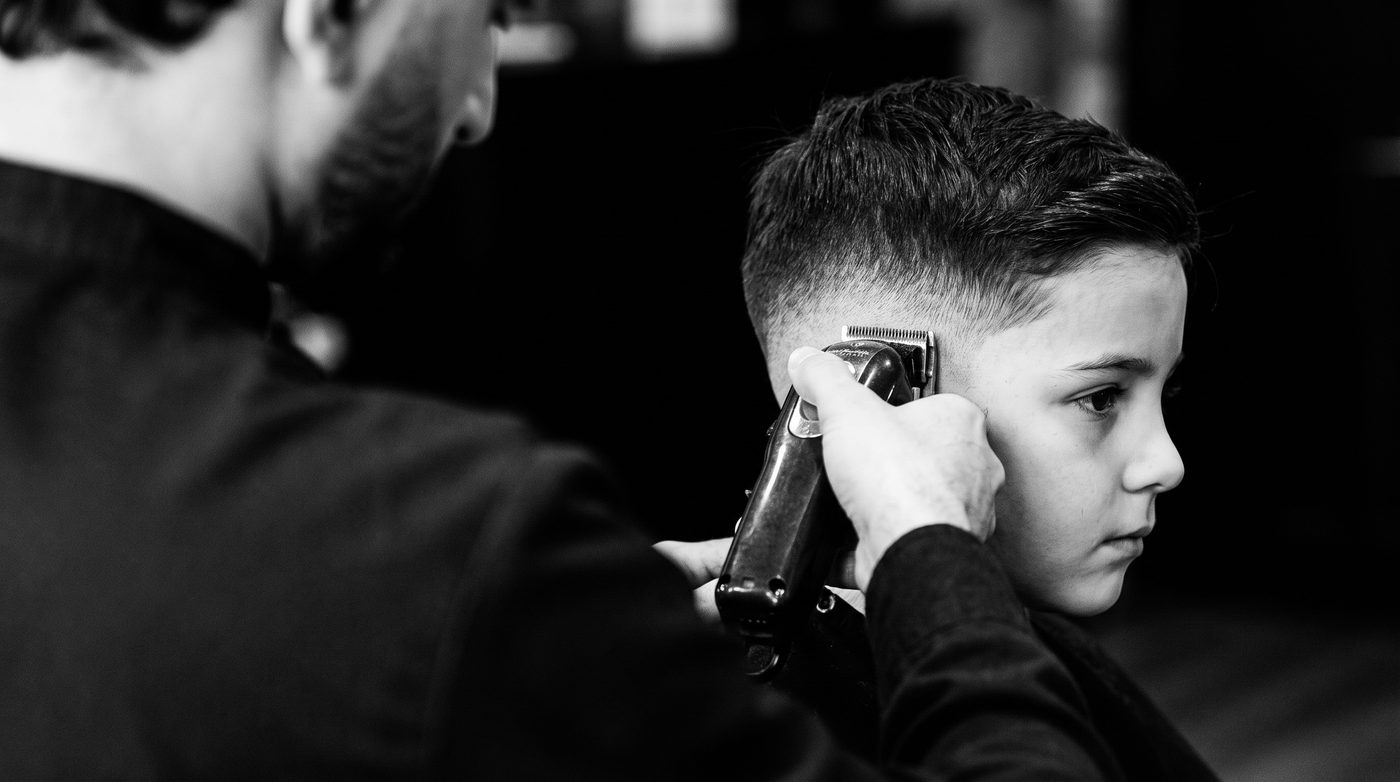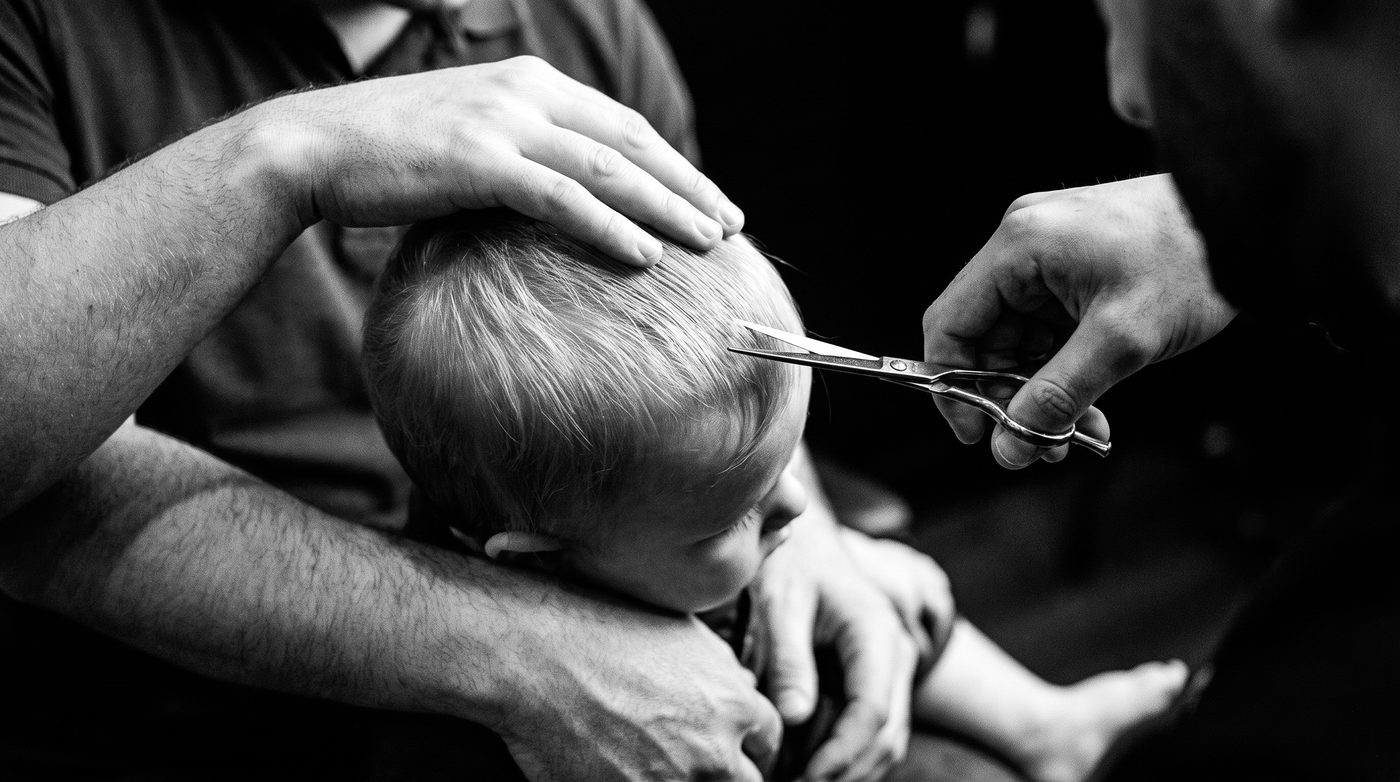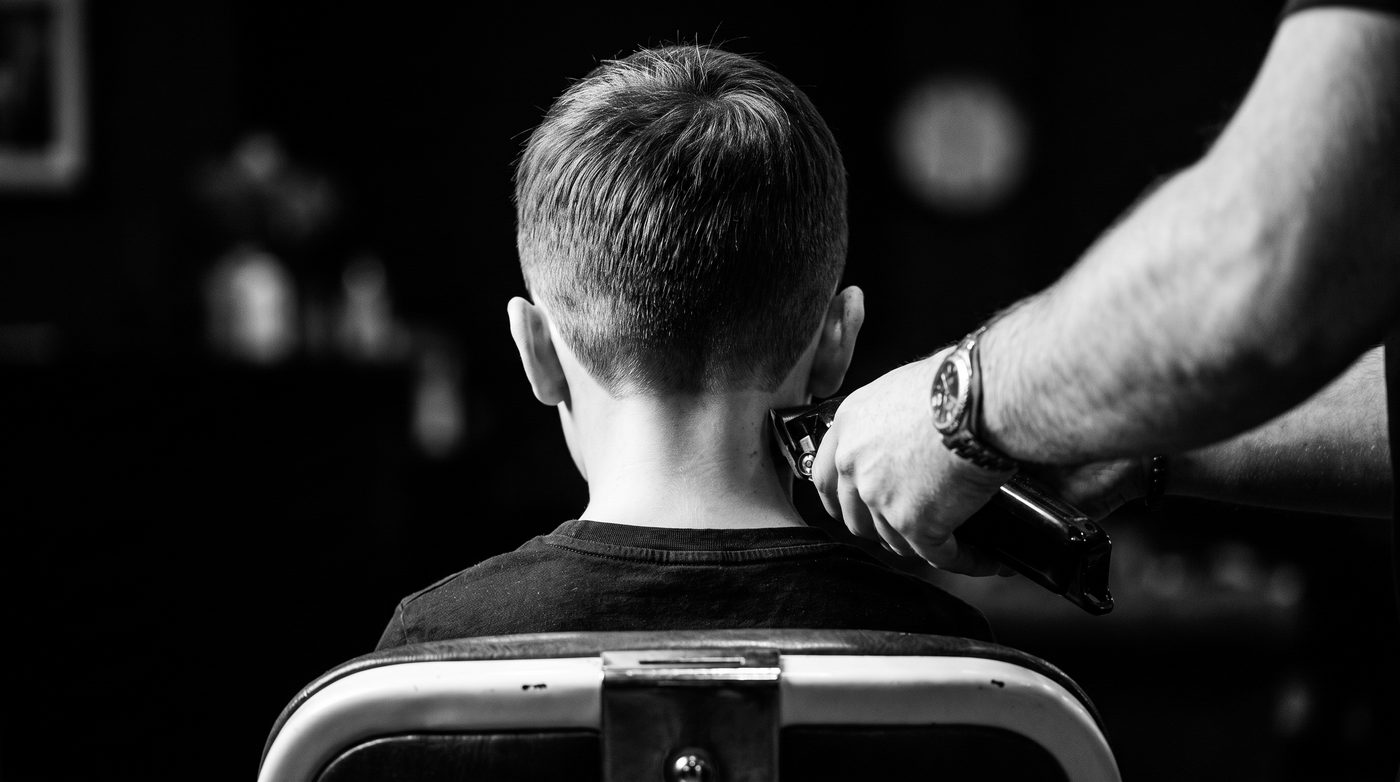
The internet says six weeks. The internet says this about everyone, which is why it is not useful. A four-year-old with fine straight hair and a nine-year-old with a skin fade are on completely different schedules, and treating them the same is how you end up either wasting money or showing up to school photos with a grown-out cut.
Here is a more useful way to think about it.
Start with the cut, not the calendar
How long a haircut lasts is mostly a function of how much contrast it has. High contrast — very short sides against a long top — loses its shape fast, because a quarter inch of growth is a big proportional change. Low contrast holds much longer.
- Skin fade — 3 weeks
- Fade with a guard — 4 weeks
- Taper or classic short cut — 5 to 6 weeks
- Scissor cut, longer sides — 8 weeks
- Longer layered cut — 10 to 12 weeks
- Buzz cut — whenever you feel like it; it grows out into itself
If those terms are fuzzy, our fade explainer and the nine-styles guide put a photo to each one.
Then adjust for the hair
- Fine hair shows growth at the neckline earliest. Knock a week off.
- Thick hair gets wide before it gets long — it is the volume, not the length, that tells you it is time.
- Curly and coily hair should be judged by shape, not length. When the silhouette starts to lose its edges, it is time.
- Season matters: hair grows faster in summer than in winter, by a noticeable margin. A cut that lasts six weeks in February may last five in July.
The four signs it is time
Ignore the calendar and watch for these instead.
The neckline goes fuzzy
The single most reliable tell. Look at the back of the neck above the collar. When the clean line has become soft and feathered, the cut is done — even if the top still looks fine. This is what other people notice first.
Hair goes behind the ears
If your child is tucking hair behind their ear to see or to get it off their face, it has passed the point of usefulness.
It stops sitting where it was cut to sit
A cut that used to fall into place and now needs pushing around has lost its shape.
They start complaining
Kids who are otherwise indifferent to their hair will suddenly mention it when it is bothering them. Take that seriously; it usually means it has been bothering them for a week.
Cutting for events, not just for tidiness
The rule that saves the most grief: for anything photographed, book the haircut five to ten days before, not the day before.
A haircut on day one looks slightly too sharp — the lines are hard, the neckline is stark, and it reads as “just had a haircut” rather than “has good hair.” By day five it has softened into itself. This applies to school photos, weddings, holidays, first days of school, and anything where a camera is involved.
Which means: school picture day in early fall, book in late August. First day of school, book the week before, not the night before.
Does frequent cutting make hair grow faster?
No. This is the most persistent myth in hair, and it is simply not how hair works. Growth happens at the follicle, under the scalp. Cutting the end of a hair has no more effect on its growth rate than trimming your fingernails has on your fingers.
What regular cutting does do is remove split and damaged ends before the damage travels up the shaft, which keeps hair looking healthier and reduces breakage. Hair that breaks less appears to grow faster because more of it stays attached. That is where the myth comes from.
The practical system
Two habits solve almost all of this:
- Book the next appointment before you leave the shop. It takes ten seconds and removes the decision entirely.
- Put a recurring reminder in your phone at the right interval for your child’s cut — three, four, or six weeks — and move it as needed.
Full cut, or just a clean-up?
Not every visit needs to be a full haircut, and alternating saves both money and sitting-still time.
- An Edge Up — neck and edges cleaned, from $12, in and out in 10–15 minutes — buys another week or two on a fade or taper.
- A bangs trim alone is often all a longer cut needs at the six-week mark, if the shape is still good.
- A full cut is warranted when the silhouette has gone — when the sides have flared, the top has lost its shape, or the whole thing has grown into a different haircut.
A reasonable rhythm for a kid on a fade: full cut, Edge Up, full cut, Edge Up. It halves the number of long appointments without the hair ever looking grown out.
What you can do between cuts
Nothing here will extend a haircut dramatically, but it helps.
- Wash less than you think. Most kids do not need daily shampoo, and over-washing makes fine hair fluffier and harder to control.
- Condition curly and coily hair properly. Dry curl loses its shape long before it loses its length.
- Brush or comb daily. A brushed head looks a week fresher than an unbrushed one with the identical cut.
- Resist trimming the bangs yourself. It is the single most common reason a cut needs an early correction — home bangs trims almost always come out short and slightly angled.
A year-round calendar
For most families, four fixed points a year plus a routine interval covers everything:
- Mid-to-late August — the back-to-school cut. Book by the first week of August.
- Five to ten days before school picture day. Find out the date in September.
- Early-to-mid December — before holiday photos and family visits.
- Late May or early June — the summer reset before sports, swimming, and camp.
Everything between those is just the normal three, four, or six-week rhythm for whatever cut your child has.
Two or three kids on different schedules
Families with more than one child usually end up with mismatched intervals — a nine-year-old on a fade needing three weeks and a five-year-old on a taper needing six. Trying to synchronize them means one child is always being cut too early or too late.
Two workable approaches. Either accept the mismatch and bring them separately, which is more trips but a better cut for each. Or pick cuts that share an interval — put both on a taper, say — and bring them together every five weeks. The second is what most families settle into, and it is a perfectly good trade.
If you do bring them together, book it rather than walking in — two or three chairs’ worth of time is a lot to ask of a Saturday, and booking is the only way to guarantee the chairs.
Both shops are at 716-389-0192 — Williamsville, Tonawanda, or book online. Book the next one before you leave the chair and this whole article becomes unnecessary.