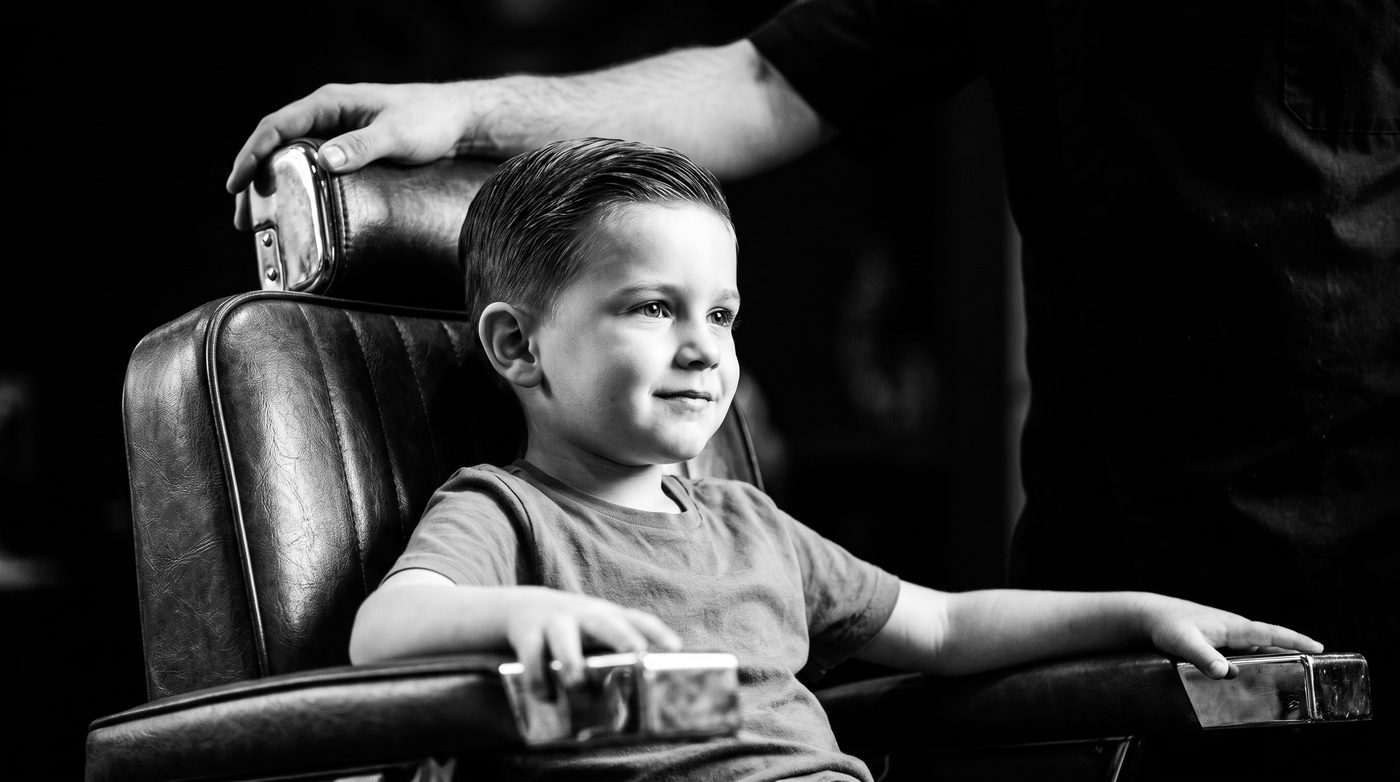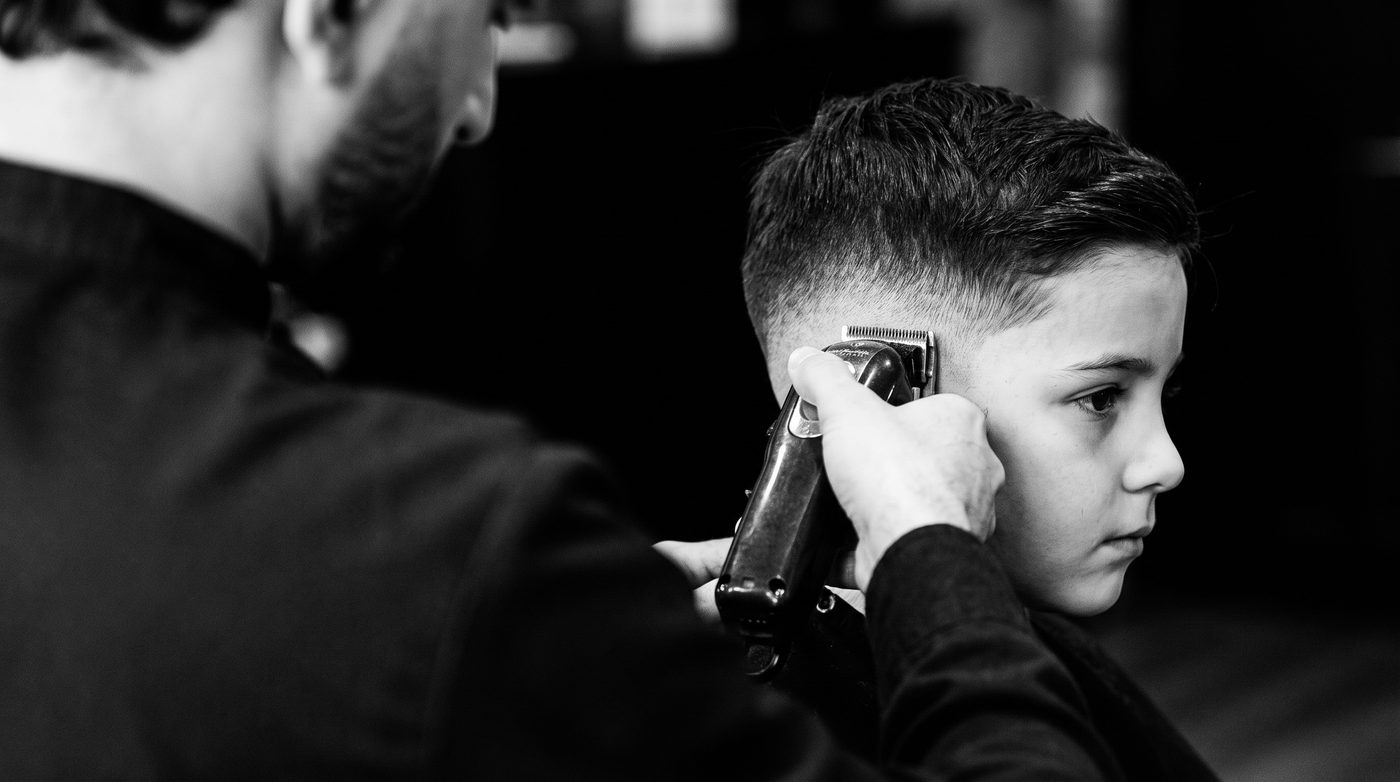
“He wants a fade” is the most common request we get for boys over about seven, and roughly half the time the parent and the child mean different things by it. Then the cut happens, someone is unhappy, and it is nobody’s fault — the word just covers about six different haircuts.
Here is what the terms actually mean, so you can ask for the right one.
What a fade is
A fade is a gradient. The hair goes from very short at the bottom to longer as it moves up, with no visible line where one length becomes another. That blend is the whole skill of it — a bad fade has steps and shelves in it, a good one is smooth enough that you cannot point at where it changes.
Every fade is defined by two things: how high up the head the blend starts, and how short it goes at the bottom.
How high: low, mid, high
Low fade
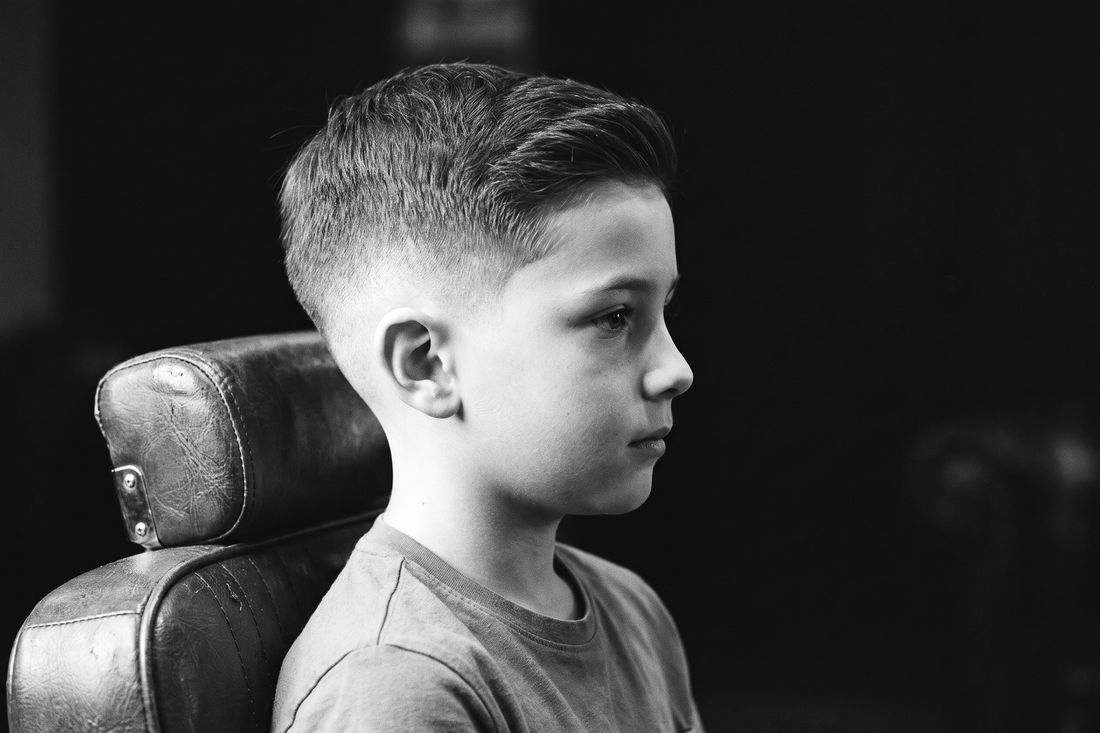
The blend starts just above the ear and around the hairline at the back. Most of the side keeps its length. Subtle, conservative, and the most forgiving as it grows out. If your kid’s school has hair rules, this is usually the safe one.
Mid fade
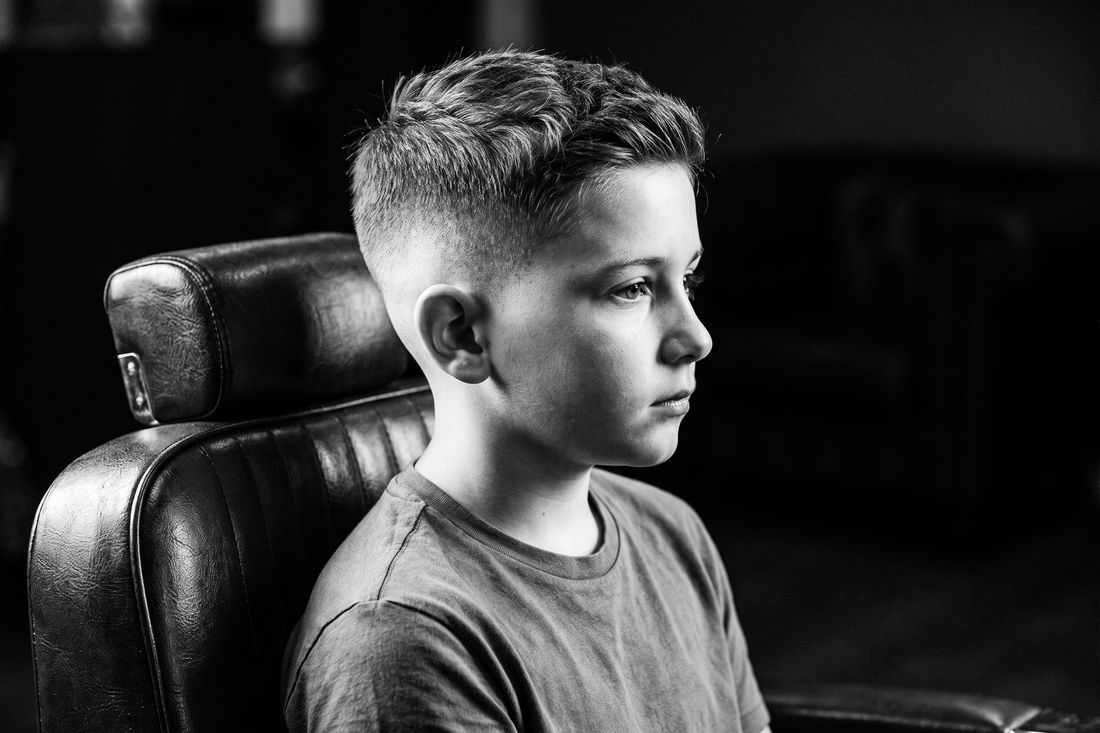
Starts around the temple, roughly halfway up. The default. More contrast than a low fade, still balanced. If someone says “a fade” with no other detail, this is what they probably want.
High fade
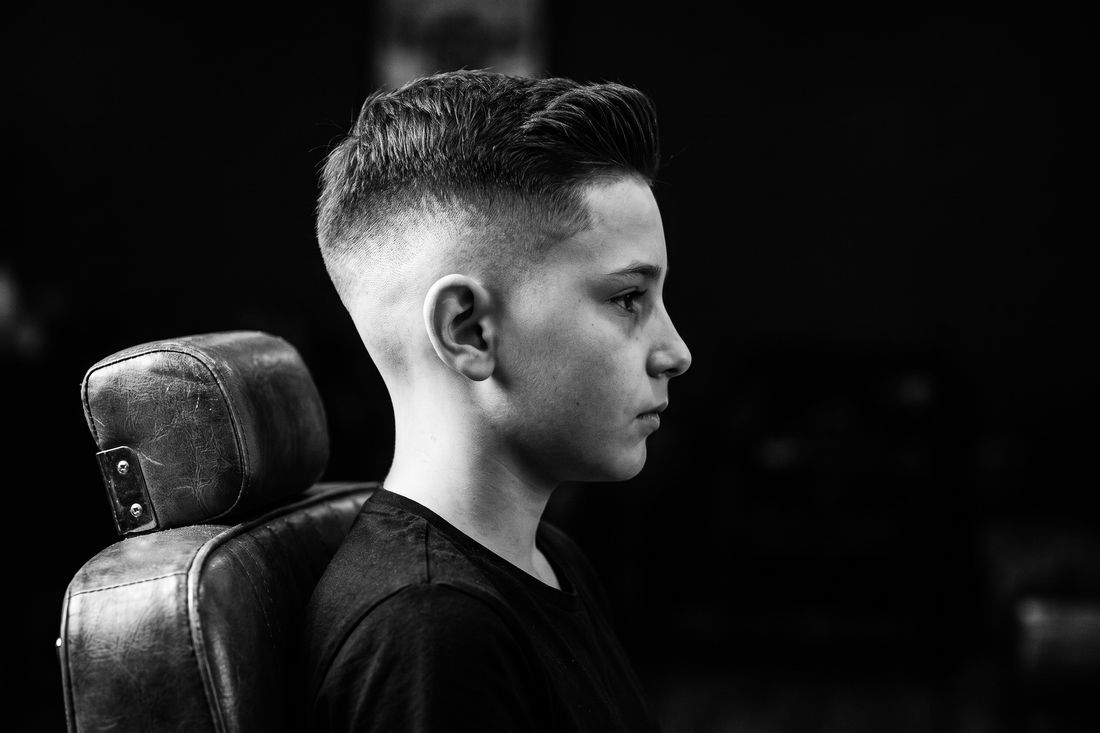
Starts at or above the temple corner, near the widest point of the head. Strong contrast, very short sides, a lot of visual weight on top. Sharp, and demanding — it is obvious within two weeks when it starts growing.
How short: taper, low guard, skin
- Taper — the shortest point still has hair on it, blended to the natural hairline. The softest option, and the kindest to sensitive skin.
- Number one or two at the bottom — very short but not bare. The middle ground, and where we steer most kids.
- Skin fade (also called a bald fade) — clippers with no guard, or a razor, taking it to bare skin. The highest contrast, the sharpest look, and the fastest to show growth. On children with sensitive skin it can cause irritation, which is worth knowing before you ask for it.
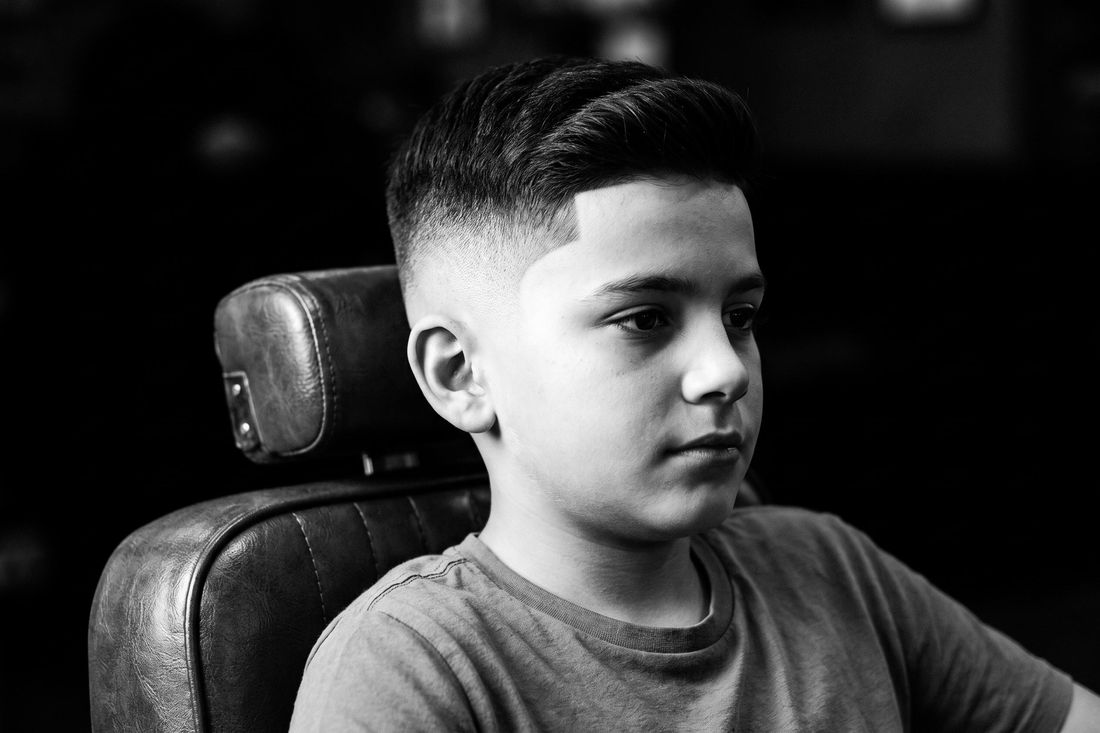
Put the two together and you get the actual request: “low taper fade,” “mid skin fade,” “high fade with a two at the bottom.” That is a brief a barber can execute exactly.
The maintenance question nobody asks first
This is where families get caught. A fade looks its best for about a week. Here is the honest schedule:
- Skin fade — sharp for 7–10 days, clearly grown out at three weeks. Rebook every 3 weeks.
- Low-guard fade — good for two weeks, fine at four. Rebook every 4 weeks.
- Taper fade — holds its shape for five or six weeks. Rebook every 5–6 weeks.
A low fade of any kind grows out more gracefully than a high fade, because there is less contrast to lose.
If a monthly appointment is not realistic, get a low taper fade rather than a high skin fade. It will look better on week four, which is where most of your child’s life is actually lived.
Fades on different hair types
- Coily and Afro-textured hair — fades sit beautifully, and the line-up is a big part of the look. Ask how the edges are finished; a razor line-up is crisper but harder on the skin than a clipper line-up.
- Thick straight hair — takes a fade cleanly. This is the easiest hair to fade well.
- Fine hair — fades can look patchy at the very short end because scalp shows through. A taper is usually the better call.
- Curly hair — a fade on the sides with curl left on top is one of the best-looking kids’ cuts there is, but the top must be cut dry.
For the full menu of cuts and who each one suits, our guide to nine low-maintenance boys’ haircuts covers the whole field.
Fades and younger kids
Under about six, a fade means more clipper time against the skin than a simple taper does, and more time sitting still. It is doable and we do it, but if your four-year-old is already at their limit after eight minutes, a taper gets you 80% of the look in half the time.
If clipper noise is the issue, a fade is not really possible without them — but a scissor-cut taper is a genuine alternative and looks sharper than most people expect.
Line-ups, parts and designs
Three things that often come bundled with a fade request:
The line-up
Squaring the hairline at the forehead and temples. It is what makes a fade look finished rather than merely short. Done with clippers it is clean and lasts about two weeks. Done with a razor it is sharper and lasts a little longer, but it is harder on the skin — on younger children we would generally suggest clippers.
One caution: a line-up moves the hairline back very slightly each time. On a child, once every few cuts is plenty.
The hard part
A shaved line where the part sits. Sharp, popular, and it grows back as stubble within a week and a half, which some kids find itchy. Worth knowing before rather than after.
Designs
Lines, chevrons, a team logo. If your kid wants one, ask when you book and we will tell you honestly whether it will work with their hair. Two practical notes: check your school’s dress code first, and know that a design commits you to a three-week schedule, because it looks unmistakably scruffy as it grows.
How to tell a good fade from a bad one
Useful whether you come to us or not. Look at the sides in natural light, not shop light:
- No visible lines or shelves. A gradient should look continuous. If you can point at where one length becomes another, the blend was not finished.
- Both sides match. Stand behind and look at both ears at the same height.
- The back is blended, not just short. The back of the head is where rushed fades fail.
- The transition into the top is soft. A hard ledge where the fade meets the length is the most common flaw.
- The neckline is squared or tapered deliberately, not just wherever the clipper stopped.
A fade takes real time to blend properly, which is the honest reason a good one costs more than a quick one.
Between fades
If a monthly cut is not workable, cleaning up the neck and edges at the two-week mark buys you another ten days or so on a fade. That is exactly what our Edge Up is — from $12, in and out fast — and it is the cheapest way to keep a fade looking deliberate between real cuts.
How to ask for it
Bring a photo. Then add the two variables out loud: how high, how short. “Something like this, low, and not down to the skin” takes four seconds and eliminates every misunderstanding in this article.
Both shops are at 716-389-0192 — Williamsville, Tonawanda, or book online. Walk-ins are welcome when there is an open chair, but a good fade takes time — book it.