Carpenters have a saying: measure twice, cut once. It is also the best advice there is for your beard neckline, because it is the one line on your face you cannot see properly, and the one you cannot undo once it is cut too high.
Get the neckline right and almost any beard looks deliberate. Get it wrong and even a great beard looks strange. Here is how to measure it, mark it and cut it — plus the cheek line and the rest of a proper line-up.
Where the neckline should be
For most beards, the neckline sits about one to two fingers’ width above the Adam’s apple. From that point, it curves back and up toward the corner of the jaw, behind each ear — roughly following a gentle U shape.
That is it. Not on the jawline. Not halfway down the neck. Just above the Adam’s apple, curving up to the ears.
Why not the jawline?
Because from the front, a beard trimmed right at the jawline looks like it is stuck onto your face. The bottom of the beard vanishes, and the face looks smaller and the neck bigger. It is the most common beard mistake there is, and almost everyone makes it the first time they trim at home.
And why not lower? Because a neckline too low lets the beard creep down the neck, which looks untidy from the side and makes the whole beard look unkempt.
Measure twice: finding your line
Step 1: Find the point
Tilt your head back slightly. Place two fingers flat above your Adam’s apple. The top edge of your fingers is roughly the center point of your neckline. If you have a short beard or a smaller face, one finger may be enough.
Step 2: Find the corners
Find the point just behind each earlobe, where your jaw meets your neck. These are the ends of the line.
Step 3: Imagine the curve
Picture a smooth curve from one corner, down through the center point, and back up to the other corner. That is your neckline. Some people use a trimmer’s edge to lightly touch the skin along it as a guide before cutting anything.
Step 4: Check from the front
Look straight ahead in the mirror. The beard should still look like it continues under your jaw. If you cannot see any beard below your jawline from the front, the line is too high.
Cut once: trimming the neckline
- Use a trimmer without a guard, or a razor for a cleaner finish.
- Start at the center point and work outward toward each ear.
- Trim only below the line. Everything above it stays.
- Go slowly and take short passes. You can always take more off; you cannot put it back.
- Shave the area below the line clean if you want the sharpest look.
The cheek line
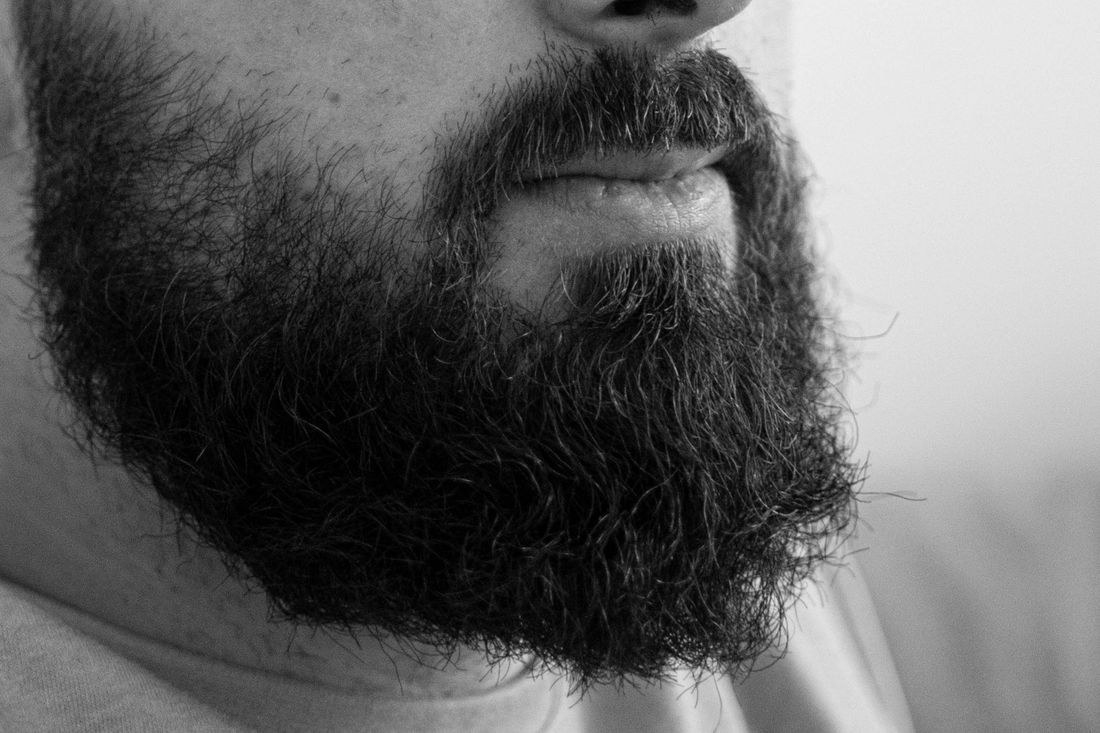
The neckline has a partner: the cheek line, the top edge of the beard across your cheeks. Options:
- Natural: leave the cheek line as it grows and only remove the obvious strays. The safest choice for most people.
- Defined: a clean, straight or gently curved line from the sideburn to the corner of the mustache. Sharper, more groomed.
- Lower: taking the line down a little makes a patchy beard look fuller, because it starts where the hair is dense.
Whatever you choose, go conservative. Taking a cheek line too low is the second most common beard mistake, and it can make the beard look thin.
Lining up the rest
- Mustache: keep it off your lip. Our mustache trimming manual covers the steps.
- Sideburns: where the beard meets the haircut. A beard fade blends the two together.
- Under the lip: tidy the area below your lower lip so it does not look overgrown.
Fixing a neckline that is too high
If you have already taken it too high, do not panic and do not try to fix it by going higher still. Stop shaving the neck for a week or two and let the hair below the line grow back. Then set the line again at the right height, or have your barber do it. For a while it may look a little fuller underneath than you are used to. That is the beard looking the way it should.
Mistakes to avoid
- Neckline at the jaw. The classic chinstrap problem.
- Creeping upward. Every trim takes a little more off the top of the line until it is too high. Follow the line you set; do not chase it.
- A straight horizontal neckline. Necks are not flat. The line should curve up toward the ears.
- Lining up in bad light. You will miss hairs and cut unevenly.
- Cutting with your head tilted too far back. It stretches the skin and the line ends up higher than you think when you look straight again.
Skin on the neck
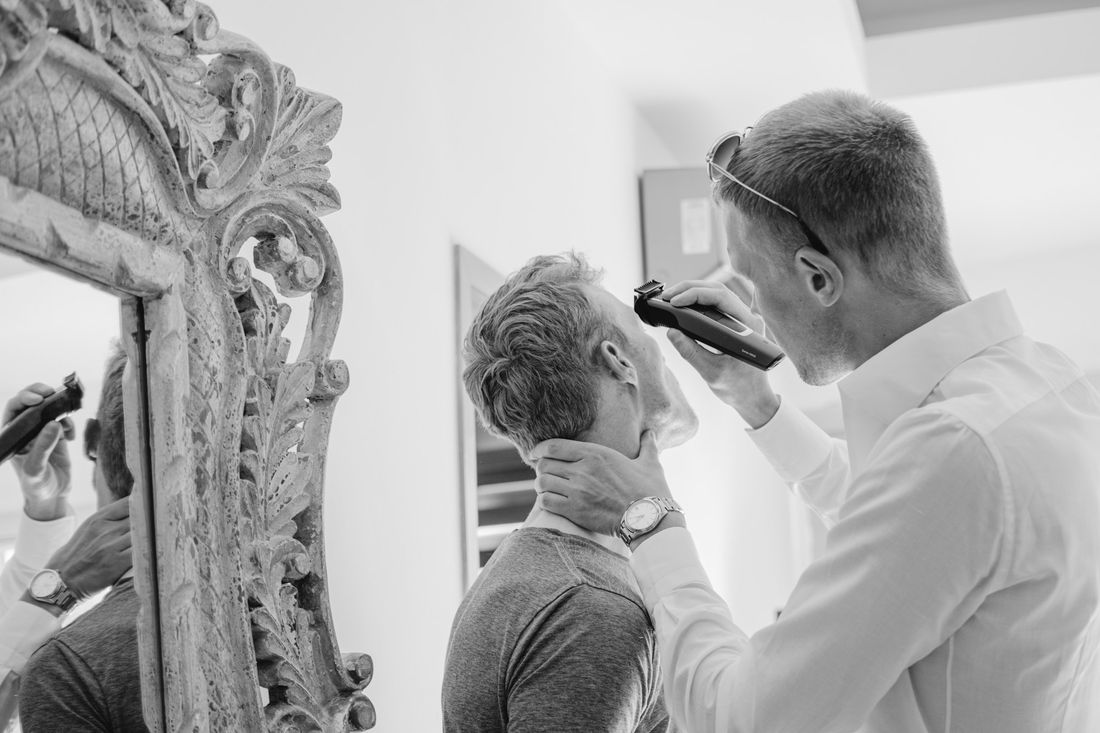
The neck is one of the most irritation-prone areas to shave, because the hair often grows in several directions. Shave with the grain where you can, use a sharp blade, and do not go over the same spot repeatedly. If you get bumps that do not settle, the Mayo Clinic’s page on ingrown hair is a good place to start, and a doctor can help if they persist.
Tools for lining up at home
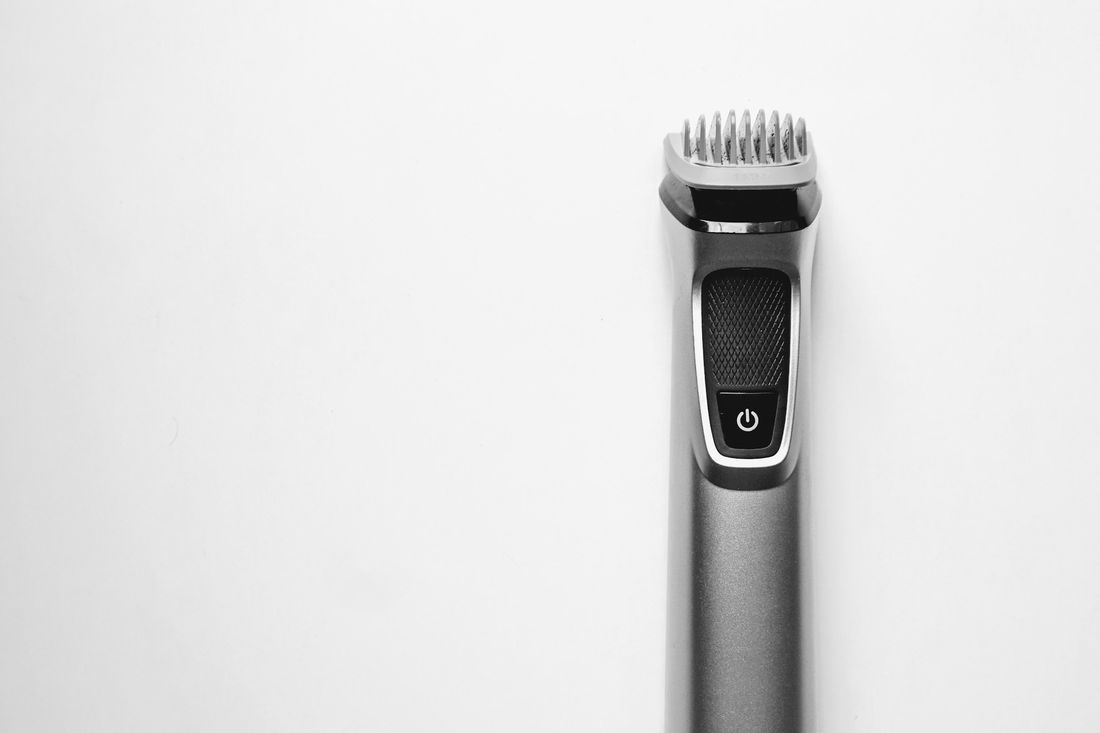
- A trimmer with a fine T-blade gives the cleanest edge for the line itself.
- A safety razor or cartridge razor for shaving below the line after trimming.
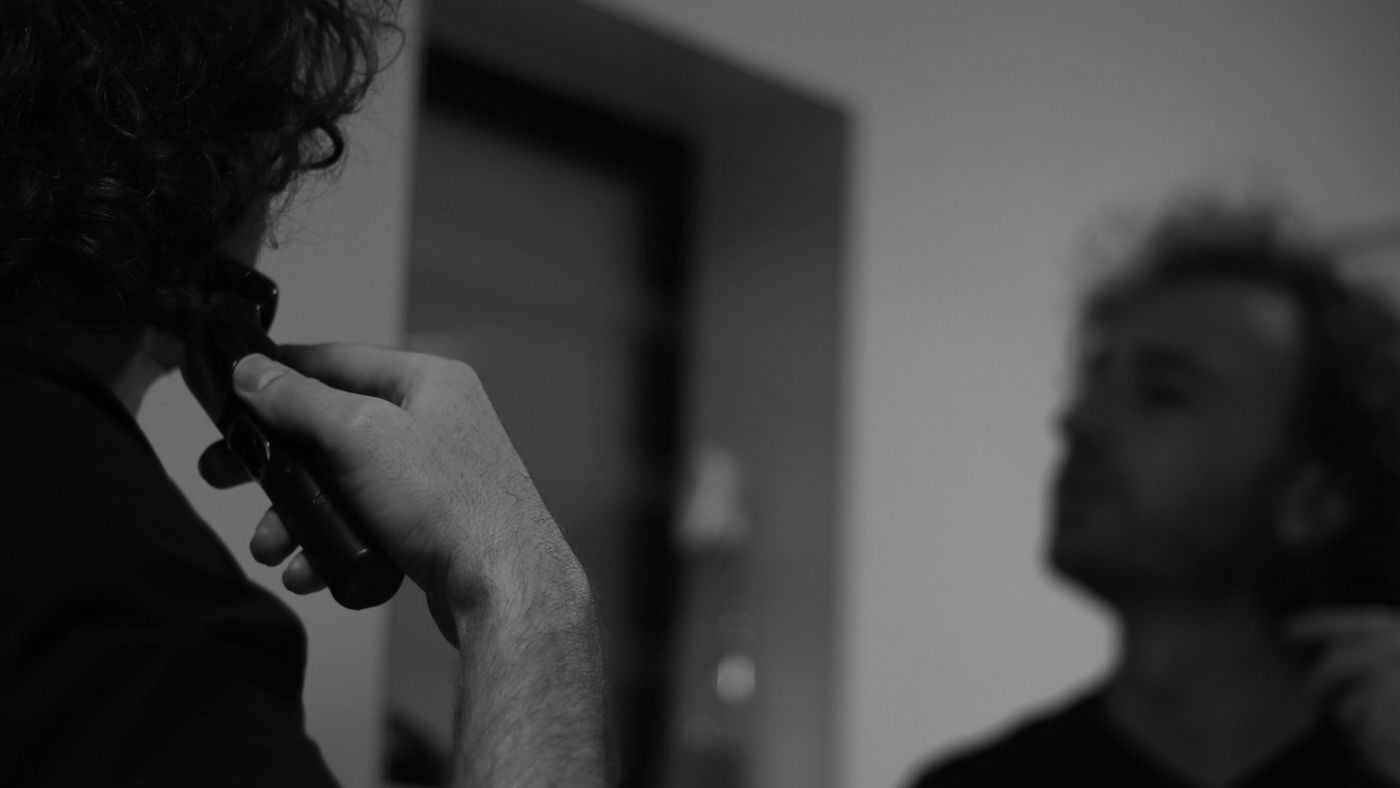
- A hand mirror, so you can see the sides of your neck and behind the jaw.
- Good light from the front, not from overhead. Overhead light hides the neck in shadow.
- A fine comb to lift the beard so you can see where it ends.
Neckline by beard style
- Stubble: the line can be soft, even slightly faded, so it does not look like a hard edge on short hair.
- Short boxed beard: a clean, defined curve. This is where the two-finger rule matters most.
- Full beard: the line is hidden by the hair hanging over it, but it still keeps the neck tidy from the side.
- Goatee or chin beard: there is no full neckline; the edges of the goatee itself are the lines to keep sharp. Our beard trim styles guide covers each style.
How often to line up
- Clean, sharp look: every two to four days for the neck below the line.
- Relaxed look: once a week.
- Full reshape: every few weeks, with your barber.
The easiest method of all
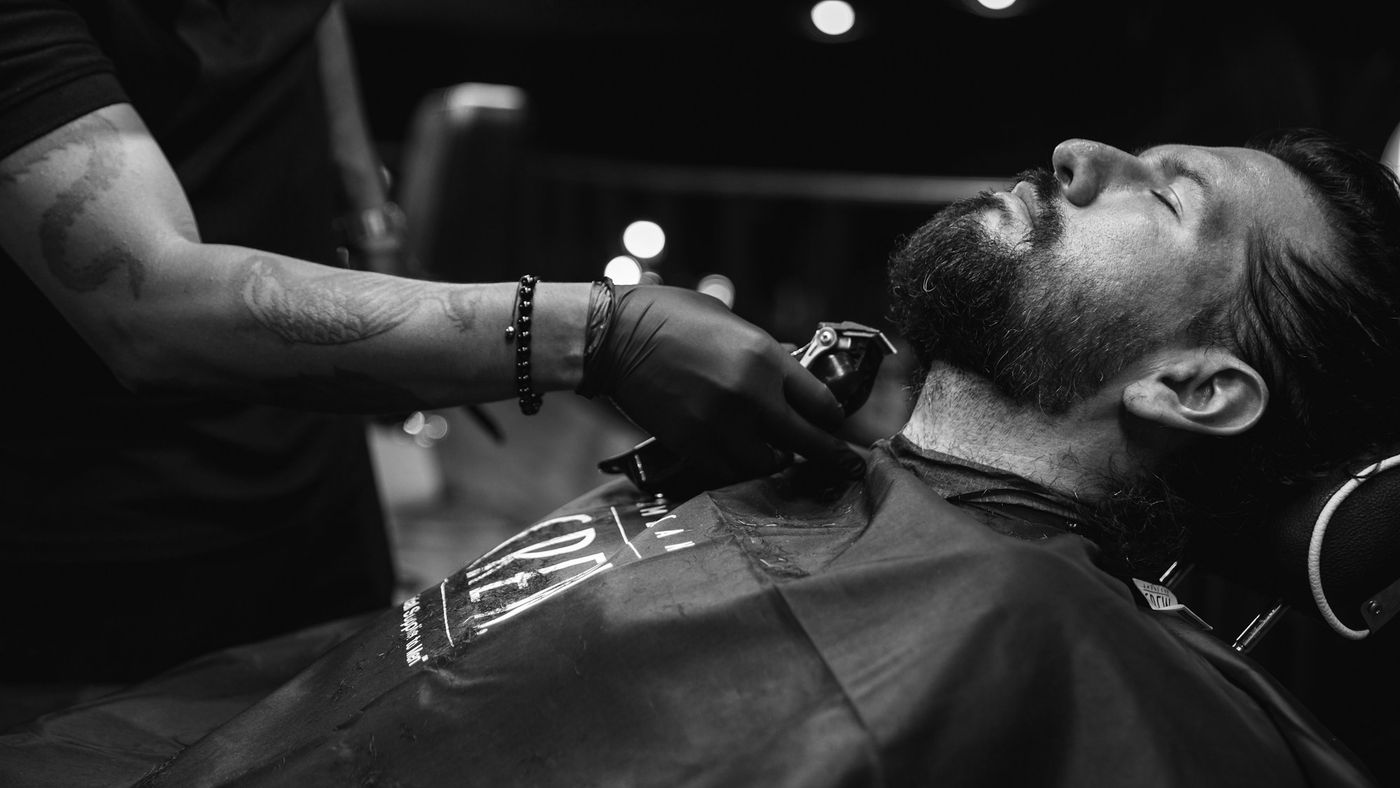
Have a barber set the line once. A clean neckline set by someone who can see it properly is easy to follow at home: you just trim whatever grows below it. At our shops, beard sculpting and line work come with Classic & Beard (from $35), and an Edge Up (from $12) cleans the neck between full visits.
What a barber does differently
Barbers line up beards dozens of times a week, and a few habits make their lines cleaner than most home attempts:
- They stand where you cannot. They see your neck from the side and from below, which is where most home mistakes hide.
- They set the line before they cut. A light guide pass, then the real cut, then a check from the front.
- They finish with a razor. An edger gets close; a straight razor makes the line crisp for days rather than hours.
- They match it to your haircut. The neckline, the sideburns and the haircut are treated as one job.
That is why it is worth having a barber set the line once, even if you maintain it yourself afterward.
Line-ups and beard length
The longer the beard, the more the neckline matters, because the hair underneath hangs over it. With long beards, the line often sits a little higher than on a short beard — closer to one finger above the Adam’s apple — so that the length hangs naturally. Ask your barber where yours should be.
The cheat sheet
- Center point: one to two fingers above the Adam’s apple.
- Ends: just behind each earlobe, where jaw meets neck.
- Shape: a gentle curve, never a straight line, never the jawline.
- Method: measure, mark, then trim only below the line.
- Check: from the front, the beard should still show under the jaw.
- Upkeep: follow the line; never chase it upward.
The Tonawanda shop
578 Delaware St., Tonawanda, NY 14150. Open Tuesday through Friday 7AM to 7PM and Saturday 8AM to 1PM; closed Sunday and Monday. Dorian Mayham, Sam Balesteri and Zaid Blasiny line up beards every day, and all three are licensed through the New York Department of State.
Book online or call 716-389-0192. Ask your barber to set the neckline and show you where it is. Then all you have to do is keep below it clean.