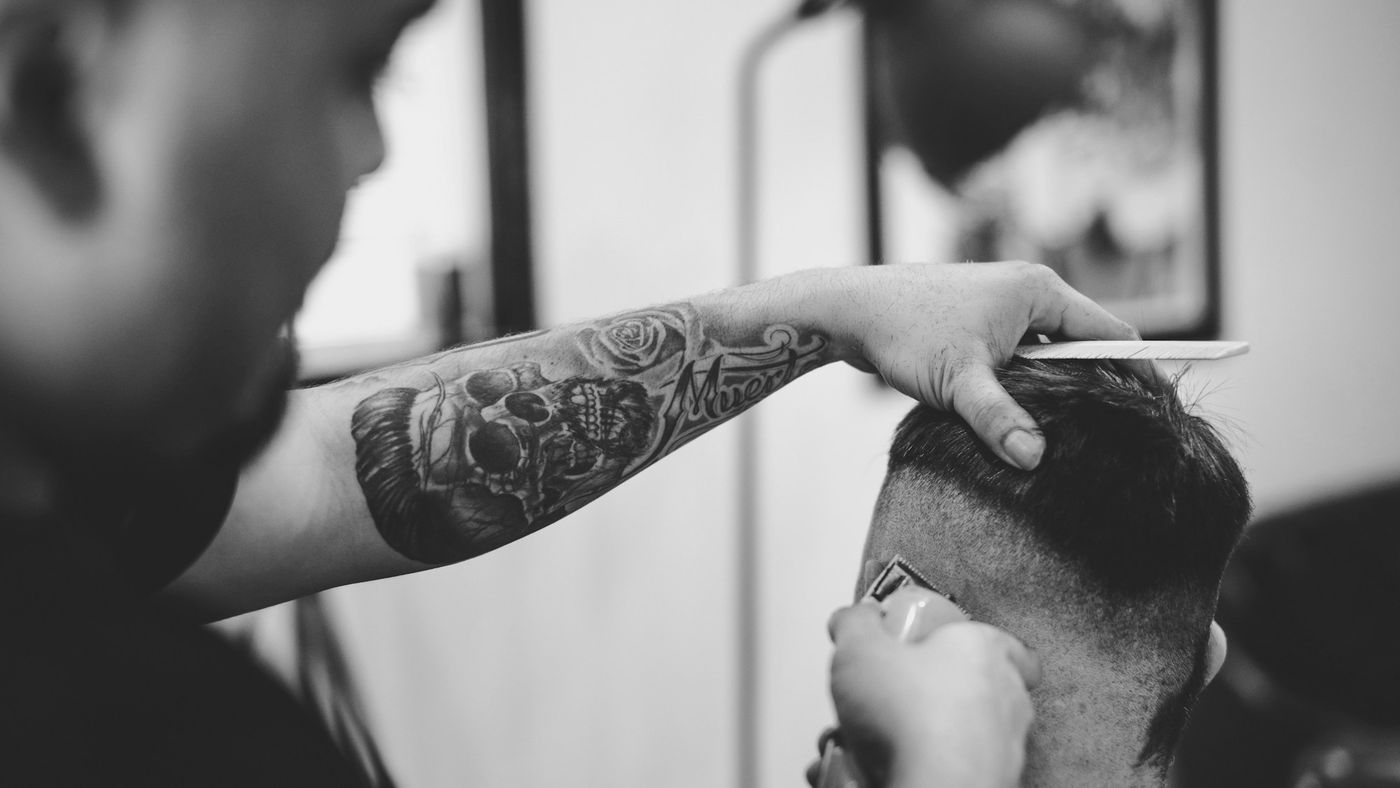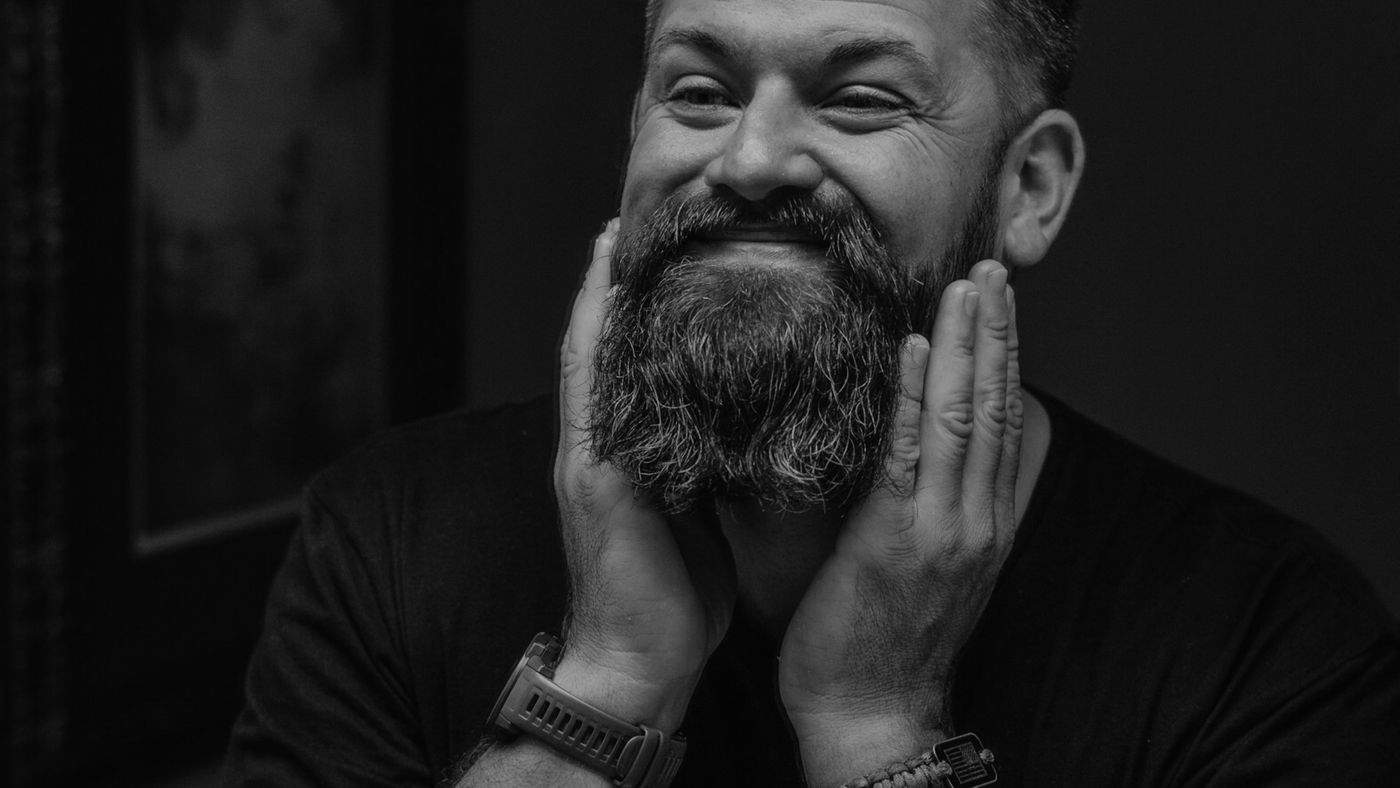
A beard fade is the blend between your haircut and your beard. Instead of the haircut stopping at the sideburns and the beard starting as a separate block of hair, the length changes gradually — short where the haircut meets the beard, getting fuller as it moves down the jaw. Done well, your hair and beard read as one deliberate shape.
The easiest way to understand it is to walk down the side of the head, zone by zone. So let us do that, from the top of the haircut to the point of the chin.
Zone 1: The haircut
A beard fade starts with the haircut above it. Most beard fades sit under a faded or tapered haircut — the sides get shorter as they go down toward the ears. That gradient is what the beard fade continues. If you are not sure which you have, our guide on fade vs. taper explains the difference.
You can do a beard fade under a longer haircut too, but the effect is softer. The shorter the sides of the haircut, the more dramatic the blend into the beard.
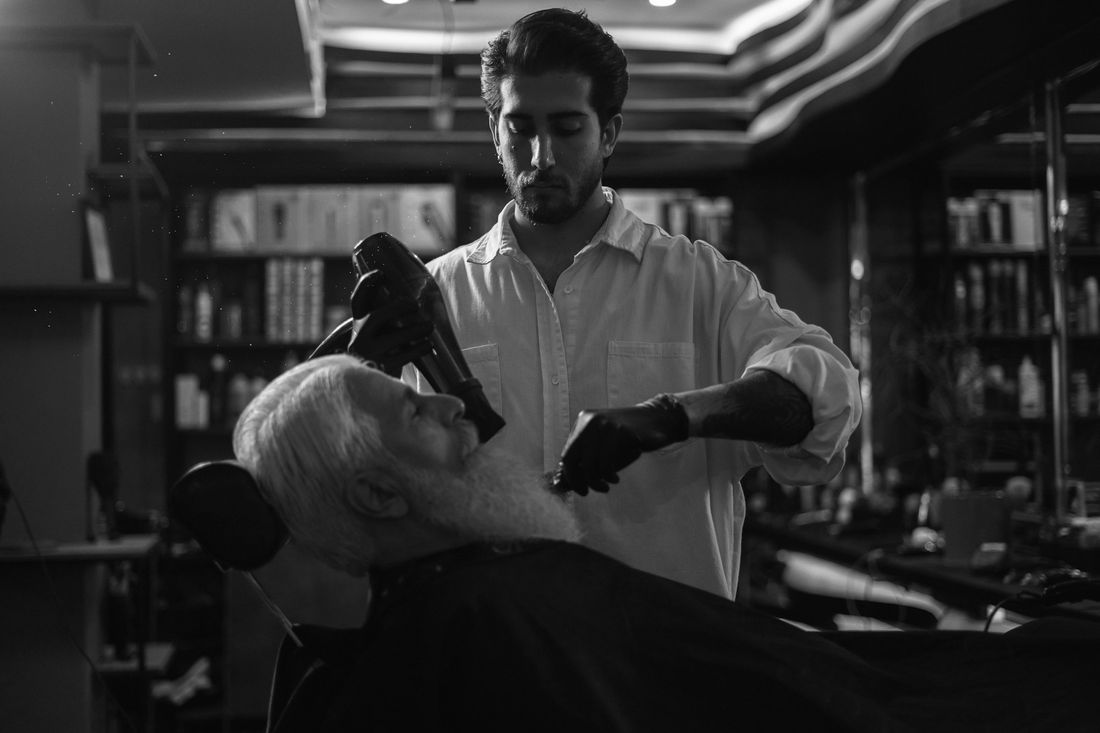
Zone 2: The temple and the sideburn
This is where most of the work happens. Where the haircut meets the beard — at the sideburn, in front of the ear — the hair is taken very short. Depending on the style, that can be a short clipper length or right down to skin.
From there, the barber works downward, letting the length build gradually. Instead of a sideburn that is the same length as the beard, you get a sideburn that starts short and grows into the beard.
Zone 3: The cheek
As the fade moves down past the ear, it reaches the upper cheek. The cheek line — the top edge of the beard across the face — is set here, usually with an edger and finished with a straight razor so it is crisp. On a beard fade, the hair just below the cheek line is often a little shorter than the rest of the beard, which keeps the face from looking heavy at the top.
Zone 4: The jaw
By the time the fade reaches the jaw, the beard is at its full length on the sides. This is where the beard’s own shape takes over — whether it is kept short and even or allowed to get longer toward the chin.
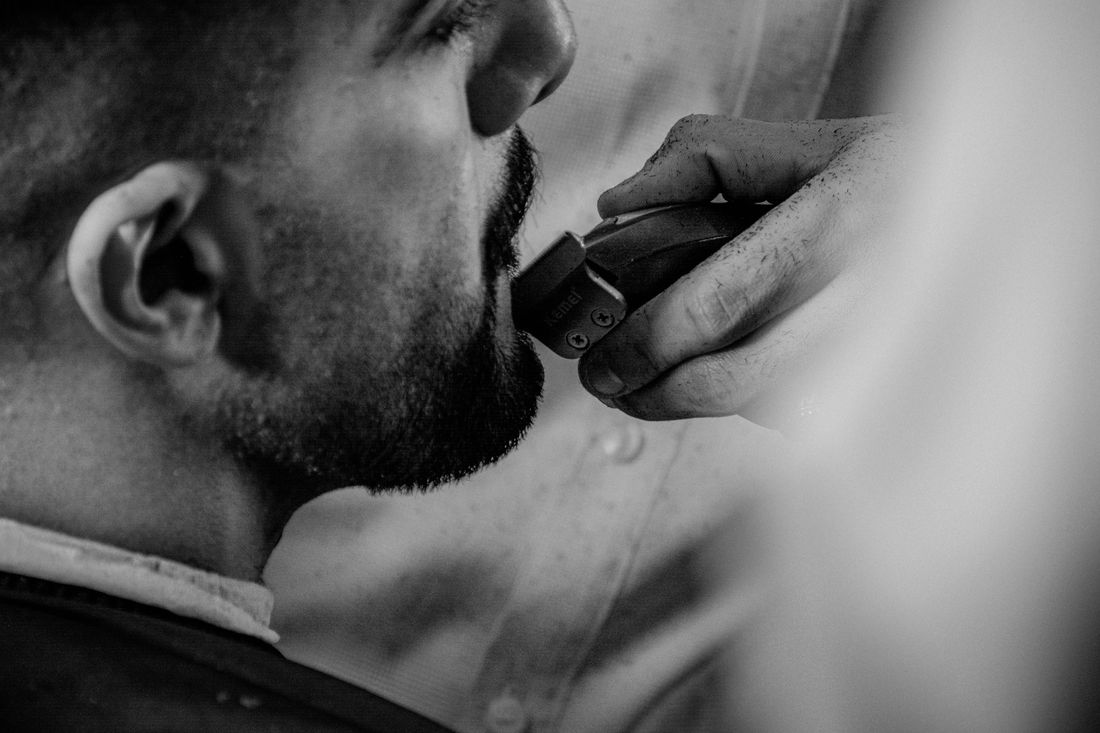
Zone 5: The chin and neckline
At the bottom, the beard is shaped at the chin and finished with a clean neckline. Our guide to the beard neckline covers exactly where that line should sit, because it is the single detail that most often goes wrong.
The main styles of beard fade
Low beard fade
The fade is concentrated right at the sideburn and doesn’t travel far. The beard stays full most of the way up. Subtle, and the easiest to grow back from.
Mid beard fade
The blend travels further down the cheek. A clear, visible gradient from the haircut into the beard. The most common choice.
High beard fade
The short area extends well down the side of the face before the beard fills in. Bold and very clean, best with a short, sharp beard.
Skin beard fade
The sideburn area goes right down to skin before blending into the beard. The sharpest look of all, and the quickest to grow out.
Faded stubble
For short beards: a skin fade at the haircut, blending down into a short, even stubble beard. Clean and very low-maintenance.
Who a beard fade suits
- Anyone with a faded or tapered haircut and a beard. It connects the two.
- Patchy sideburns. If your beard is thin near the ears, a fade hides it by keeping that area short on purpose.
- Round faces. Keeping the sides short and the chin fuller makes the face look longer. Our round face guide explains why.
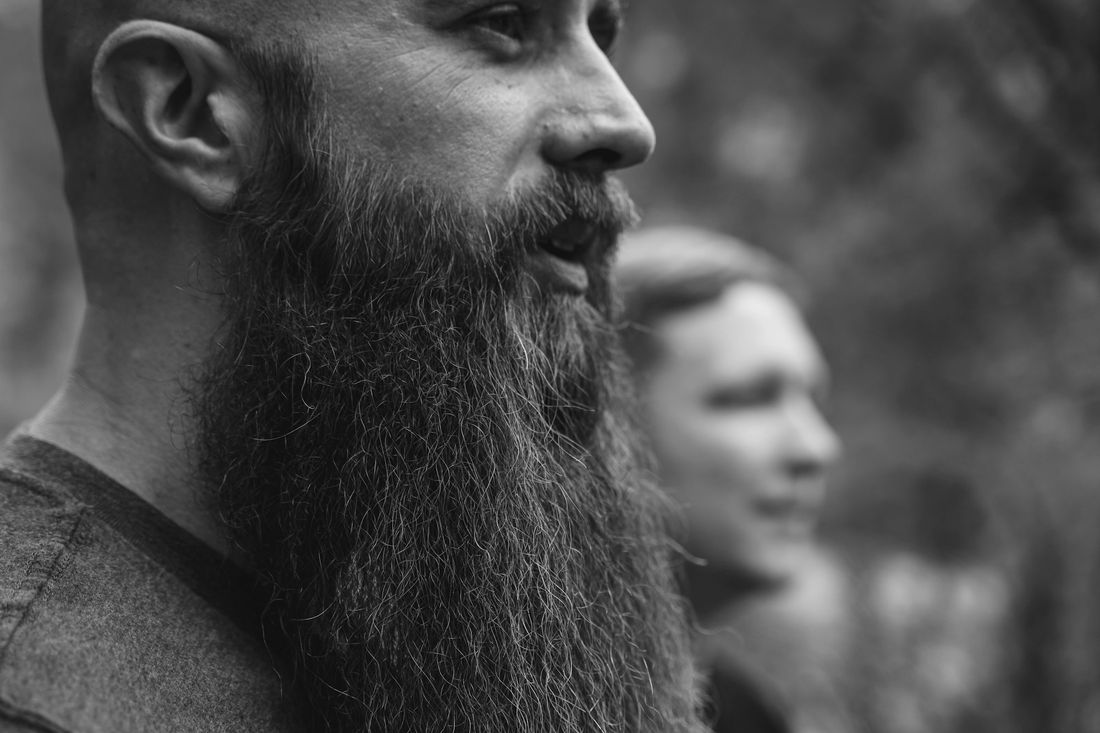
- Thick, heavy beards. A fade stops the beard looking like it is stuck on to the side of the face.
How long it lasts
A beard fade lives and dies on the sideburn, where the hair is shortest. That area shows growth fast. Roughly:
- Skin beard fade: sharp for about a week, noticeably grown in by two weeks.
- Low or mid fade (not to skin): two to three weeks.
- Faded stubble: one to two weeks if you want it crisp.
Most people match their beard fade to their haircut and book both together every two to four weeks. Our post on how often to get a haircut has a full schedule.
Maintaining it at home
- Do not try to re-fade the sideburn yourself. Blending short into long by eye is the hardest part of the cut, and it is easy to leave a line.
- Keep the neckline clean by following the line your barber set. Our neckline guide shows how.
- Trim only stray hairs on the cheek. Leave the shape alone between visits.
- Oil the skin under the beard, especially in winter. Our guide to beard oil vs. balm covers which to use.
How to ask for a beard fade
Tell your barber three things:
- The haircut: “Mid fade on the sides.”
- Where the beard fade starts and how short it goes: “Fade the sideburns into the beard, down to skin at the top.”
- The beard length and shape: “Keep the beard about half an inch, a bit longer at the chin, clean neckline.”
If you do not have words for it, a photo plus “I want my haircut to blend into my beard” is enough. Your barber will take it from there.
Beard fade by beard length
Stubble (under a quarter inch)
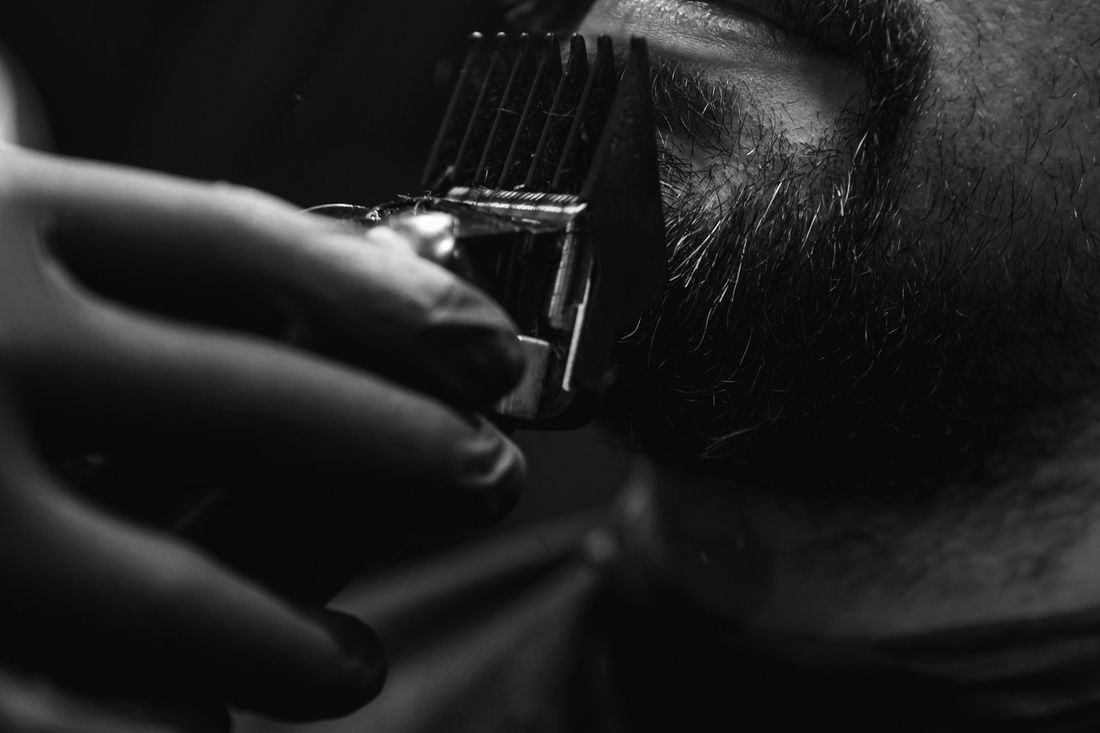
The fade is short and quick: skin or near-skin at the sideburn, blending into an even stubble within an inch or two. Very clean, very easy to live with, but it needs frequent touch-ups to stay crisp.
Short beard (a quarter to half an inch)
The most popular length for a beard fade. There is enough beard for a visible gradient, and the shape stays tidy for a couple of weeks.
Medium beard (half an inch to two inches)
The fade travels further, so the contrast is more dramatic. Ask for the sides of the beard to be kept a little shorter than the chin, which keeps the face from looking wide.
Long beard (two inches and up)
The fade sits only at the top, near the ears. Below that, the beard does its own thing. A clean fade at the top keeps a long beard looking groomed rather than wild.
Mistakes to avoid
- A fade that does not match the haircut. A high skin fade under a long, shaggy haircut looks disconnected. Match the two.
- A fade with a visible line. If you can see where one length stops and the next starts, the blend is not finished. Ask your barber to soften it before you leave.
- Going too high on a patchy beard. Taking the fade too far down the cheek can make a thin beard look thinner. Keep the short area higher up.
- Letting it go too long between visits. A grown-out fade just looks like a scruffy sideburn.
Beard fade vs. a regular beard trim
A regular beard trim takes length off and tidies the shape. A beard fade adds a gradient at the top, connecting the beard to the haircut. Most people who try a fade do not go back, because the haircut and beard suddenly look like they belong together.
What it costs at our shop
A beard fade is part of Classic & Beard at our shops: the full Classic haircut — clippers, scissors, edger and straight razor — plus beard sculpting and line work. It starts at $35 and is booked in about thirty minutes. If you only need the outline cleaned up between full visits, an Edge Up (from $12) handles the lines.
Skin care under a short beard
Short, freshly faded areas are close to the skin, and curly beard hair in particular can curl back in and cause bumps. The Mayo Clinic’s page on ingrown hair explains why. If you get razor bumps, tell your barber; they can keep the shortest part slightly longer.
The Tonawanda shop
Our Tonawanda shop at 578 Delaware St. does beard fades every day. Dorian Mayham (master barber), and Sam Balesteri and Zaid Blasiny (licensed New York State barbers) all do beard work. The shop opens at 7AM Tuesday through Friday and 8AM on Saturday.
Book online — choose Classic & Beard — or call 716-389-0192. For the rest of the menu, see the services page. Growing a beard to fade in the first place? Start with our beard-growth timeline.
The short version
Short at the sideburn, full at the jaw, clean at the neck. Matched to your haircut, booked every few weeks. That is a beard fade, and it is the easiest way to make a haircut and a beard look like one decision instead of two.