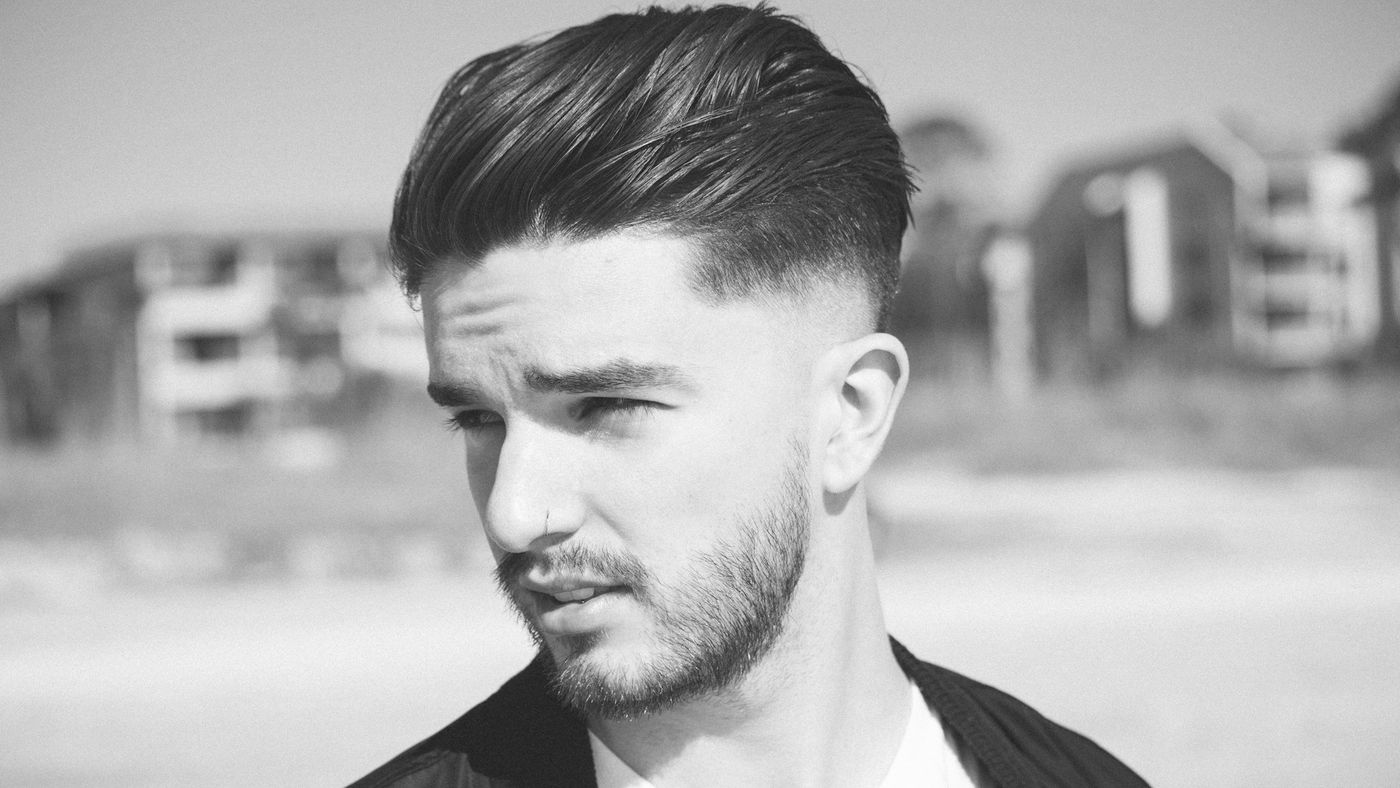
Let us start with something worth hearing: a receding hairline is one of the most ordinary things a barber sees. It is not a crisis, it is not rare, and it is not the end of good haircuts. In a busy week, a barber will cut dozens of heads with temples that have moved back a bit. The ones that look good have one thing in common — a haircut built around the hairline they have now, not the one they had at nineteen.
That is what this post is about. Not hair-loss treatments — that is a conversation for a doctor — but the cuts that work, the ones that do not, and how to ask for them.
First, is it actually receding?
Not every change at the temples is hair loss. Most men’s hairlines move back slightly in their late teens and twenties as they settle from a rounder, younger shape into a more angular adult one. That is often called a mature hairline, and it usually stops there.
A receding hairline, in the sense people worry about, keeps moving — typically deeper at the temples, sometimes with thinning at the crown too. The most common cause is male pattern hair loss, which is largely genetic. MedlinePlus, the National Library of Medicine’s health site, has a clear explainer on androgenetic alopecia if you want the science.
If you are worried about how fast it is changing, or you notice sudden patches or shedding, see a doctor or a dermatologist. They can tell you what is happening and what the options are. A barber cannot — but a barber can make it look good in the meantime, whatever you decide.

The principle: shorter usually looks fuller
Here is the counterintuitive part. When the temples start to recede, the instinct is to grow the top longer to cover them. It almost never works. Longer hair separates, shows the scalp underneath and draws attention to exactly the area you are trying to hide.
Shorter hair does the opposite. When the length on top is closer to the length on the sides, the contrast at the temples shrinks, and the hairline reads as a shape rather than a gap. That is why nearly every cut on the list below is short.
The cuts that work
1. The buzz cut
The most confident option there is. One length all over means there is no contrast at the temples at all. It looks deliberate, it needs no styling, and it works on almost any head. If you have been thinking about it, this is your sign.
Ask for: a guard number all over (start longer, you can always go shorter) and a clean edge up on the neckline.
2. The crew cut
Short sides, a little more length on top, slightly longer at the front. The extra length at the front can be pushed up or slightly forward, which softens the temples without trying to hide them.
Ask for: a taper on the sides and back, about an inch on top, a bit longer at the front, textured rather than blunt.
3. The textured crop
Short sides and a choppy, textured top pushed forward. The forward direction and the texture break up the hairline so the temples are less obvious. It is one of the most popular cuts for receding hairlines for good reason.
Ask for: a mid or low fade or taper, a textured top with some length at the front, styled forward.
4. The short taper with a messy top
Similar to the crop but without a defined fringe. The top is cut short with texture, so it can be styled up and slightly messy. Messy tends to hide recession better than neat.
5. The short side part (for mild recession)
If your temples have only moved back a little, a short side part on the side with the deeper recession can work well. Keep it short and natural rather than slick.
6. The buzz with a beard
A short buzz on top and a well-shaped beard underneath. The beard moves the visual weight of your face down, so the top gets much less attention. Our beard-growth timeline is useful if you are starting from clean-shaven.

The cuts to avoid
- Long, slicked-back styles. They pull everything away from the temples and put the hairline on display.
- Comb-overs in any form. Everyone knows. Everyone always knows.
- A long top over very short sides. The contrast makes thinning at the front and crown more obvious.
- Heavy, shiny products. Shine shows scalp. Matte, light products are kinder.
- A severely squared-off front line. A barber can line up a receding hairline, but forcing a perfectly straight, sharp front edge across temples that have moved back can look harsh. Ask for a natural front edge instead.
The edge up question
An edge up cleans the outline — front, temples, ears and neck. For a receding hairline, the rule is simple: follow the natural line, do not push it back. A good barber only removes what has grown outside your existing hairline and never takes the temples further back to make them look tidier. Our edge up explainer has more on how this should work, and if you have ever had a barber creep your hairline back, it is fine to say so before they start.
When to go all the way
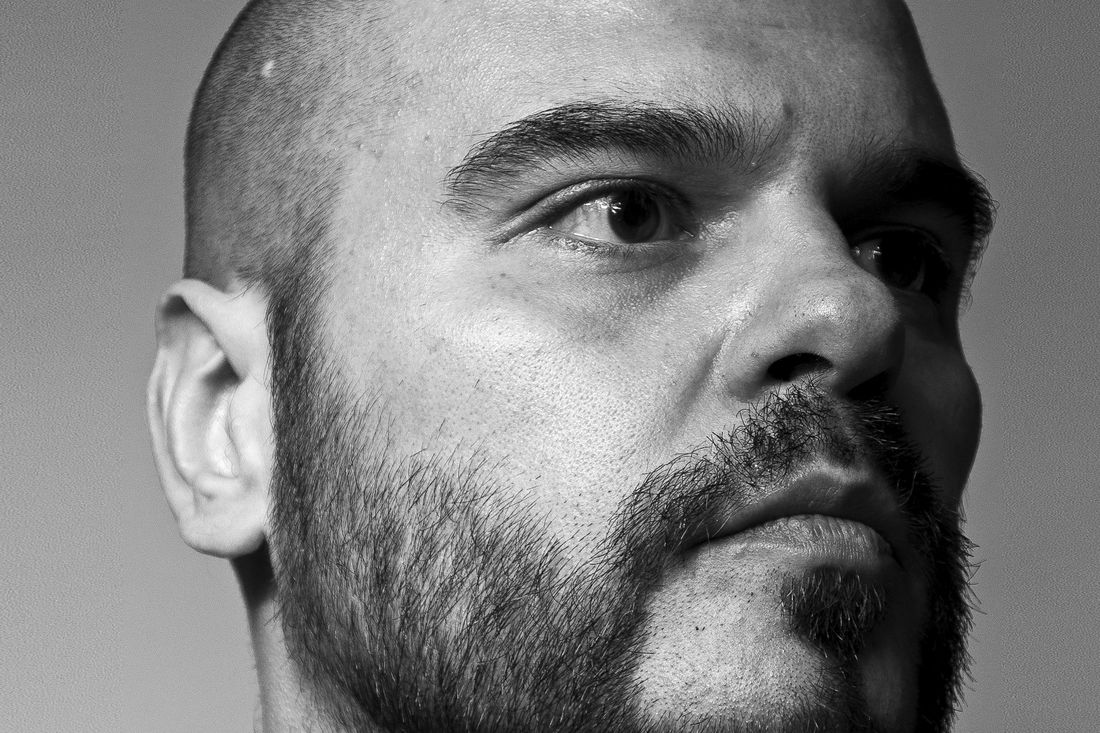
Some men reach a point where the most flattering option is to shave it all off. A clean head with a good beard, or even clean-shaven, can look stronger and more deliberate than any cut trying to manage what is left. There is no right time for this — only the point where you would rather stop thinking about it.
If you are curious, a very short buzz is a good test run: it shows you what your head shape looks like with almost nothing on it, and it grows back if you change your mind.
What about the crown?
For many men, thinning shows up at the crown as well as the temples. The same principle applies: shorter is usually kinder. A barber can also adjust how the hair at the crown is cut so it lies flatter and shows less scalp. Ask them to check it with a mirror at the end of the cut — it is the one spot you will never see properly on your own.
Product, done right
- Matte clay or paste adds texture and grip without shine. A pea-sized amount is plenty.
- Apply to dry or nearly dry hair, working from the back forward.
- Skip heavy gels and pomades unless your barber suggests one for a specific style. Shine shows scalp.
- No product at all is a perfectly good option for a buzz or a very short crop.
How to bring it up with your barber
A lot of men never mention their hairline to their barber, which makes the barber’s job harder. You do not need to make it a big conversation. Try one of these:
- “My temples are going back a bit — what would you do?”
- “I want something that does not make my hairline the first thing people see.”
- “I am thinking about going shorter. Talk me through it.”
A good barber will have an opinion and explain it. That is exactly what they are there for.
Small things that make a big difference
- Stay on schedule. Short cuts for receding hairlines look best fresh. Every four weeks or so, with an edge up in between if needed. Our post on how often to get a haircut has the schedule by cut.
- Use a matte product, sparingly, or nothing at all.
- Keep the brows tidy. Groomed brows draw the eye to the middle of the face. Our Williamsville shop offers brow, ear and nose waxing.
- Look after your scalp. If you go very short, sunscreen on your scalp in summer is a good habit.
A word on confidence
This is the part nobody puts in a haircut guide, but every barber will tell you it is true: the men who look best with a receding hairline are the ones who stopped trying to hide it. A short, sharp, well-kept cut on a guy who is comfortable with his head looks far better than a carefully arranged attempt to cover something everyone can see anyway.
Pick a short cut that suits you, keep it fresh, and stop checking the mirror for it. That is genuinely most of the battle.
Get it cut in Williamsville
Every cut on this list is a Classic at our shops — clippers, scissors, edger and straight razor, about thirty minutes, from $25. If you have a beard, Classic & Beard (from $35) adds beard sculpting and line work. Jon Palmeri, Dave Scolla, Michael Falzone and Bryan Castronova all work with receding hairlines every day.
The shop is at 6100 Main St., Williamsville. Hours are Tuesday through Friday 9AM to 6PM and Saturday 8AM to noon. Book online or call 716-389-0192. Bring this list, point at a number, and let your barber take it from there. For more short options, see our low-maintenance haircuts for men.