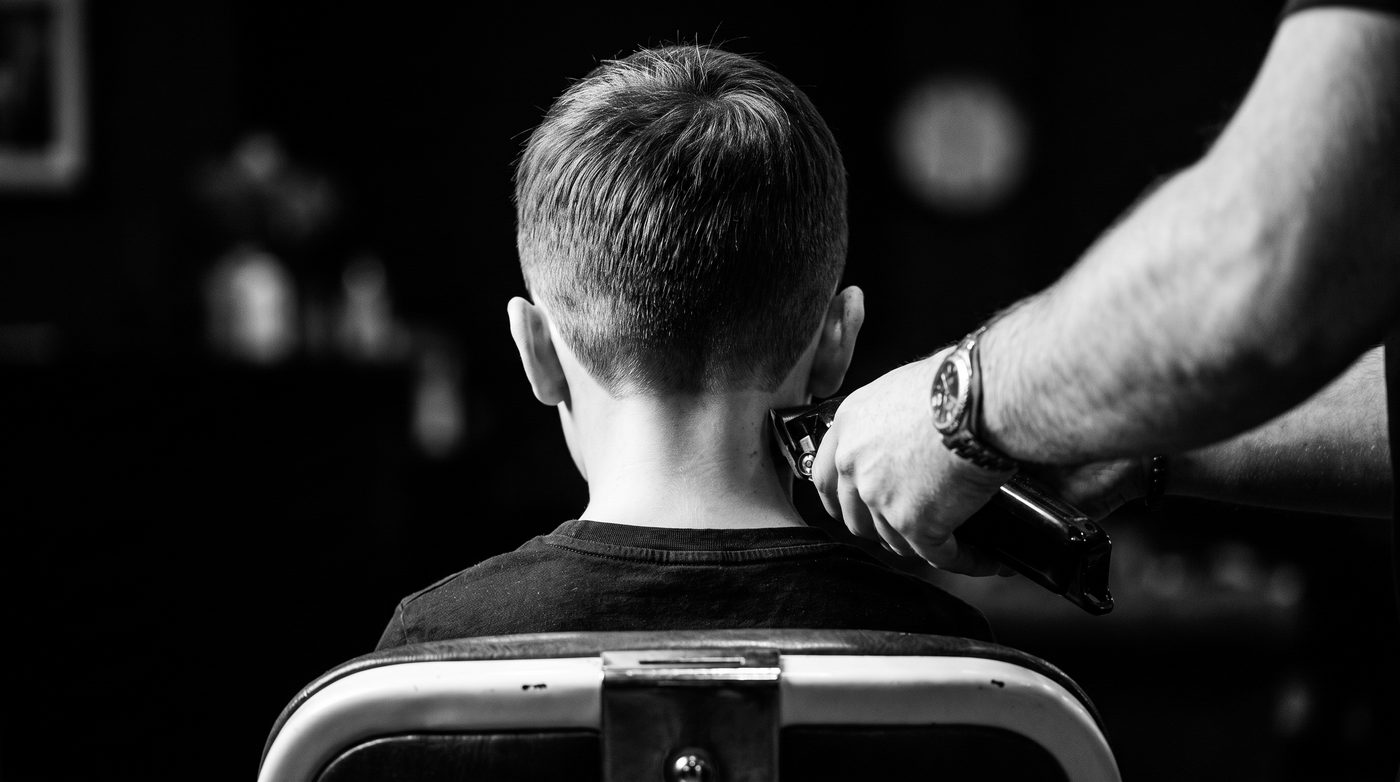
The short answer: most men should get a haircut every three to six weeks.
That is a wide range, and it is wide for a reason. The right number for you depends almost entirely on one thing — how short you keep the sides. The shorter the sides, the faster the cut loses its shape, and the sooner you need to be back.
So instead of one number, here is a schedule for every common cut, a few ways to stretch it, and how to turn it into a calendar so you never hit the week where everything suddenly looks shaggy.
Why short cuts need more visits
Hair grows at roughly the same rate wherever it is on your head — somewhere around half an inch a month. On a long cut, half an inch barely shows. On a skin fade, where the bottom of the sides is cut to almost nothing, half an inch is the difference between a sharp gradient and a fuzzy one.
That is the whole principle: the same amount of growth shows more on shorter hair. Plan your visits around your shortest point, not your longest.

The schedule, cut by cut
Skin fades and bald fades — every 2 to 3 weeks
The sharpest cut there is, and the one that grows out fastest. By week two the fade has lost its crispness. By week three it looks like a different, less deliberate haircut. If you love a skin fade, budget for it.
Low, mid and high fades (not to skin) — every 3 to 4 weeks
A little more forgiving. The gradient blurs more gently, so you get an extra week or so. Our fade explainer covers how each one grows out — it was written for parents, but the same rules apply on an adult head.
Classic taper — every 4 to 5 weeks
The workhorse. The sides get shorter toward the neck but stop before skin, so there is no hard line to grow back in. Most of our Williamsville regulars on a taper come in every four or five weeks.
Crew cut and buzz cut — every 3 to 5 weeks
Simple to maintain, but on a very short buzz, the outline is what goes first. Many people stretch these with a quick edge up in between.
Textured crop and short messy cuts — every 4 to 5 weeks
These are designed to look a bit undone, which hides early growth well. When the top starts to flop rather than stand, it is time.
Scissor cuts and medium-length styles — every 5 to 8 weeks
No clipper lines to blur, so these age the most gracefully. The top and the shape of the back are what eventually need attention.
Longer hair you are growing out — every 6 to 10 weeks
Even if you are growing it, you need regular trims to keep the shape and clean up the neck and ears. Skipping them entirely is how a grow-out turns into a mess.
Our post on nine low-maintenance haircuts for men rates each of these cuts on how long they hold up.
Beards are on their own clock
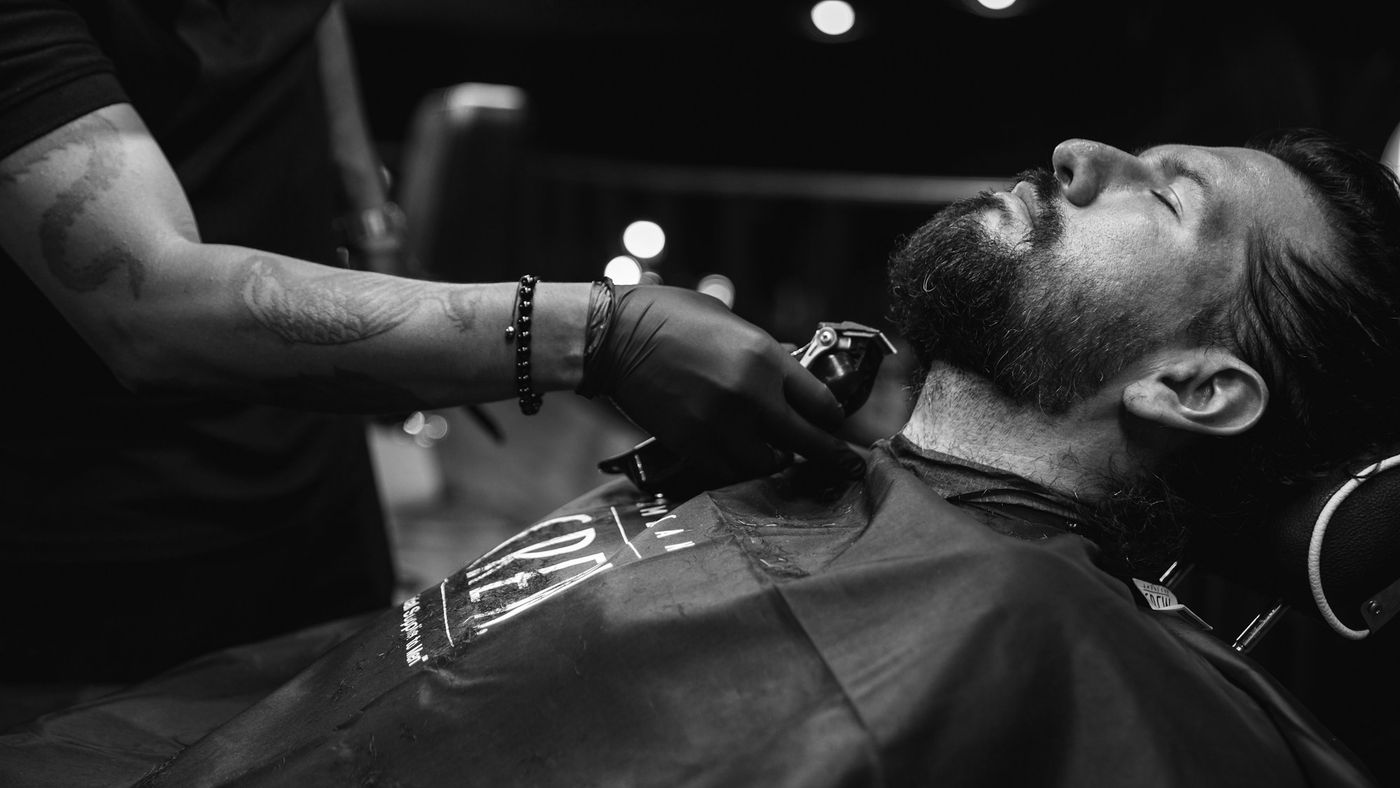
If you have a beard, it has its own schedule. Most beards look best with a trim and line-up every three to four weeks, which conveniently matches a typical haircut. That is why Classic & Beard (from $35) is one of our most booked services: the haircut and the beard stay in step. If you are still growing one in, our beard-growth timeline explains when to start trimming.
The signs you are overdue
If you do not want to count weeks, watch for these instead:
- Your ears are disappearing. Hair is starting to sit on top of them.
- The neckline has gone fuzzy, or hair is creeping down your collar.
- The top will not do what it did in week one. It flops, sticks up or needs more product.
- The fade has become a gradient of nothing in particular.
- You are wearing a hat more than usual, and not because of the weather.
Two of those at once, and you are due.
How to stretch the time between cuts
Get an edge up in the middle
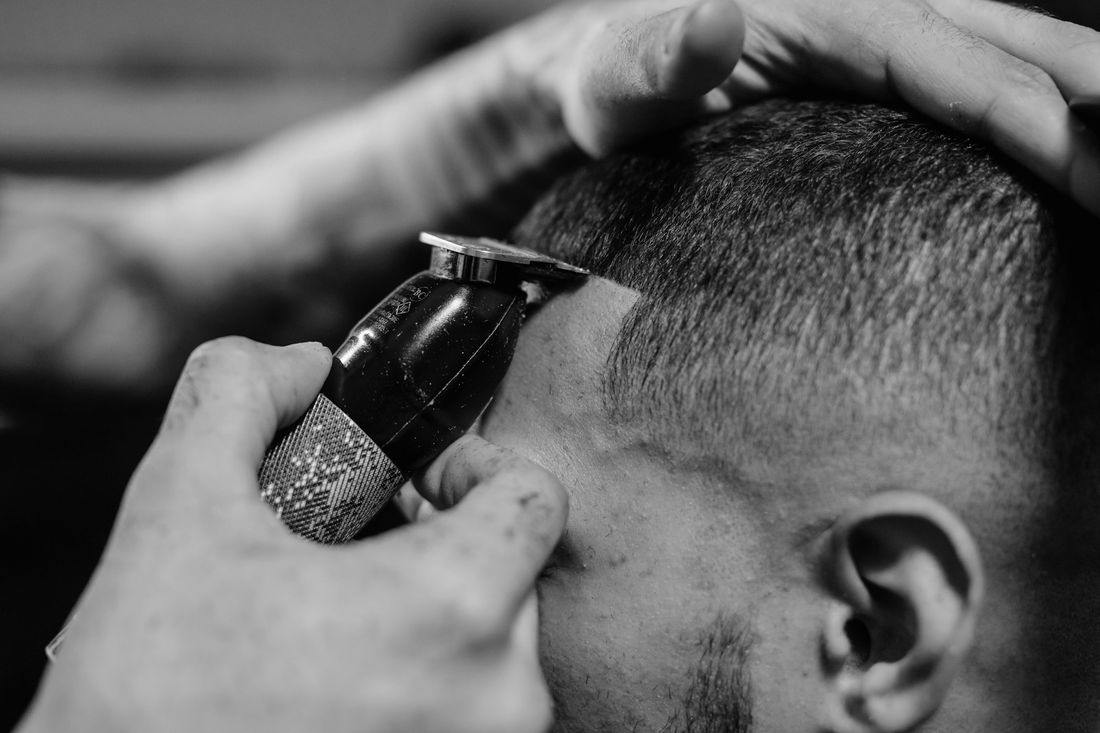
For short cuts, most of what makes a haircut look old is the outline. Our Edge Up — edging and a neck shave, ten to fifteen minutes, from $12 — resets the outline without touching the length. A lot of regulars alternate: full cut, edge up, full cut. Our edge up explainer has the details.
Pick a cut that grows out well
If you want to come in less often, ask your barber for a taper instead of a skin fade, or a slightly longer top. You trade a little sharpness in week one for a lot of extra life in weeks three to five.
Go easy on the products
Heavy product makes the top look flat and overdue faster. Less is usually better.
Do not cut it yourself
The classic mistake: you trim the neckline at home to buy a week, take it too high, and the next real haircut has to work around it.
Turning it into a calendar
The single best thing you can do is book your next cut before you leave the chair. Pick the same weekday, same time, same barber, every four or five weeks. Once it is in the calendar, you will never again notice on a Tuesday night that you need a haircut for Wednesday morning.
Some practical rhythms that work:
- The four-week rhythm: every fourth Saturday morning. Thirteen haircuts a year.
- The alternating rhythm: Classic, then an Edge Up two weeks later, then a Classic two weeks after that. Great for fades.
- The five-week rhythm: for tapers and longer cuts. About ten haircuts a year.
- The event-anchored rhythm: book three to five days before anything important — weddings, interviews, photos — and work the regular schedule around it.
At our Williamsville shop, you can book online at any time and see every barber’s open slots, which makes repeat bookings easy.
What about kids?
Kids’ hair grows at about the same rate as adults', so the same logic applies: shorter cuts need more frequent visits. We wrote a whole post on how often kids need a haircut, including how to plan around school pictures.
Does cutting it more often make it grow faster?
No. This is one of the most common myths there is. Cutting hair does not change how fast it grows from the scalp. What regular trims do is keep the ends neat and the shape intact, which makes hair look healthier and fuller. If you are growing your hair out, regular small trims still help, because they stop the shape from falling apart along the way.
Your schedule by life stage
- Students: budgets are tight and schedules are odd. A taper or crew cut every five weeks, with a cheap Edge Up in between if needed, keeps things sharp without a lot of visits.
- Office and client-facing jobs: a four-week rhythm is the sweet spot. You never look overdue in a meeting.
- Trades and outdoor work: many people go shorter and simpler, which grows out evenly and needs less upkeep.
- Retirees: a regular weekday slot, same barber, same time, is the easiest routine in the world.
Seasonal tweaks
- Summer: many people go a little shorter and a little more often. Heat and humidity make longer hair harder to manage.
- Winter: people tend to grow it a bit longer for warmth, and stretch the time between visits. Just do not skip the neckline — scarves and collars make a fuzzy neck more obvious.
- Holidays: December fills up fast. Book your pre-holiday cut early.
What it costs over a year
A Classic at our shops starts at $25. On a five-week rhythm, that is about ten cuts a year. On a four-week rhythm, thirteen. Add an Edge Up (from $12) halfway through each cycle and you get a sharp cut all year round for less than you might expect. Each barber sets their own rate, and you see it before you confirm. The full menu is on the services page.
The Williamsville shop
6100 Main St., Williamsville, NY 14221. Tuesday through Friday 9AM to 6PM, Saturday 8AM to noon, closed Sunday and Monday. Four barbers: Jon Palmeri (owner and master barber), Dave Scolla (master barber), and Michael Falzone and Bryan Castronova (licensed New York State barbers). Walk-ins are welcome; appointments are encouraged.
If you live in the village, the Village of Williamsville site is handy for knowing when Main Street events might make parking tight — worth a glance before a Saturday booking. Book online or call 716-389-0192. New here? Our Williamsville barber shop guide covers your first visit.
The cheat sheet
- Skin fade: 2–3 weeks
- Fade (not to skin): 3–4 weeks
- Taper: 4–5 weeks
- Crew or buzz: 3–5 weeks, with an edge up in between
- Textured crop: 4–5 weeks
- Scissor or medium length: 5–8 weeks
- Growing it out: a trim every 6–10 weeks
- Beard: 3–4 weeks