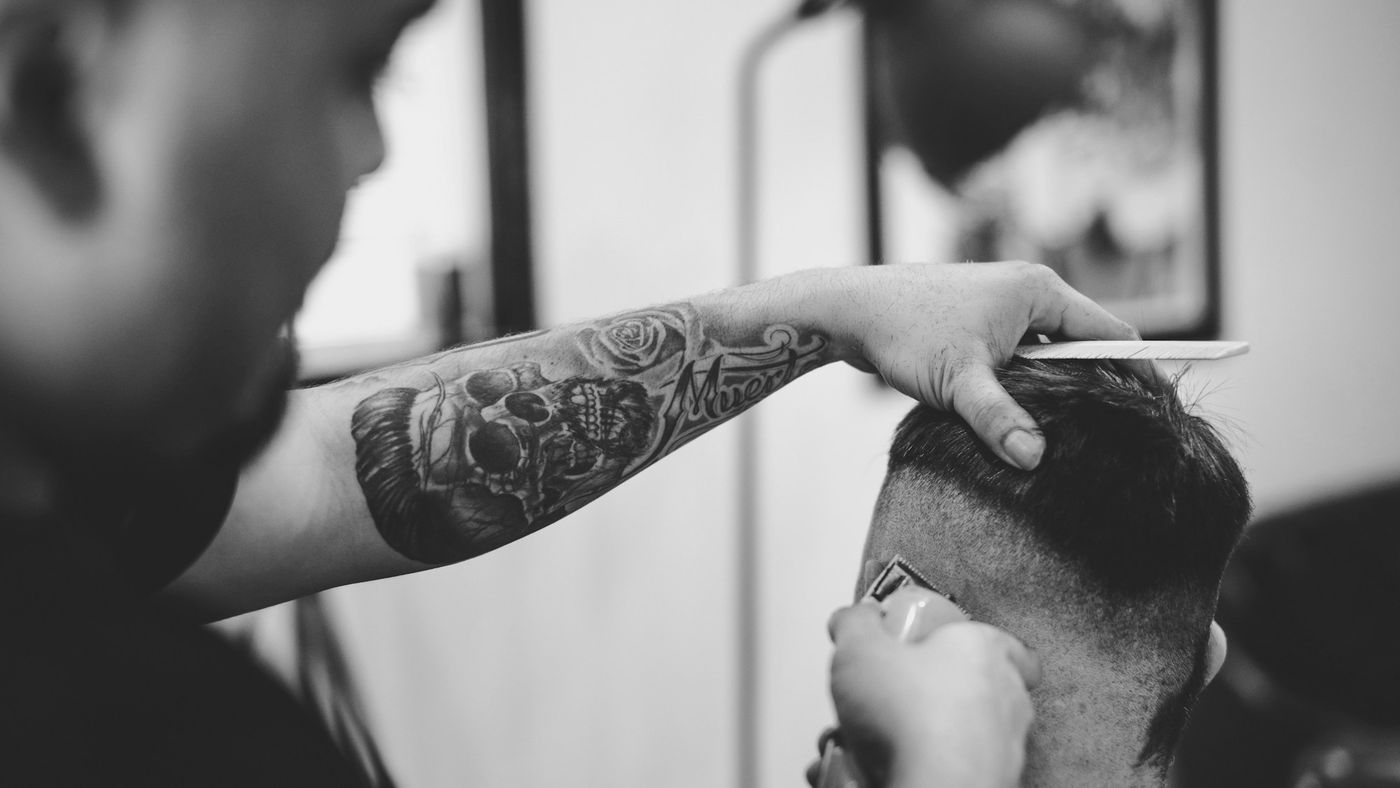
Every haircut-for-your-face-shape guide comes down to the same idea: a haircut is a frame, and a good frame balances what is inside it. For a round face, that balance comes from three simple moves:
- Add height on top, so the face reads as longer.
- Keep the sides tight, so the face reads as narrower.
- Add angles — a sharp hairline, a defined part, a structured beard — so the face reads as more defined.
That is the whole lesson. Below are the cuts that apply it, the ones that fight it, and how to tell if your face is actually round in the first place.
Is your face round?
Pull your hair back, stand in front of a mirror and look at three things:
- Length vs. width. On a round face, the face is about as wide across the cheeks as it is long from hairline to chin.
- The jaw. A round face has a soft, curved jawline, without a strong corner under the ears.
- The widest point. On a round face, the widest point is the cheeks.
If the face is clearly longer than it is wide, it is closer to oval. If the jaw has strong corners, it is closer to square. Many faces are a mix — that is fine. The rules below still help whenever your cheeks are the widest part of your face.

The geometry, one line at a time
Vertical lines lengthen
Height on top — hair pushed up, a quiff, a textured crop with volume — draws the eye upward and makes the whole face look longer. Even half an inch of lift makes a difference.
Horizontal width widens
Volume at the sides, especially around the ears and cheeks, adds width exactly where a round face already has it. That is why the sides should be short.
Angles define
Round faces are made of curves. A crisp hairline, a sharp temple, a defined part or a squared beard line adds some straight edges. Even a clean razor finish around the ears helps.
Asymmetry breaks up the circle
A side part or a top swept to one side interrupts the symmetry of a round face, which makes it look less round.
The cuts that work
1. Textured quiff with a fade
Short faded sides, a top with enough length to push up and slightly back. This is the textbook round-face cut: maximum height, minimum width. Ask for a mid fade and three to four inches on top, textured.
2. Side part with a taper
Tapered sides, a defined side part, some lift at the front. The part adds a straight line and asymmetry at the same time. Keep the sides short.
3. Textured crop with height
A short, choppy top, styled up rather than forward. A flat, forward crop can make a round face look rounder; the same cut with lift works much better.
4. Faux hawk (subtle)
Short sides, a strip of longer hair down the middle pushed up. Done subtly, it is all height and no width.
5. Short pompadour
Tight sides, the top swept up and back. A more polished version of the quiff. It does need a little product in the morning.
6. Undercut with a longer top
Very short sides with a clear disconnection from a longer top. The contrast adds structure. Best if your hair is thick enough to hold height.

The cuts that work against you
- Bowl cuts and blunt fringes straight across the forehead. They shorten the face and repeat the circle.
- Chin-length hair with volume at the sides. It widens the face at the cheeks.
- Very short, completely flat all-over buzz on a very round face. Not a disaster, but it removes the height that helps most. A buzz with a slightly longer top is better.
- Center parts with flat sides. Perfect symmetry emphasizes roundness.
- Long, curly volume all over, unless the sides are kept tighter than the top.
The beard is your secret weapon
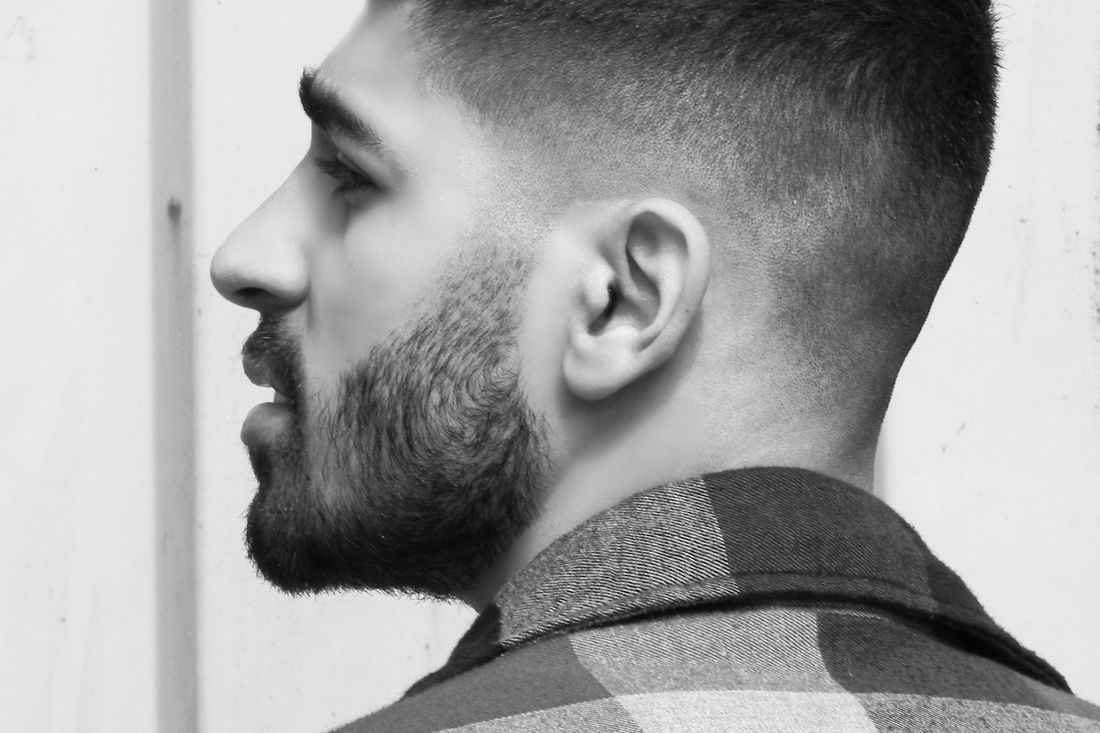
If you can grow one, a beard is the most powerful tool for a round face, because it lets you change the shape of your jaw.
- Keep the sides of the beard short, close to the cheeks.
- Leave more length at the chin. This makes the face look longer and more angular.
- Set a crisp cheek line and a defined neckline. Those are the angles a round face is missing.
- Avoid big, round, full beards that add width at the sides.
At our shops, that kind of shaping comes with Classic & Beard (from $35). If you are starting from clean-shaven, our beard-growth timeline explains when to start shaping.
Your hair type changes the plan
Thick, straight hair
The easiest to work with for a round face. It holds height well, so quiffs and pompadours stay up all day. Ask for texture on top so it does not look like a block.
Fine hair
Fine hair struggles to hold height. A shorter textured crop styled up, or a side part with a little lift, usually works better than a tall quiff that collapses by lunchtime. Matte product helps.
Wavy hair
Waves add natural volume. Keep the sides tight and let the waves do the work on top, styled up and back rather than flat.
Curly hair
Curls add width if they are allowed to grow at the sides. Keep the sides faded or tapered, and leave the length on top, where the curls add height instead.
Thinning hair
Go shorter overall, keep the sides tight, and use texture on top rather than height. A very tall style on thinning hair shows the scalp.
Glasses, too
Since you are already thinking about frames: angular frames — rectangular or squarish — tend to suit round faces better than round frames. It is the same principle: add some straight lines.
Styling for height in sixty seconds
- Towel-dry until damp, not wet.
- Work a small amount of matte product through the top, roots first.
- Push the front up and slightly back with your fingers.
- Optional: a quick blast with a hairdryer, pointing up at the roots, gives longer-lasting lift.
- Leave the sides alone. They are short for a reason.
Kids with round faces
A lot of young kids have rounder faces that lengthen as they grow, so do not overthink it. A simple short cut with a little length on top works well. Our post on nine boys’ haircuts is a better guide for kids than face-shape rules.
Round face, different occasions
- Work: a side part with a taper. Polished, adds a strong line, and works in any office.
- Weekends: a textured crop or quiff, styled with your fingers in under a minute.
- Weddings and events: a short pompadour with a sharp outline. Book it two or three days before so it has time to settle.
- Summer: go shorter on top, but keep a little length at the front so you can still add lift.
How to ask your barber
You do not need to say “I have a round face.” Just say what you want the haircut to do:
- “Short on the sides, and leave me enough on top to push up.”
- “I want some height — nothing that sits flat on my forehead.”
- “Keep the beard tight on the sides and a bit longer at the chin.”
A good barber will see your face shape anyway. That sentence just tells them what you are aiming for. If the numbers help, our clipper guard chart and fade vs. taper guide cover the sides.
Three quick mistakes to avoid
- Growing the sides out “for a change.” It adds width straight away. If you want a change, change the top.
- Flattening the top with a hat or heavy product every day. It removes the height that does the work.
- Letting the beard go round. A full, round beard on a round face repeats the shape. Keep the sides tight.
Upkeep
Round-face cuts depend on tight sides, and tight sides grow out first. Plan on a cut every three to five weeks. An Edge Up between cuts (from $12, ten to fifteen minutes) keeps the outline — and the angles — sharp.
The Tonawanda shop
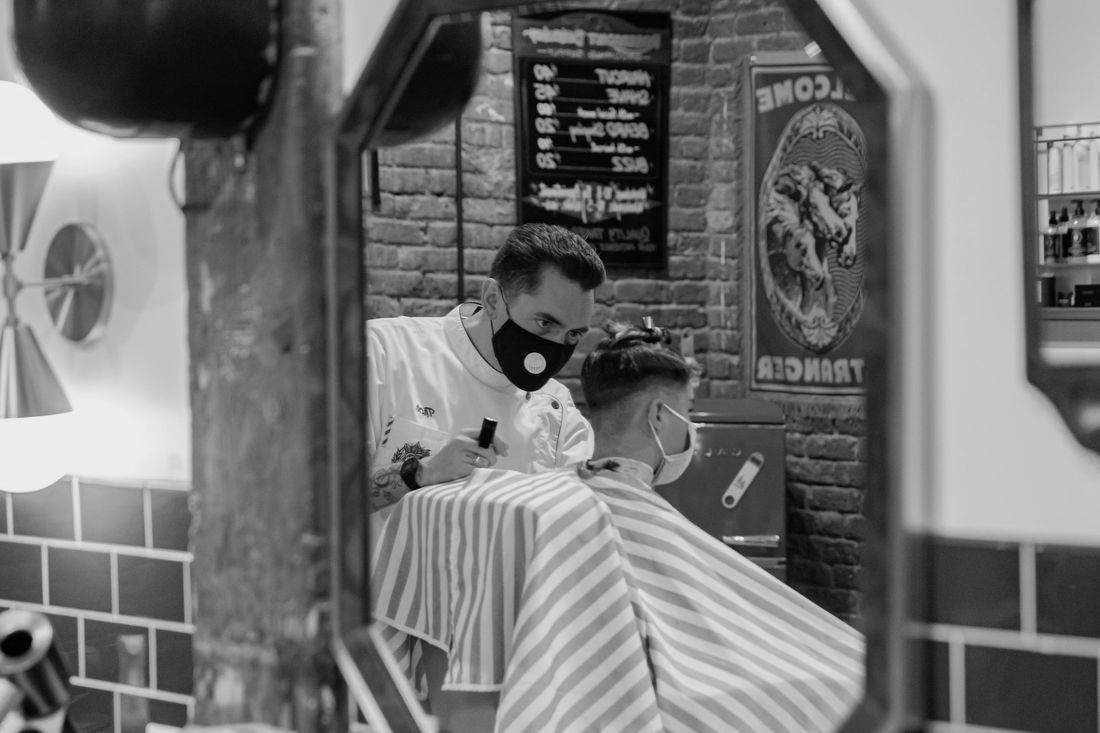
Every cut on this list is a Classic at our shops: clippers, scissors, edger and straight razor, about thirty minutes, from $25. Dorian Mayham, Sam Balesteri and Zaid Blasiny at our Tonawanda shop can do all of them. All three are licensed through the New York Department of State.
The shop is at 578 Delaware St., open Tuesday through Friday 7AM to 7PM and Saturday 8AM to 1PM. Book online or call 716-389-0192. Bring this list, point at a number, and let your barber take it from there.