Here is the difference in two sentences.
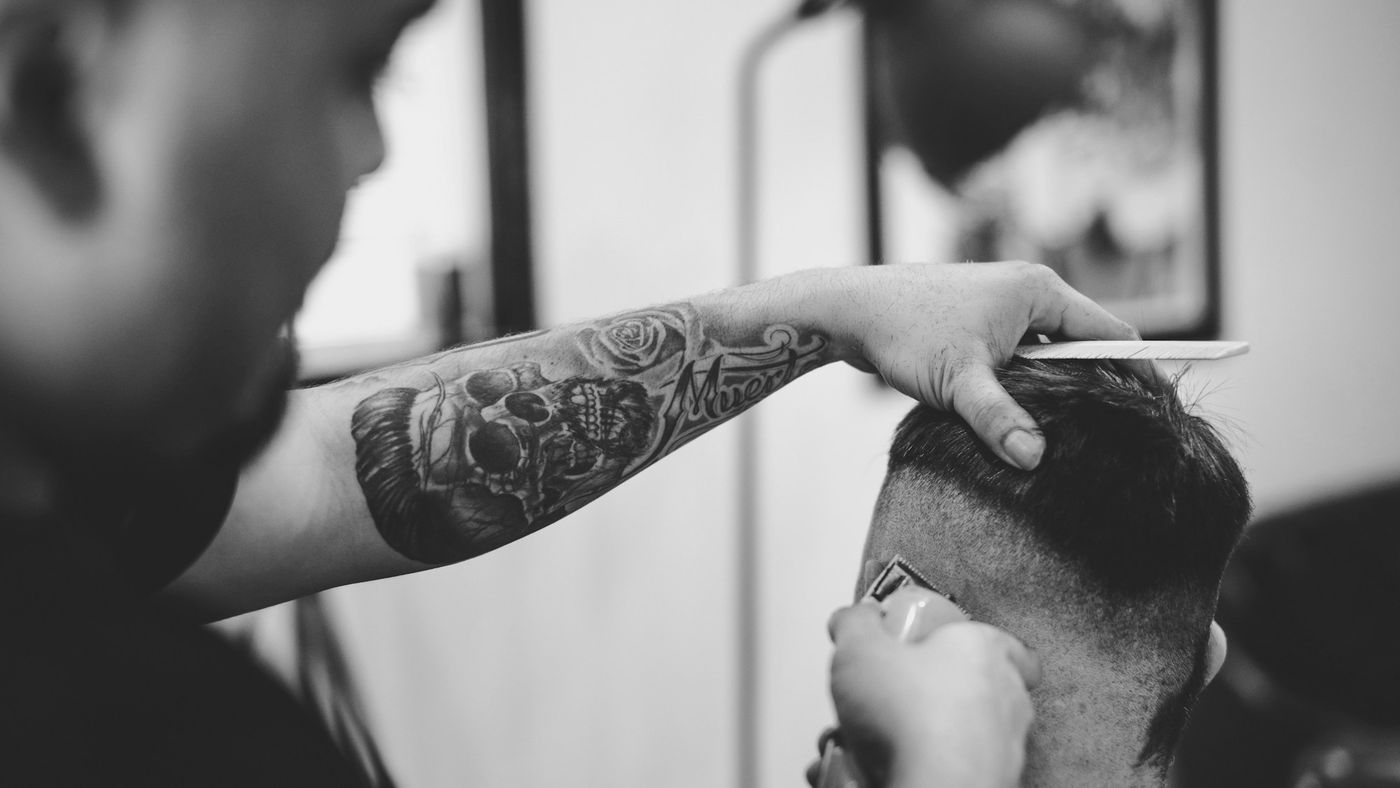
A taper gradually gets shorter as it goes down the sides and back of your head, and usually stops before it reaches bare skin. A fade does the same thing but keeps going — it blends all the way down to very short or bare skin, and does it over a more noticeable distance.
Both are gradients. A taper is a gentle one. A fade is a dramatic one. Everything else in this post is detail — and a simple decision path at the end to help you choose.
The taper, explained
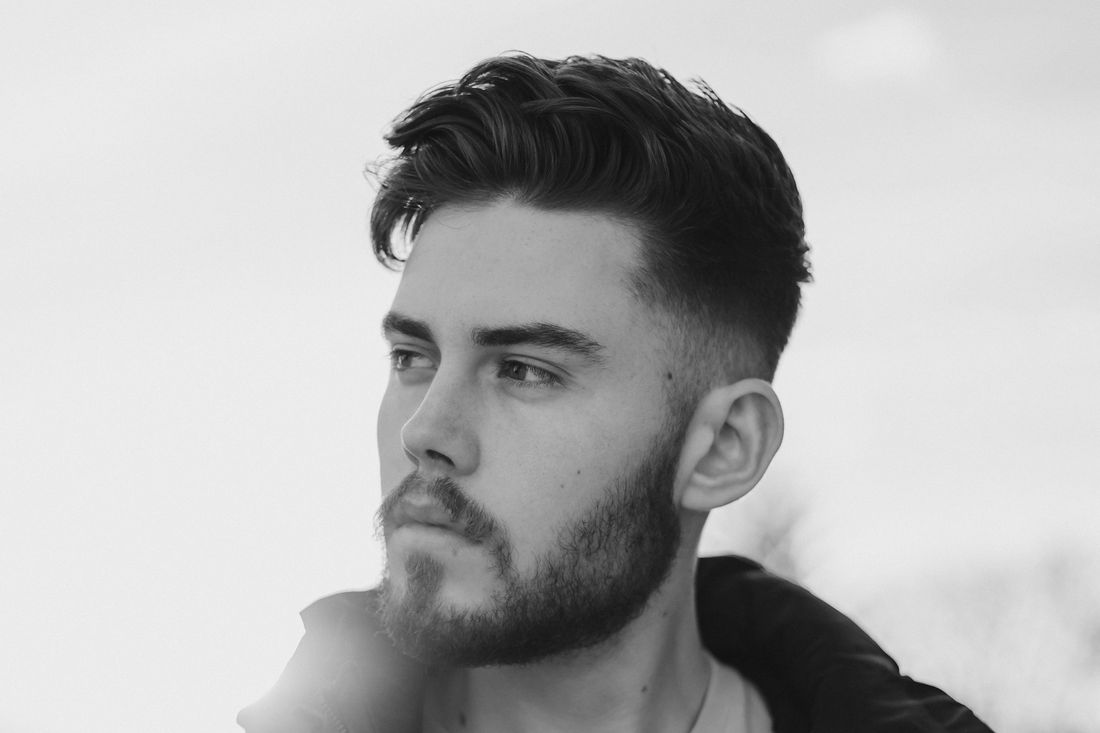
On a taper, the hair is longest near the top of the sides and gradually shorter toward the ears and neckline. At the very bottom, it is short — often a #1 or #2 — but there is still hair. The change is subtle; from across a room, a taper just looks neat.
Tapers are the most traditional men’s cut there is. They work in any office, on any age, and they grow out softly.
The fade, explained
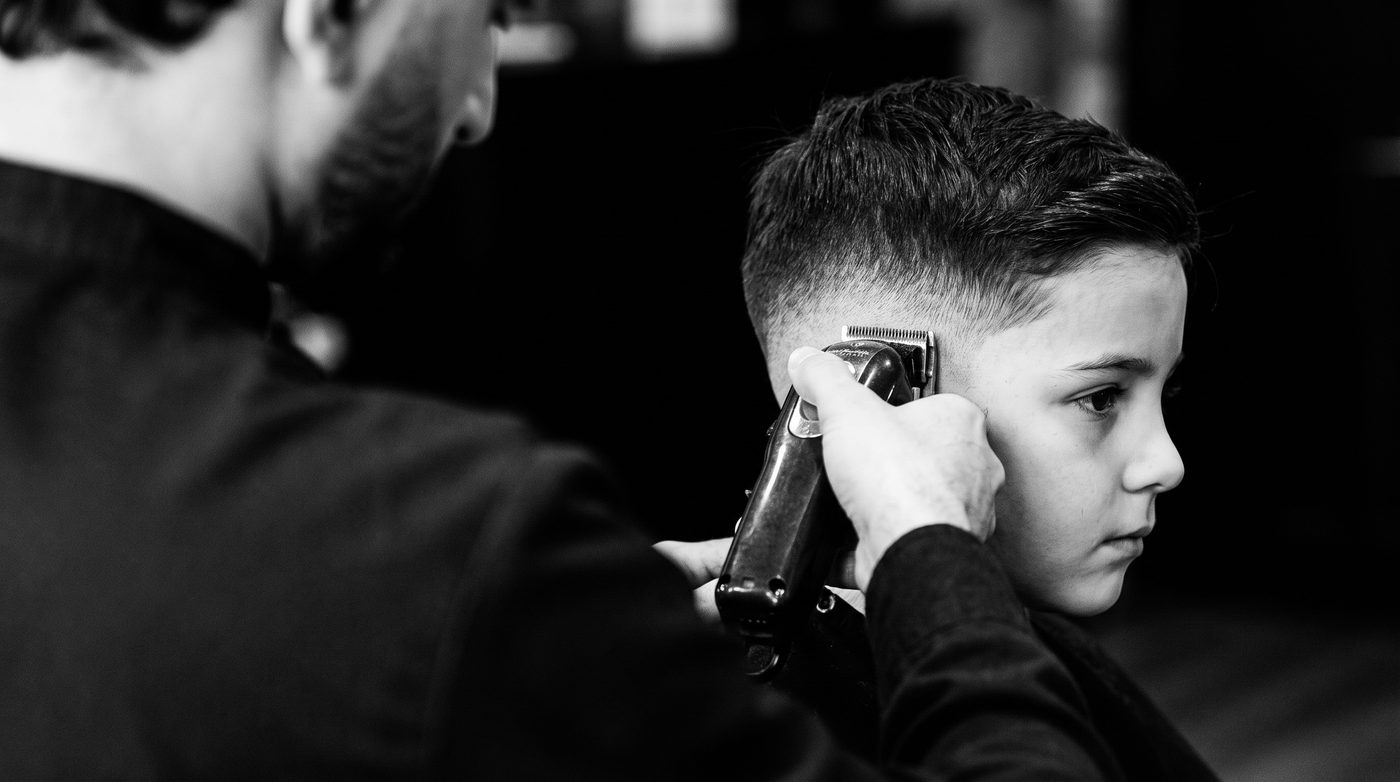
A fade takes the gradient further. At the bottom, the hair goes down to almost nothing, or to bare skin. The blend between short and long is the main visual feature — you can see the hair “fade” from dark to light.
Fades are named by where the shortest part starts:
- Low fade: the shortest part sits just above the ears and along the neckline. Subtle, closest to a taper.
- Mid fade: the shortest part reaches about halfway up the sides. The most common choice.
- High fade: the shortest part goes up to near the top of the sides. Bold and very clean.
- Skin fade (bald fade): any of the above, taken to bare skin at the bottom.
Our clipper guard chart shows what each number in a fade actually leaves on your head.
Low taper vs. low fade
This is the comparison people get stuck on, because the two look similar. The differences:
- How short it goes. A low taper usually stops at a short length. A low fade often goes shorter, sometimes to skin.
- How far the blend travels. A low taper changes length over a small area near the ears and neck. A low fade usually blends over a slightly larger area.
- How it grows out. A low taper grows out more gently. A low fade looks sharper on day one and loses that sharpness sooner.
If you are torn between the two, the low taper is the safer first choice. You can always go shorter next time.
How long each one lasts
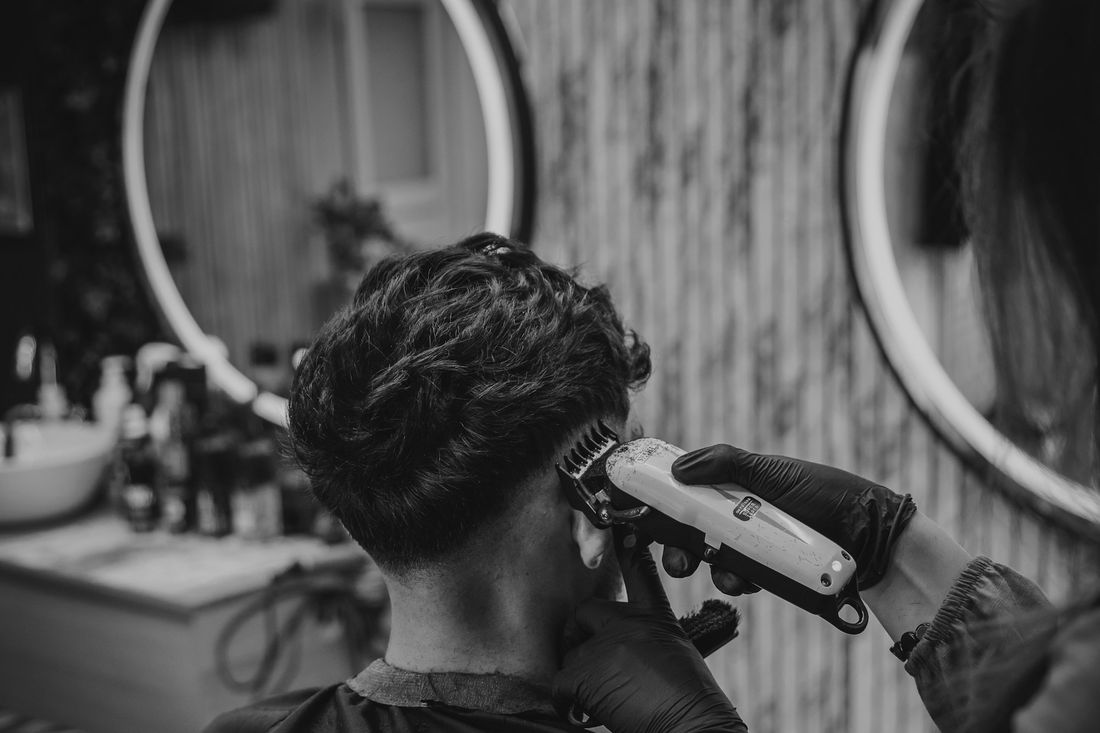
Hair grows about half an inch a month. On a fade, where the bottom is almost nothing, that growth shows fast.
- Skin fade: looks sharp for about a week, noticeably grown in by two to three weeks.
- Low or mid fade (not to skin): three to four weeks.
- Taper: four to five weeks, often longer.
So a fade is a bit more of a commitment. Our post on how often you should get a haircut has a full schedule by cut.
The decision path
Start at the top and follow the answers.
1. Do you want bare skin showing at the bottom?
Yes → you want a skin fade. Go to question 4 to pick the height.
No → keep going.
2. Do you want the change in length to be noticeable from across a room?
Yes → you want a fade, not to skin. Go to question 4.
No → keep going.
3. Do you want to come in every four to five weeks, not every two to three?
Yes → you want a taper. Done.
No, I don’t mind coming in more often → a low fade is a good middle ground.
4. How bold do you want it?
Subtle → low fade.
Balanced → mid fade.
Bold → high fade.
5. One last check: your workplace and your hair
Very conservative workplace? Lean taper or low fade. Thinning on top? A taper or a low fade often looks fuller than a high fade, because there is less contrast with the top. Very thick hair? Fades show off a clean blend beautifully on dense hair.
What goes on top
The fade or taper only covers the sides and back. The top is a separate decision, and it changes the whole look. Some common pairings:
- Taper + side part: the office classic. Neat, conservative, works everywhere.
- Taper + textured top: relaxed and low-effort. Good if you do not want to style it in the morning.
- Low fade + crew cut: short all over, sharp at the bottom. Very easy to live with.
- Mid fade + textured crop: one of the most popular cuts there is. Short, choppy top pushed forward or up.
- High fade + longer top: bold contrast. Needs a bit of styling and frequent visits.
- Skin fade + buzz: the cleanest, sharpest short cut possible. Also the fastest to grow out.
When you sit down, say the side and the top together: “mid fade, textured crop on top.” That is a complete haircut in five words.
Hair type makes a difference
- Thick, dark hair shows a fade beautifully — the blend from dark to light is very visible.
- Fine or light hair can make a high or skin fade look more bare than expected. A taper or low fade is often more flattering.
- Curly or coily hair takes a fade very well and looks especially sharp with a defined top.
- Cowlicks at the crown or nape can affect where a fade can sit cleanly. Your barber will work around them.
Fades and beards
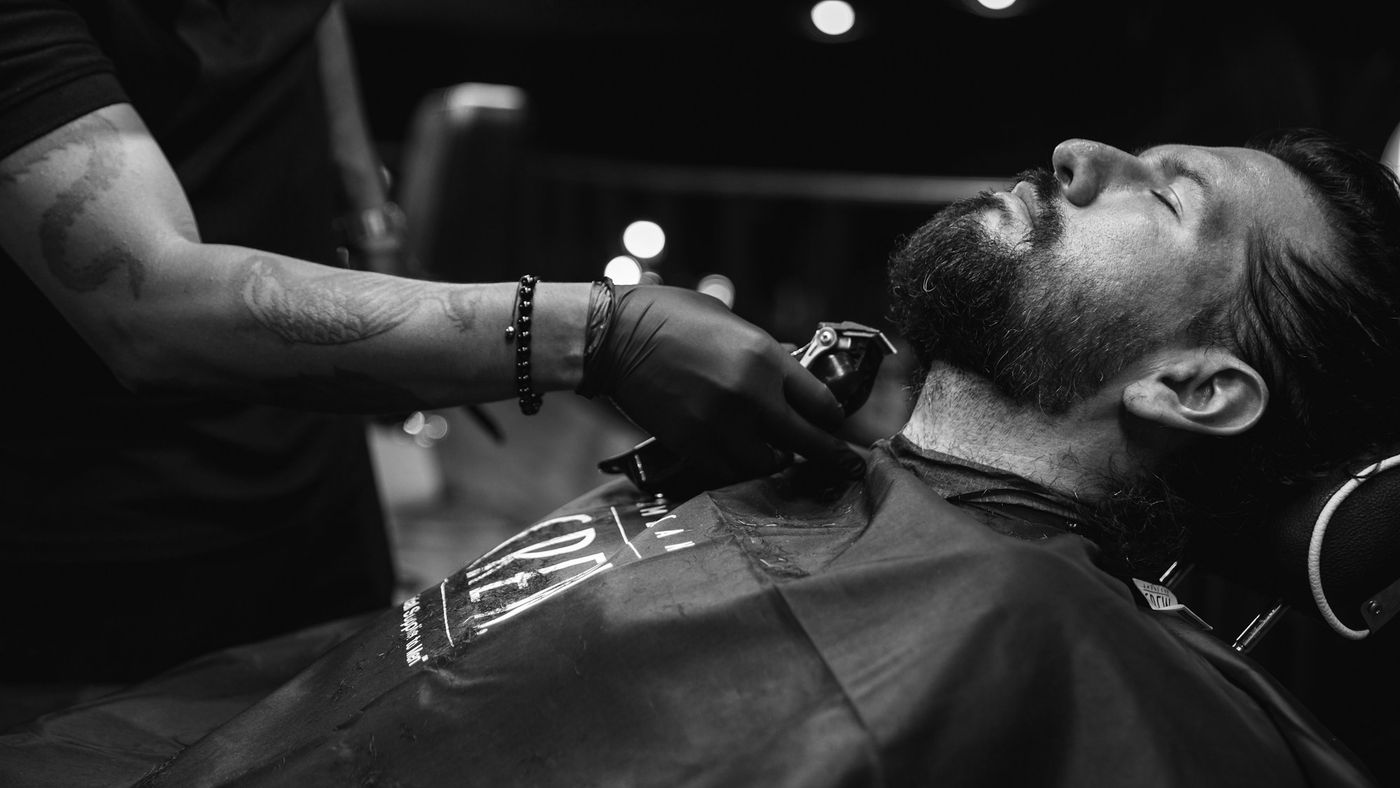
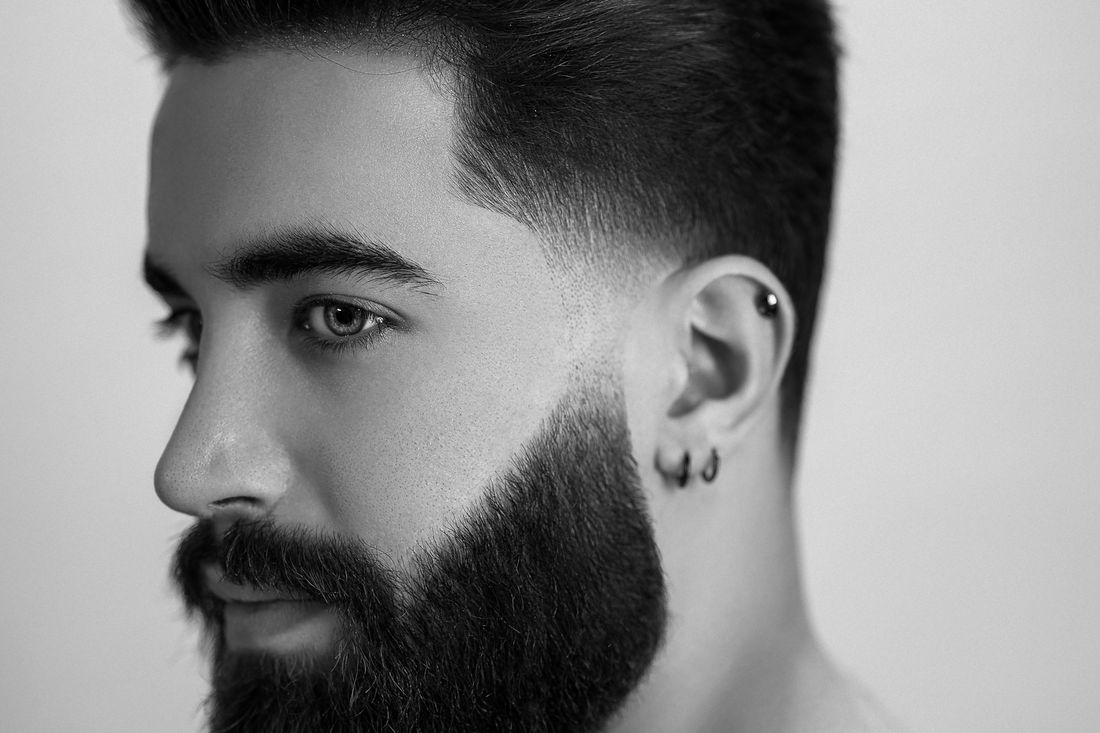
If you have a beard, ask for the fade to blend into it. This is often called a beard fade: the sideburns are taken short where they meet the haircut, then the beard gets gradually fuller as it comes down the jaw. It ties the haircut and the beard into one shape. At our shops, that is a job for Classic & Beard (from $35), which includes the full haircut plus beard sculpting and line work.
A taper can blend into a beard too — just more softly.
How to ask for each one
Say three things: the style, where it starts, and how short it goes.
- “A classic taper on the sides and back, nothing shorter than a #2, scissors on top.”
- “A low fade, down to a #½ at the bottom, keep the top about two inches.”
- “A mid skin fade, and blend it into my beard.”
Add one sentence about the top — how you wear it and how much should come off — and you have given your barber everything they need. If you want help with that part, our guide on low-maintenance haircuts for men covers what to do on top.
The edges make both look better
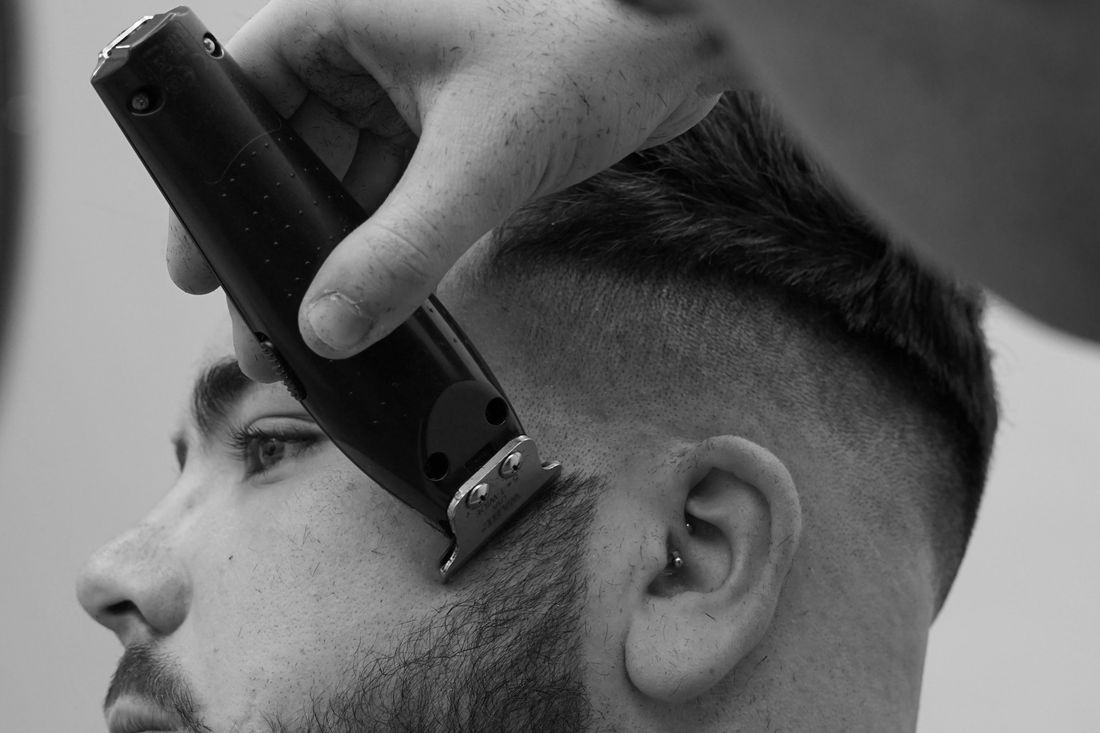
Whichever you choose, the outline — hairline, temples, ears and neck — is what keeps it looking sharp. Every Classic at our shops is finished with an edger and a straight razor. Between cuts, an Edge Up (from $12, ten to fifteen minutes) resets the outline and stretches either cut by a week or so.
Kids’ fades and tapers
The same rules apply to kids, with one extra consideration: kids grow out fast and do not sit still. We wrote a whole post on kids’ fades, including which heights work best for school.
Common mix-ups
- “I asked for a fade and got a taper.” Usually the barber played it safe because the request was not specific. Say how short at the bottom.
- “I asked for a taper and got a skin fade.” Say “nothing shorter than a #2” and the problem disappears.
- “My fade has a line in it.” That is a blending problem, and it can usually be fixed in the chair. Ask before you leave.
Keeping it sharp between cuts
- Book the next one before you leave — two to three weeks for a skin fade, four to five for a taper.
- Do not touch the fade with home clippers. Blending is the hard part, and a home pass usually leaves a line.
- Use less product on top as the cut grows; heavy product makes a growing fade look heavier.
- Get an Edge Up halfway if the outline is what bothers you most.
The Tonawanda shop
Our Tonawanda shop at 578 Delaware St. does fades and tapers all day. Dorian Mayham (master barber), and Sam Balesteri and Zaid Blasiny (licensed New York State barbers) will happily talk you through the choice in the chair. All three are licensed through the New York Department of State, and fades and tapers are bread-and-butter clipper work for every licensed barber. A Classic starts at $25 and takes about thirty minutes. The shop opens at 7AM Tuesday through Friday and 8AM on Saturday.
Book online or call 716-389-0192. Say “taper” or “fade” and where you want it to start, and you are halfway there. For more on the shop, see our Tonawanda barber shop guide and the Tonawanda page.