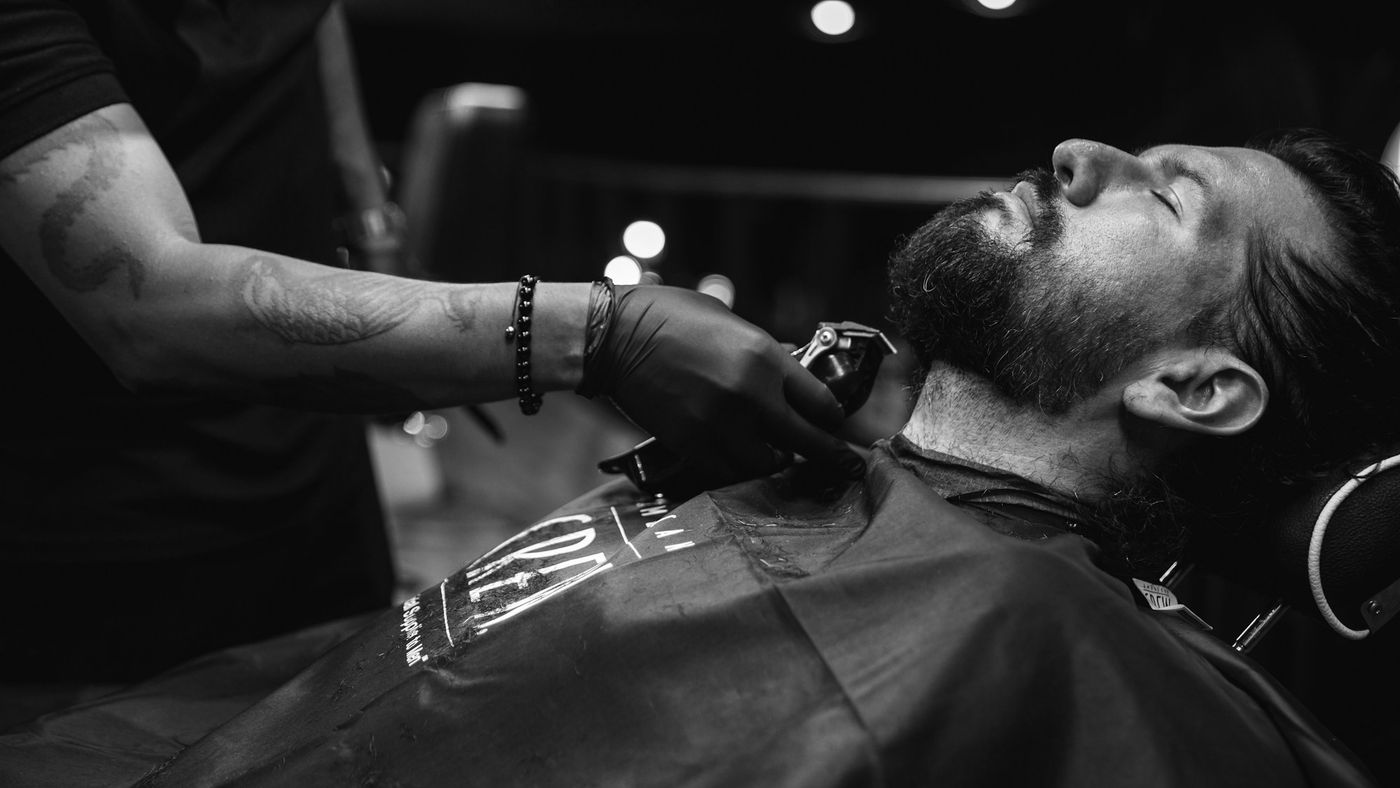
The shaving cream vs. gel argument usually gets settled by habit: you use whatever your dad had in the medicine cabinet, or whatever was on sale. That’s fine as far as it goes. But if you’ve ever wondered why one product leaves your neck calm and another leaves it red and tight, it helps to look at what’s actually happening on your face during a shave. So put on the imaginary lab coat for a few minutes. No beakers, no made-up experiments — just the basic mechanics of hair, water, skin and a sharp edge.
We’ll cover what any shaving product is supposed to do, then go through cream, gel, foam, soap and oil one at a time, then skin types, lather technique, shelf life, and how all of it fits into the Hot Towel Shave at our Williamsville shop.
What does shaving cream do? The three jobs of any lather
Strip away the marketing and every shaving product is trying to do three things.
- Hold water against the hair. A dry whisker is stiff and resists the blade. A whisker that has soaked up water for a few minutes softens and cuts with less pull. Shaving cream doesn’t soften hair by itself so much as it keeps water parked on your face long enough for the hair to absorb it.
- Create slip. The blade needs to glide. Slip is the slick, low-friction layer between steel and skin. Less friction means less drag, and less drag usually means less irritation.
- Provide cushion. Cushion is the body of the lather — the thickness that sits between blade and skin and keeps a light hand light. A thin, watery film gives you slip with very little cushion; a dense lather gives you both.
There’s a fourth, quieter job: visibility. White lather shows you where you’ve already shaved.
Keep those four jobs in mind — water, slip, cushion, visibility — because every product below is just a different trade-off among them.

Shave gel vs. shave cream: the main event
Shaving cream
Shaving cream is a thick, soap- or emulsion-based product, usually sold in a tube or tub, that you whip up with water, either with a brush or with your hands. When it’s lathered properly, it’s mostly air and water held in a stable structure. That’s its strength: it holds a lot of water against the whiskers and gives generous cushion.
What you notice: a dense, opaque, white lather; a cooling, wet feel; easy visibility. The trade-off: it takes a minute to build, and a lather that’s too dry or too thin won’t do much. Cream rewards technique.
Shave gel
Shave gel usually comes in a can or tube as a clear or tinted gel. Many canned gels are made to expand into a foam-like lather as you rub them in; others stay a translucent gel. Gel tends to feel slicker than cream right out of the gate, and many guys like that it’s quick and doesn’t need a brush.
What you notice: strong slip, a little less cushion than a good brushed cream, and — if it stays clear — the ability to see exactly where your edges are. That last part is why some men with a carefully shaped beard or a beard with no mustache like gel for cleaning up lines. The trade-off: clear gel hides missed patches, and a thin layer can feel slick while offering less protection than you’d think.
So, shave gel vs. shave cream? If you want speed and slip and you shave with a cartridge razor, gel is a reasonable choice. If you want cushion and a wetter, more forgiving shave, especially with a safety razor or straight razor, a properly built cream is hard to beat. Neither is a magic fix for irritation; technique matters more than the tube.
What does shaving foam do, exactly?
Canned foam is the lather that’s already been made for you. A propellant pushes the product out of the can and it puffs up into airy white foam on contact. It’s the fastest option there is: press, spread, shave.
What shaving foam does is the same job as cream — hold water, add slip, mark your progress — just with a lighter structure. Because it’s mostly air, it tends to offer less cushion than a dense brushed lather and can thin out or collapse on your face if you take your time. It works fine for a quick daily shave on cooperative skin. If your neck is touchy, foam is often the first thing worth swapping out.
Shave soap: the old-school puck
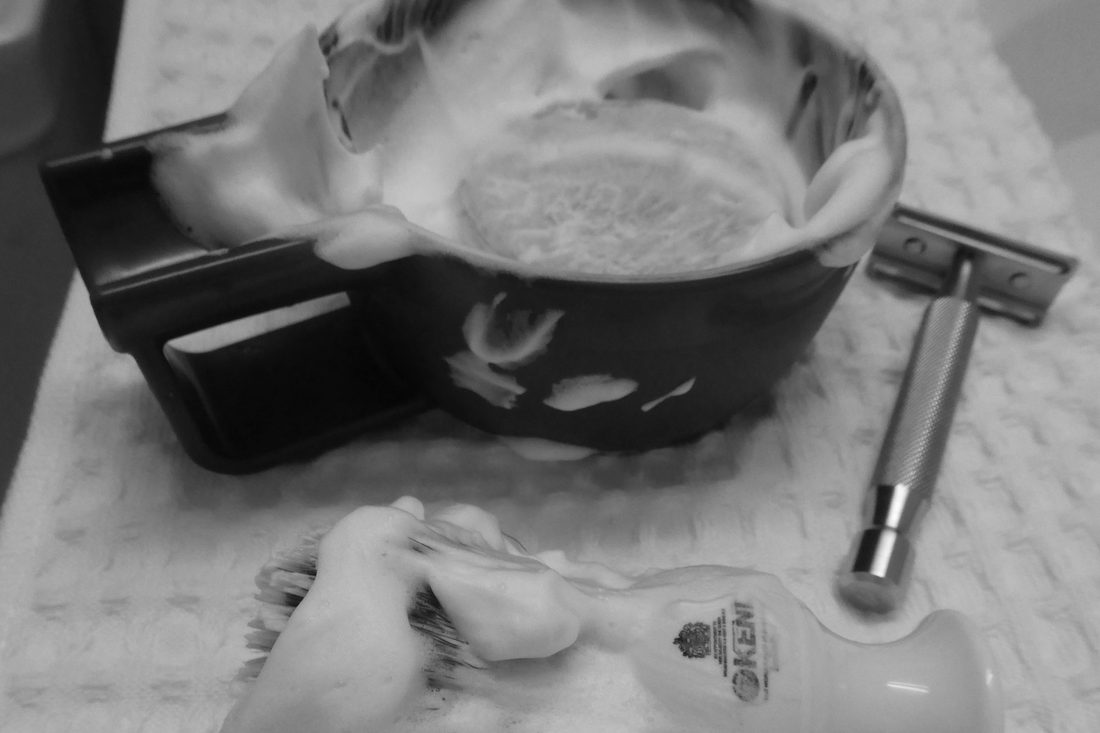
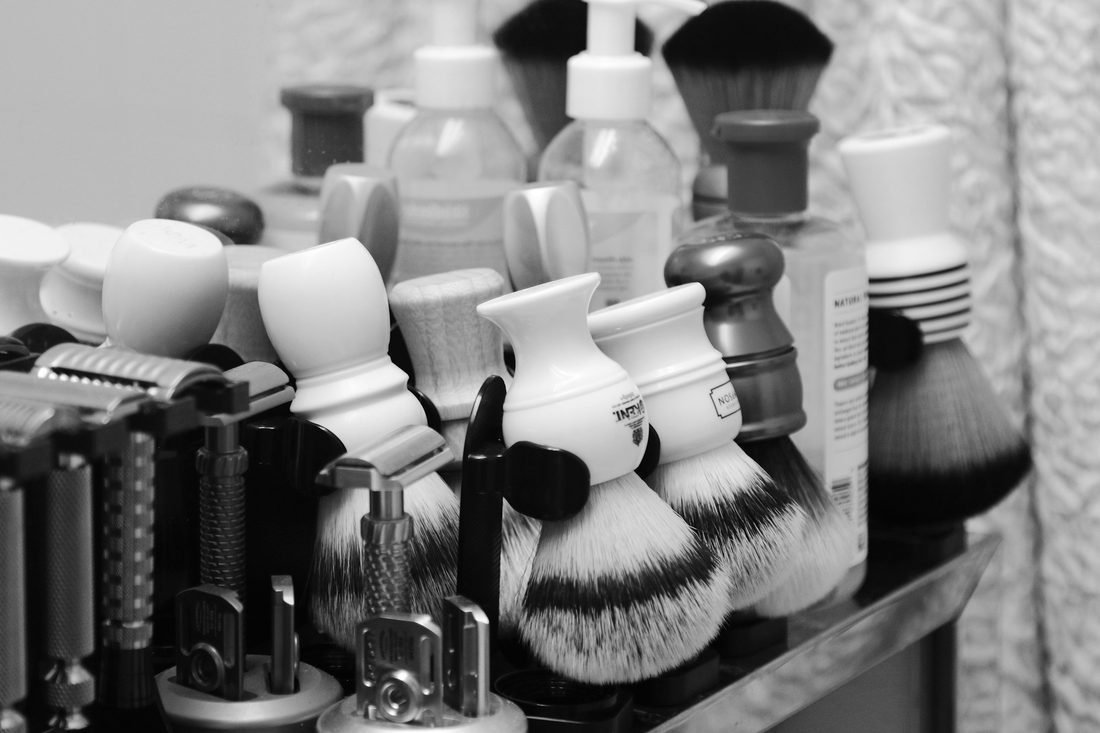
Shave soap is a hard puck or a soft "croap" (somewhere between cream and soap) that you load onto a wet brush and work into a lather in a bowl or on your face. Chemically, it’s in the same family as cream; practically, it takes more effort and gives you a lot of control over how wet or dense the lather is.
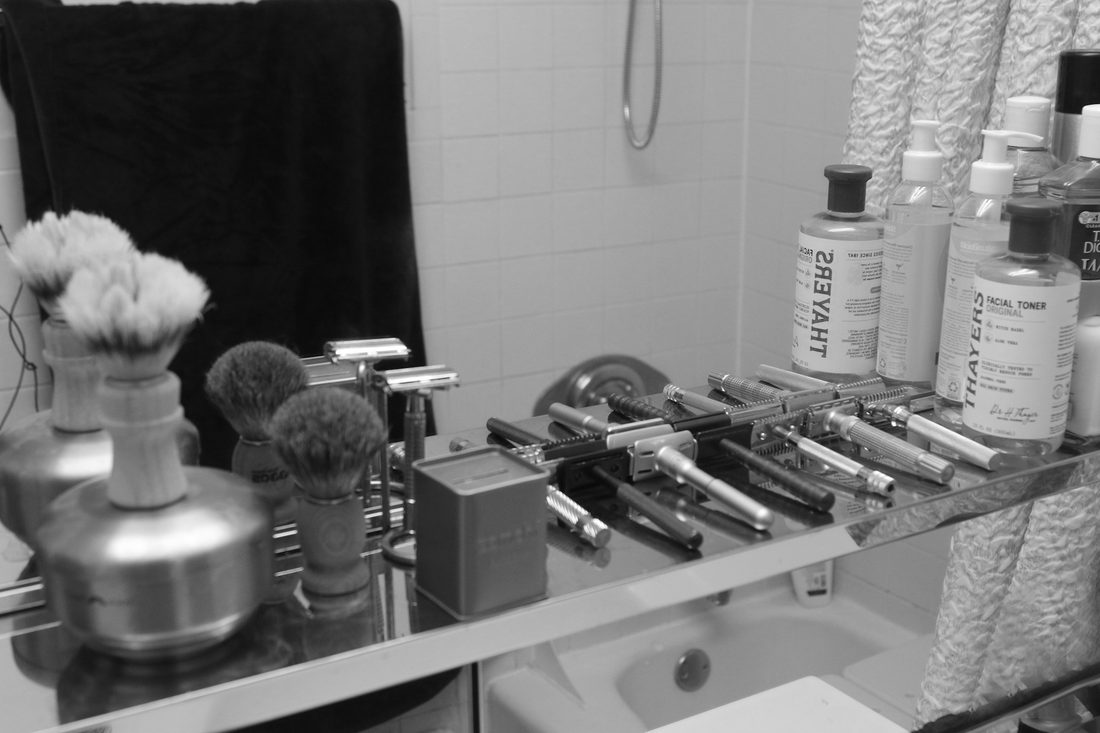
Soap tends to suit people who already enjoy the ritual — a brush, a bowl, maybe a safety razor. If you’re curious about that world, our comparison of straight razors vs. safety razors is a good place to start.
Shave oil vs. cream
Shave oil is a small amount of oil — often a blend of plant-derived carrier oils — rubbed onto wet stubble. It doesn’t lather. Instead of a thick cushion, it leaves a thin slick film on skin and hair.
Here’s the confusion: "shave oil" and "pre-shave oil" are often the same type of product used two different ways.
- As a pre-shave: a few drops go on damp skin first, then lather goes on top. The oil adds an extra layer of slip under the cream.
- As the whole shave: oil alone, no lather. Clear, very slick, minimal cushion.
Shave oil vs. cream comes down to cushion and visibility. Oil alone is handy for travel, for tidying a neckline, or for anyone who dislikes lather. But because it gives little cushion and you can’t see where you’ve been, many people find it less forgiving for a full face shave. Used underneath a cream, it’s a different story — that combination is exactly what we do in the chair.
A quick comparison, product by product
- Cream: high water, good slip, high cushion, white. Best all-rounder if you’ll lather it properly.
- Gel: moderate water, high slip, medium cushion, often clear. Fast, good for edges, easy to miss spots.
- Foam: moderate water, moderate slip, lower cushion, white. Fastest, can collapse, fine for easy skin.
- Soap: high water, good slip, high cushion when built well, white. Most effort, most control.
- Oil: low water, high slip, minimal cushion, clear. Best as a pre-shave layer; minimal on its own.
Matching the product to your skin
Skin isn’t one thing, and a product that’s comfortable for one face can sting another. A few general patterns:
- Sensitive or easily irritated skin: look for a lather that stays wet and cushiony, and consider fragrance-free options. Heavily scented products and menthol "cooling" effects feel nice to some people and irritate others. If you react to a new product, stop using it. The FDA has a useful overview of allergens in cosmetics, including fragrance.
- Dry skin: creams and soaps that leave skin feeling cushioned, followed by a moisturizer, tend to be more comfortable than airy foams. Lukewarm, not scalding, water helps too.
- Oily skin: most products work; you may prefer a gel or lighter cream that rinses clean.
- Coarse or curly beard hair, or razor bumps: the product matters less than technique — soak the hair well, shave with the grain, don’t stretch the skin hard, and avoid pressing. The American Academy of Dermatology’s guide to razor bump prevention is worth reading if bumps are a regular thing for you.
One careful note: we’re barbers, not dermatologists. If you have painful bumps, rashes that don’t settle, or skin that’s getting worse instead of better, a dermatologist is the right call.
How to build a lather that actually works
Most complaints about shaving cream are really complaints about under-built lather. Here’s the method in plain steps.
- Wet the hair first. Shave after a warm shower, or press a warm, wet washcloth on your face for a minute or two. The AAD’s how-to-shave guidance recommends wetting skin and hair to soften it before you apply shaving cream or gel.
- Use a small amount of product. An almond-sized dab of cream is usually plenty. More product isn’t more protection; more water and more work is.
- Add water gradually. With a damp brush or wet fingertips, work the cream in circles — in a bowl or right on your face — adding a few drops of water at a time.
- Watch the texture. You’re after something like soft yogurt: glossy, holds its shape, no big bubbles. Too airy and it collapses; too stiff and it’s dry and draggy; too runny and it slides off.
- Paint it on. Brush or rub it against the grain to lift the whiskers, then smooth it flat.
- Shave with the grain first. Light pressure, short strokes, rinse the blade often. Re-lather before any second pass.
For gel, the steps are shorter: wet face, a small amount, rub until it turns to lather (if it’s a self-foaming gel), shave. The same rules about water and light pressure apply.
Does shaving foam expire?
Yes, shaving products can go off, and it’s a fair question because cans and tubes tend to sit around for a long time. A few practical pointers, without pretending to know your specific product:
- Look for a date or symbol. Many cosmetic products carry an expiration date or a "period after opening" symbol — a small open-jar icon with a number like "12M," meaning roughly 12 months after opening.
- Trust your senses. A change in smell, color, or texture — separating, going watery, turning grainy, or a can that sputters instead of foaming — is a reasonable sign it’s time to replace it.
- Store it sensibly. Caps on, out of direct sun, and not baking next to a heater. Aerosol cans shouldn’t be left in a hot car.
Unopened products commonly last a good while, but there’s no single number that fits every formula. When in doubt, replace it. A fresh can of foam is cheaper than an irritated neck.
What happens after the blade: aftercare
Once the whiskers are gone, the job shifts to the skin. Rinse with cool or lukewarm water, pat — don’t rub — dry, and follow with something that suits your skin. Whether that’s a splash, a balm or a plain moisturizer depends on how your skin reacts; we break that down in our guide to alcohol-free aftershave.
How it all fits into a Hot Towel Shave at the shop
Our Hot Towel Shave is the full version of everything above, done for you. It starts at $25 and takes about 30 minutes, and it includes pre-shave oil, hot lather, hot towels and aftercare. You can read a complete walkthrough in What Is a Hot Towel Shave?, but in terms of the science we’ve been talking about:
- Hot towels handle the water job — warmth and moisture to soften the whiskers.
- Pre-shave oil adds that extra layer of slip under the lather.
- Hot lather provides cushion and visibility, and the warmth feels good.
- Aftercare finishes the skin once the blade is done.
If you mostly want a clean neck between cuts rather than a full face shave, an Edge Up includes edging and a neck shave in 10 to 15 minutes. You can see everything on the services page, and meet the team on the barbers page — each barber’s exact rate shows before you confirm a booking.
Coming from Clarence Town Park
Clarence Town Park sits out at 10405 Main St. in Clarence, east of our shop along Main Street. If you’re coming from there, it’s a straight shot west.
- Head out of the park toward Hillcrest Dr and onto Main St (NY-5), heading west.
- Stay on Main St for about 6.6 miles.
- Turn into 6100 Main St — the shop is on the left.
Plan on about 14 minutes and 6.6 miles via NY-5 W / Main St, depending on traffic. Open these directions in Google Maps
Book a shave in Williamsville
Our Williamsville shop is at 6100 Main St., Williamsville, NY 14221, open Tuesday through Friday 9AM to 6PM and Saturday 8AM to 12PM, closed Sunday and Monday. It serves Williamsville, Amherst and Snyder, and you’ll find our Tonawanda shop on the locations page. If you’re comparing shops in the area, Choosing a Barber Shop in Williamsville, NY explains what to look for.
Book online or call 716-389-0192. Walk-ins are welcome when there is an open chair — appointments are encouraged, so call 716-389-0192 to confirm someone is free.
The short version of the lab report: cream for cushion, gel for speed and slip, foam for convenience, soap for control, oil underneath for extra glide. Pick the one that fits how you shave, build it with enough water, and keep the pressure light.