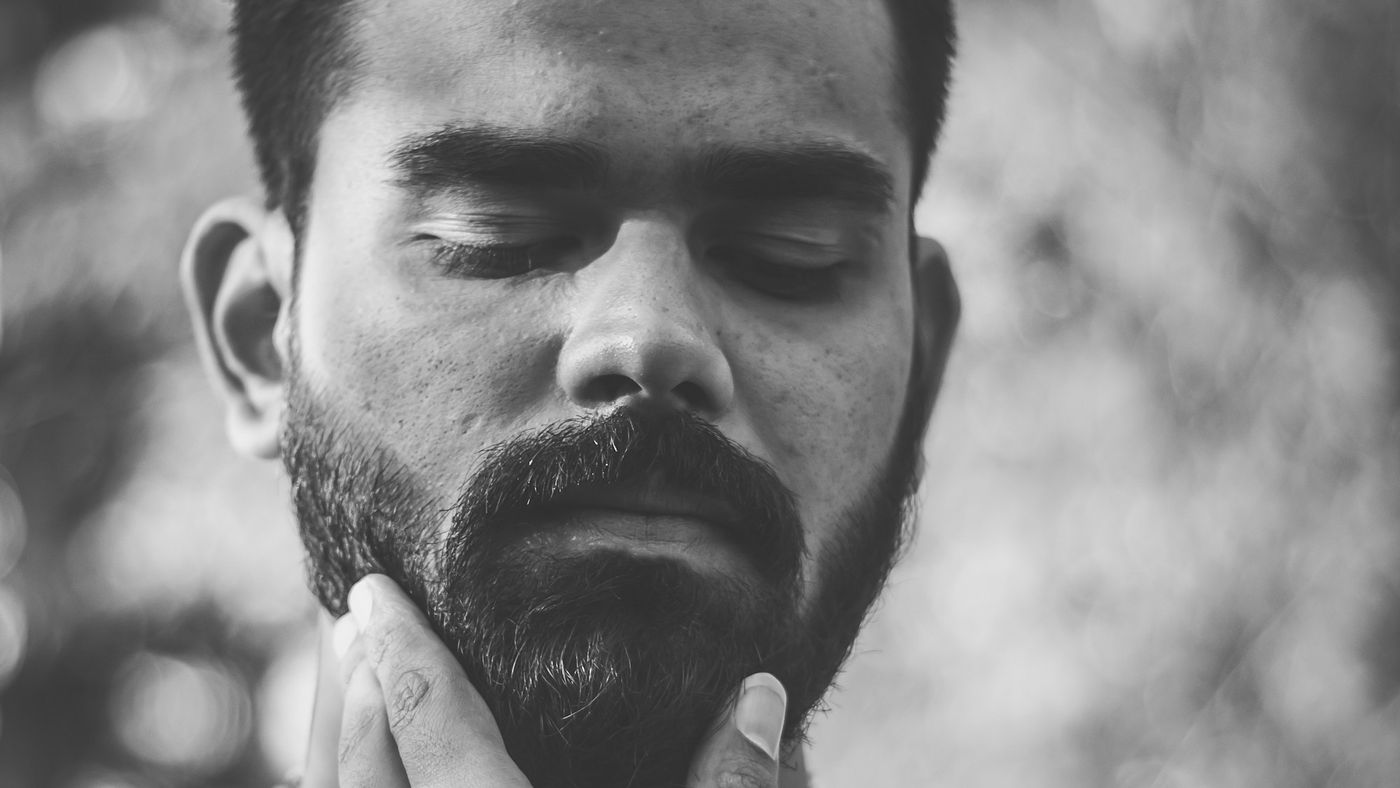
Beard dandruff is one of those things almost every bearded guy deals with at some point, and almost nobody talks about. You notice white specks on a dark sweater, or you scratch your chin and a little snowfall lands on the desk. It’s annoying, it’s a little embarrassing, and it’s very common. The good news: in most cases it’s manageable with a few changes to how you wash and care for the beard and the skin underneath it.
This is a field guide, so we’ll work it like triage. First figure out what you’re actually looking at. Then match the symptom to the likely cause. Then try the fix that fits. One honest note before we start: we’re barbers, not doctors. We see a lot of beards and the skin under them, and we can tell you what generally helps, but anything persistent, painful, red and spreading, or just not getting better belongs with a dermatologist.
Step one: what are you looking at?
"Beard flakes" can mean a few different things, and the fix depends on which one you have. Take a look in good light, ideally after you’ve been awake a while and haven’t just washed.
- Small, dry, white flakes that brush off easily, with skin that feels tight. This is usually plain dry skin under the beard.
- Larger, yellowish or greasy-looking flakes, sometimes with redness or itch underneath, often also showing up on the scalp, eyebrows or sides of the nose. This pattern is commonly associated with seborrheic dermatitis, the condition behind a lot of regular dandruff.
- Flakes plus itching in a new beard, in the first few weeks of growth. Often the skin adjusting, plus hair trapping dead skin. Our post on beard itch covers that stage in detail.
- Bumps, pain, pus, or patches that spread. Not a grooming problem. See a doctor.

Symptom: dry skin under the beard, small white flakes
Likely cause: The skin under the beard is dry, and the hair is holding onto the dead skin instead of letting it fall away unnoticed. Facial hair traps flakes the same way a sweater traps lint. The skin can also miss out on moisture because lotions you’d use on a bare face don’t get through the hair.
The Buffalo winter factor: If your beard dandruff shows up every November and fades by May, there’s a good chance the weather is part of the story. Cold air outside holds little moisture. Then you come inside to forced-air heat, which dries the air out even more. Add hot showers to warm up, and wind off the lake, and the skin under your beard spends the whole season getting dried out. When the skin under your beard is dry for months at a time, it flakes.
The fix:
- Wash the beard, but gently. Use a mild cleanser made for beards or faces, not a harsh bar soap and not your regular shampoo every day. Two to four washes a week is plenty for most guys; rinse with water in between.
- Turn the water down. Lukewarm, not hot. Hot water strips oil from skin, and dermatologists generally advise against very hot showers for dry skin.
- Pat dry. Don’t scrub with the towel.
- Moisturize the skin, not just the hair. Right after washing, while the beard is still slightly damp, work a few drops of beard oil down to the skin with your fingertips. A balm can help on longer beards. Not sure which? Read beard oil vs. beard balm.
- Brush or comb daily. A beard brush helps lift loose skin out and spread natural oils down the hair. Go easy — you’re grooming, not sanding.
- Consider a humidifier in the bedroom during heating season. It’s a simple change a lot of people find helpful for dry winter skin.
Give this two to three weeks before deciding whether it’s working. Skin doesn’t change overnight.
Symptom: greasy, yellowish flakes with redness or itch
Likely cause: This is the pattern often linked to seborrheic dermatitis. It tends to show up in oily areas — scalp, eyebrows, the folds beside the nose, behind the ears and the beard area. The American Academy of Dermatology has a clear overview of seborrheic dermatitis, and the Mayo Clinic’s page on dandruff explains the common causes and when to see a doctor. Both are worth reading before you buy anything.
A key point: this kind of flaking often isn’t about dryness, so piling on more oil doesn’t always help. Some guys find that heavy oils make it worse.
The fix:
- A medicated beard wash for dandruff. Over-the-counter medicated dandruff shampoos contain ingredients such as zinc pyrithione, selenium sulfide, ketoconazole, coal tar or salicylic acid. Many people use the same type of product on the beard that they’d use on the scalp. Follow the label directions, keep it out of your eyes, and rinse well.
- Treat the scalp too. If you have scalp dandruff, the beard and scalp often flare together. Treating one and ignoring the other is a common reason it keeps coming back.
- Go lighter on heavy products while you’re getting it under control.
- Patch-test anything new. Some people react to fragrances or other ingredients in grooming products. The FDA explains allergens in cosmetics and why patch-testing a new product is a smart habit.
If a few weeks of consistent over-the-counter care doesn’t help, or the skin is very red, cracked, sore or spreading, make the dermatologist appointment. They have options a barber doesn’t, and they can confirm what it actually is.

How to get rid of beard dandruff: a simple weekly routine
If you’re asking how to get rid of beard dandruff and you just want a plan, here’s a reasonable starting point. Adjust based on which symptom above fits you.
- Two to four times a week: wash the beard with lukewarm water and a gentle beard or face cleanser. If you have the greasy, yellowish type, swap in a medicated dandruff shampoo on some of those days, following the label.
- After every wash: pat dry, then work a few drops of beard oil to the skin (skip or reduce this if oils seem to make things worse).
- Every day: brush or comb the beard once or twice, and rinse it with water if you’ve been sweating or eating messy food.
- Every night in winter: run a humidifier if your bedroom is dry.
- Every few weeks: get the beard cleaned up. Trimming split, frayed ends and keeping the shape tidy makes flakes less likely to get caught and show.
That’s how to stop beard dandruff for most guys with ordinary dry skin. For the seborrheic type, think of it as management: it can come and go, and keeping up the routine is what keeps it quiet.
Is there a beard dandruff cure?
People search for a beard dandruff cure the way they’d search for a cure for a cold — one product, one week, done. That’s not usually how it works. Dry-skin flaking typically improves once you change washing and moisturizing habits and get through the dry season. Seborrheic dermatitis is generally considered a long-term condition that can be controlled rather than cured once and for all, according to the AAD. Neither needs to be a big deal, but expect a routine, not a miracle.
Be skeptical of anything promising instant results, and don’t use harsh home remedies on your face. If you’re unsure, a dermatologist can tell you what you’re dealing with and what’s safe for your skin.
Symptom: a yellowing beard
A yellowing beard comes up a lot, especially with gray, white or light-colored beards, which show discoloration more easily. It’s usually cosmetic, not medical. The common causes:
- Smoke. Tobacco smoke stains hair, especially around the mouth and mustache.
- Sweat and skin oils. Over time, natural oils build up and can give the hair a yellowish cast.
- Product buildup. Oils, balms and waxes that never fully wash out can collect and discolor the hair.
- Minerals in your water. Hard water can leave a residue on hair that dulls or tints it.
- Sun. Sun exposure can change the tone of hair, particularly lighter hair.
The fix:
- Wash regularly with a beard cleanser so oils and sweat don’t build up.
- Clarify occasionally. A clarifying shampoo every week or two helps strip product buildup. It can be drying, so follow it with a little oil.
- Rinse well. Take an extra 30 seconds under the water after washing. Residue left behind is one of the easiest causes to fix.
- Use less product. A few drops is enough. More doesn’t mean softer.
- Ask a pro. If the color still bothers you, ask your barber at your next visit. We can look at what’s going on and point you in the right direction.

Don’t confuse it with beard itch
Itch and flakes often travel together, but they’re not the same thing. Beard itch is most common during the first few weeks of growth, when short, coarse hairs curl back toward the skin and dead skin gets trapped. Beard dandruff can show up at any length, in a beard you’ve had for ten years. If your main complaint is itching in a newer beard, start with our beard itch guide. If it’s flakes in an established beard, you’re in the right place. And if the itch comes with red bumps where hairs seem to be growing back into the skin, that may be ingrown hairs — a different problem again.
How a barber can help
We can’t diagnose skin conditions, and we won’t pretend to. But a good beard appointment helps with the grooming side of beard dandruff in a few practical ways:
- Cleaning up split and frayed ends that catch flakes.
- Shaping the beard so it’s easier to wash and brush down to the skin. If you’re unsure where yours should stop, our beard neckline guide explains it.
- Talking through which product types suit your skin and beard length.
- Flagging anything that looks like it needs a doctor’s eye.
The Classic & Beard is 30 minutes, starting at $35, and includes full beard sculpting and line work along with your cut. If you’d like ideas for a shape that’s easier to keep clean, browse our beard trim styles. For a closer, cleaner neck and cheek line, a hot towel shave uses pre-shave oil, hot lather, hot towels and aftercare. Full menu and starting rates are on our services page, and you’ll see each barber’s exact rate before you confirm.

Beard dandruff help at our Tonawanda shop
Our Tonawanda barbershop is at 578 Delaware St. Dorian Mayham, Sam Balesteri and Zaid Blasiny are on the chairs — meet them on our barbers page. We’re open Tuesday through Friday 7AM to 7PM and Saturday 8AM to 1PM; closed Sunday and Monday. Walk-ins are welcome when there is an open chair — appointments are encouraged, so call 716-389-0192 to confirm someone is free. We cut for Tonawanda, North Tonawanda, Kenmore and North Buffalo; if you’re coming from the village, see our Kenmore barber shop post. For more between-visit habits, read our barber hair care tips.
Directions from Ellicott Creek Park
Ellicott Creek Park is an Erie County park on Ellicott Creek in the Town of Tonawanda. From the park, the shop is about eight minutes and 3.5 miles away.
- Head toward US-62 S.
- Turn right onto US-62 S (about 300 ft).
- Turn right onto Ellicott Creek Rd (2.5 mi).
- Continue onto State St (0.4 mi).
- Turn left onto Delaware St (0.5 mi).
- Turn right into 578 Delaware St. — Jonny the Barber, Tonawanda.
Open these directions in Google Maps
Ready to get the beard cleaned up? Book online or call 716-389-0192. And if the flakes are stubborn, painful or spreading, book the dermatologist too.