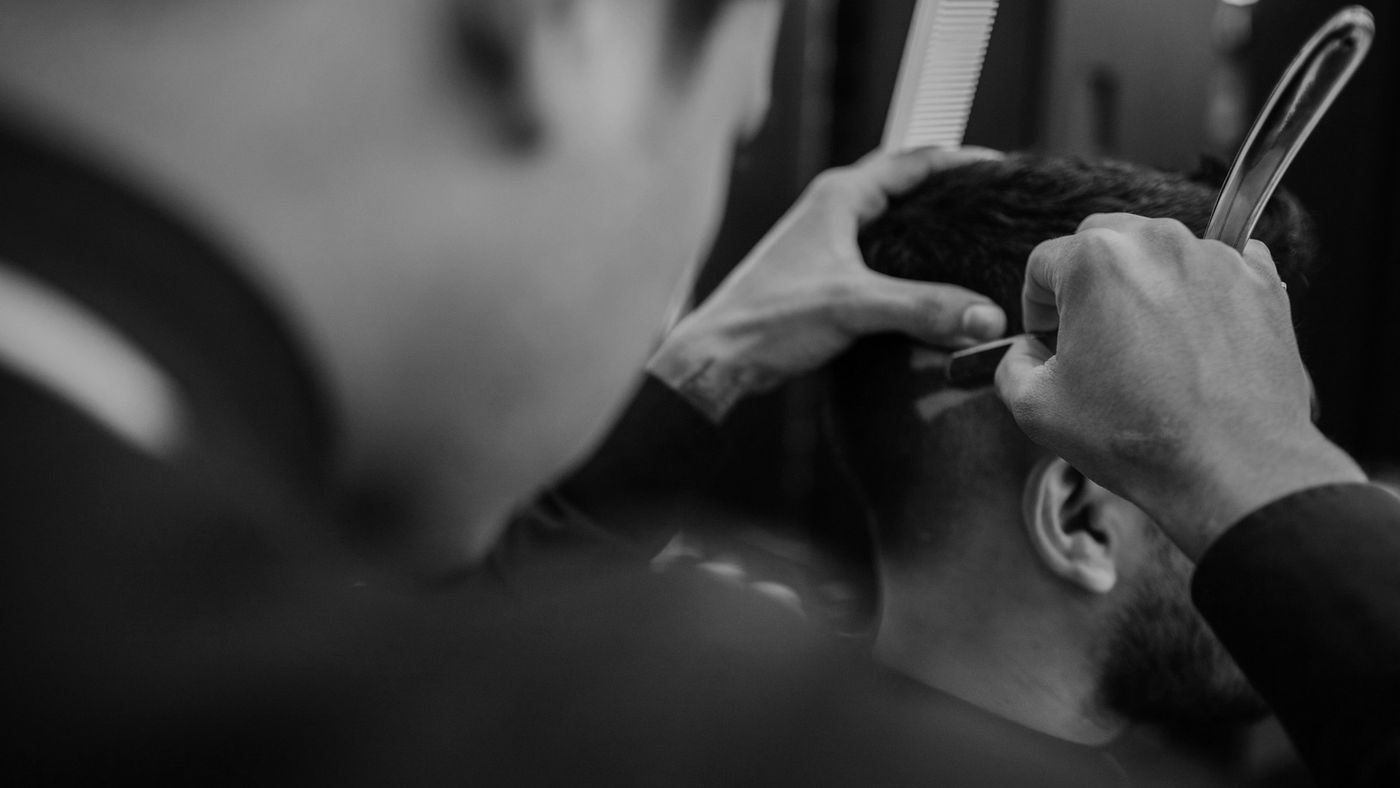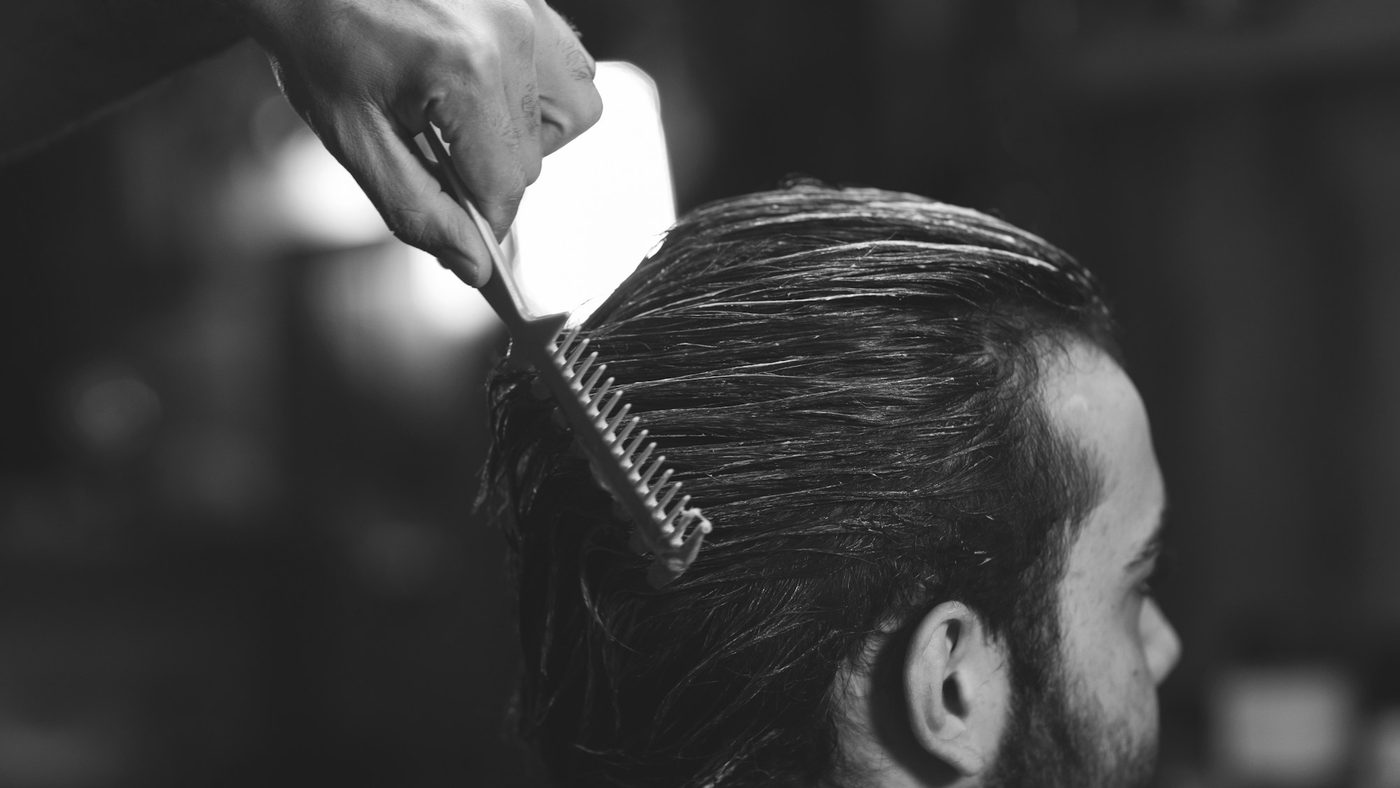
Learning how to use pomade is a little like learning to tie a proper tie knot. Nobody explains it, everybody assumes you know, and the difference between doing it well and doing it badly is obvious from across the room. The good news is that pomade is not complicated. It asks for a clean head of hair, a modest amount of product, a comb, and about five minutes. This guide covers what pomade does, the two main families, how much to use, the method we’d teach an apprentice, how to wash it out, and the classic pomade hairstyles that still look right today.
A short history of a greasy tin
Pomade is old. The word comes to us through the French pommade, and most accounts trace it back to the word for apple, since early versions of these ointments were said to include apple. For a long stretch of history, hair dressings were made from whatever fats were on hand — animal fats and waxes, scented to cover the fact that they were animal fats and waxes. Men put up with this because the alternative was hair that went wherever the wind told it to.
In the twentieth century, petroleum jelly and mineral oils took over, and the shiny, heavy, combed look became the uniform of the American barbershop. Side parts, slick backs and tall pompadours were built with a tin, a comb and patience. The pompadour itself is commonly said to be named after Madame de Pompadour, an eighteenth-century French noblewoman, which is a fine bit of trivia to bring up while your barber is working.
Later came water-based pomades, which hold and shine like the old stuff but rinse out with ordinary shampoo. That one change probably did more to bring pomade back than any movie or magazine ever did. Now you have a choice, which is where most of the confusion starts.
What does pomade do?
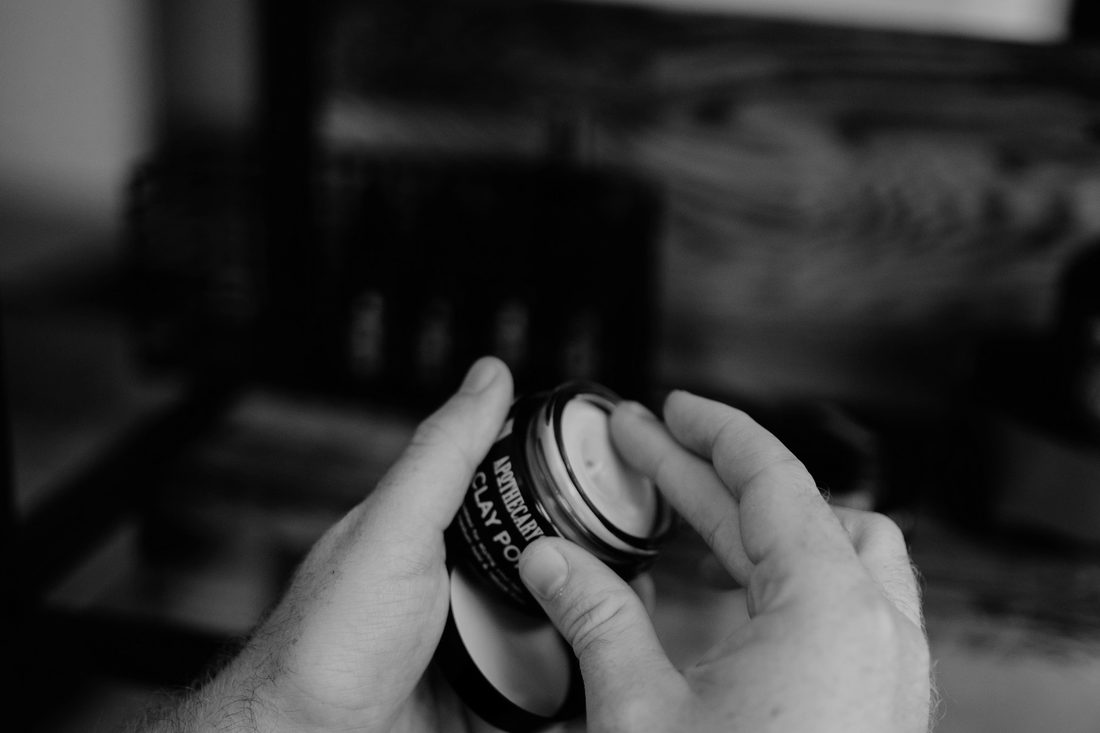
Pomade does three things. It holds hair in place, it adds shine, and it lets you comb hair into a clean, defined shape and keep it there. That’s the whole job description.
The answer to "what is pomade used for" is mostly combed styles: side parts, comb-overs, slick backs, pompadours and quiffs. Anything with visible comb lines and a polished finish is pomade territory. If you want messy, matte, lived-in texture, you are holding the wrong tin — look at sea salt spray or texture powder instead. If you want a full lineup of products by hair length, see how to style short hair.
Oil-based vs. water-based pomade
This is the first decision, and it matters more than any label promise.
Oil-based pomade
- Made from: petroleum jelly, mineral oil, waxes or natural oils.
- Feel: heavy, greasy, very workable. It never fully sets, so you can re-comb it all day.
- Shine: usually high.
- Washing out: difficult. Water just slides off it. Expect two or three shampoos, or a clarifying shampoo.
- Best for: thick, coarse or very curly hair that needs weight to lie down; guys who restyle midday; true vintage looks.
Water-based pomade
- Made from: water plus holding agents, often with a little oil or conditioner.
- Feel: lighter, cleaner. It sets as it dries, then can be re-worked with a little water.
- Shine: anything from low to high, depending on the formula.
- Washing out: easy. One normal shampoo usually does it.
- Best for: most men, honestly. Fine to medium hair, office hair, anybody who washes daily.
If you are not sure, start with water-based. It forgives mistakes. Oil-based pomade is wonderful once you know you want it, and a nuisance until then.
Hold and shine, decoded
Pomade tins are labeled with two dials: hold and shine. Read them like this.
- Light hold: keeps a soft side part in place on fine hair. Moves with you.
- Medium hold: the everyday setting. Handles a comb-over, a slick back, most short cuts.
- Strong hold: for thick hair, tall pompadours and hair that has never once done what it’s told.
- Low or matte shine: combed shape without the wet look. Reads modern.
- Medium shine: a healthy, groomed finish. The safe choice.
- High shine: mirror finish, unmistakably vintage. Wear it with conviction.
A useful rule: the more hair you have, the stronger the hold you need; the finer your hair, the lighter you go, or it collapses under the weight. If in doubt, ask your barber which one suits your hair. We’ve had our hands in it, and that tells us more than any label.

Damp hair or dry hair?
It depends on the pomade and the look.
- Damp hair spreads product more evenly and gives a smoother, sleeker, slightly wetter finish. Good for water-based pomades, slick backs and side parts.
- Dry hair gives more hold and more control, with a bit more texture. Good for oil-based pomades and for building height in a pompadour or quiff.
- Blow-dried hair is the professional’s secret. Dry the hair into roughly the shape you want first, then apply pomade. The dryer does the lifting; the pomade only holds what’s already there.
How much pomade to use
Start with a pea-sized amount. That is the single most useful sentence in this whole article. Short hair rarely needs more than that; medium hair might take a second pea. You can always add more. Taking it out means another shower.
Too much pomade does not give you more hold — it gives you hair that looks wet, clumps into stripes, and leaves a mark on the headrest. If your hair looks greasy by lunch, the problem is quantity, not the product.
How to use pomade: the five-minute method
This is the method we’d give a new apprentice. Five steps, five minutes, no shortcuts.
- Minute one — prepare the hair. Start clean. Towel-dry until hair is damp, or blow-dry it fully if you’re using oil-based pomade or building height. Point the dryer in the direction you want the hair to go and lift at the roots with a comb or your fingers.
- Minute two — warm the product. Scrape a pea-sized amount from the tin with a fingernail or fingertip. Rub it between your palms until it’s warm and nearly invisible. Cold pomade goes on in lumps; warm pomade goes on evenly.
- Minute three — apply from back to front. Work your hands through the hair starting at the back and crown, then the sides, then the front. The front gets what’s left on your hands, which is exactly the right amount. Get it down to the roots, not just the surface.
- Minute four — comb the shape. Now the comb. For a side part, find your natural part (it’s usually where your hair already wants to split) and draw a clean line. Comb the top across and back. For a slick back, comb straight back from the hairline. Use a fine-tooth comb for a sleek finish and a wide-tooth comb for visible lines with more texture.
- Minute five — finish and fix. Smooth any flyaways with your palms. Press the sides down lightly. If something won’t sit, add a tiny bit more product to that spot only. Then put the comb down. Over-combing is how good hair goes flat.
Midday touch-up: with water-based pomade, wet your fingertips and re-comb. With oil-based, just re-comb — it never set in the first place. Keeping a pocket comb is old-fashioned, and that’s precisely the point.
Patch test first
Pomades can contain fragrances and other ingredients that some people react to. If you have a sensitive scalp or a history of reacting to products, dab a little behind your ear and wait a day before using it all over. The FDA explains common allergens in cosmetics, and its page on hair products covers the basics of what’s in them. If your scalp gets red, itchy or flaky and stays that way, stop using the product and see a dermatologist.
Washing pomade out
Water-based pomade: shampoo once, rinse, done.
Oil-based pomade takes more effort, because oil and water don’t mix. A few tricks that work:
- Shampoo on dry hair first. Work shampoo into dry hair before wetting it, so the surfactants grab the oil before water gets in the way. Then rinse and shampoo again.
- Use a clarifying or degreasing shampoo once or twice a week if you wear oil-based pomade daily.
- Condition afterward. Repeated heavy washing dries hair out. The American Academy of Dermatology’s healthy hair tips are a good, sensible baseline.
- Give it a day off. Your scalp will thank you.
Seven pomade hairstyles that still hold up
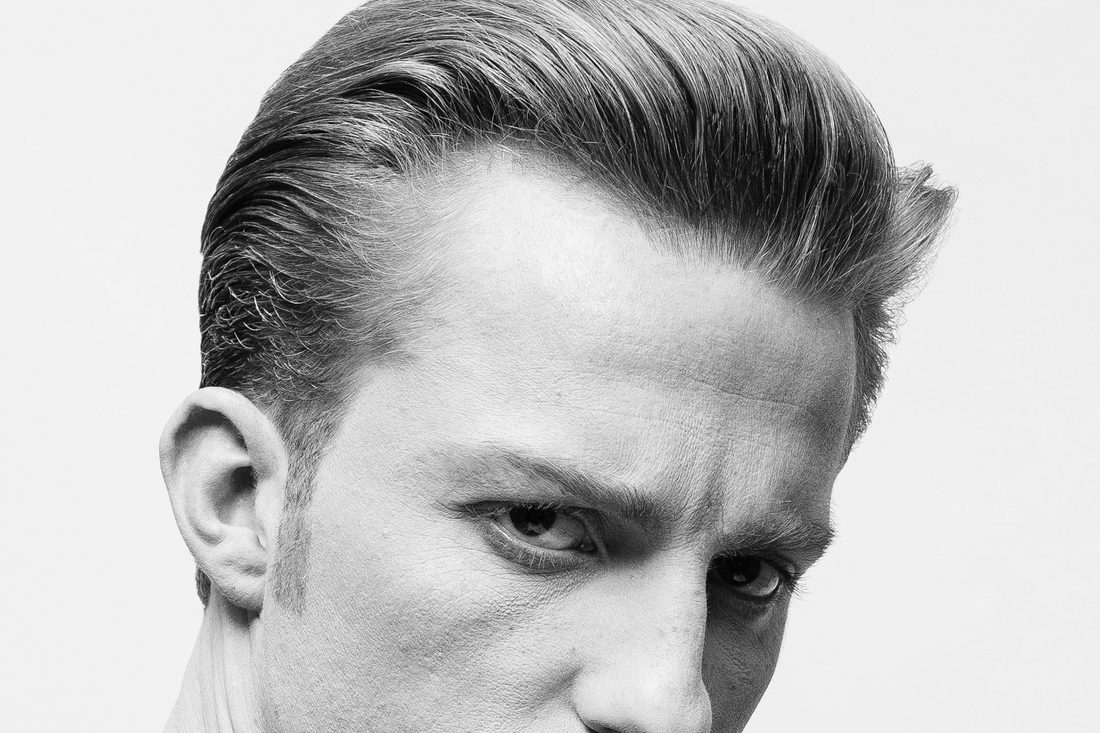
Pomade hairstyles start with the haircut. A good cut gives the product something to hold; a bad one just looks oiled. Here are the classics.
- The side part. Short sides, two to four inches on top, a clean part. Medium hold, medium shine. Never goes out of style because it was never in style; it simply is.
- The comb over with pomade. The modern version — faded or tapered sides, a defined part and the top swept across. Not the old bald-spot cover-up. A pomade comb over looks sharpest with medium hold and a fine-tooth comb. Full details in our comb over fade guide.
- The slick back. Longer top, combed straight back. Water-based on damp hair for a sleek look; oil-based for the full vintage shine.
- The pompadour. Volume at the front, swept up and back. Blow-dry first, strong hold, and accept that this one takes the full five minutes.
- The quiff. The pompadour’s more relaxed cousin — height at the front with a little movement. A matte or low-shine pomade keeps it modern. See the quiff haircut.
- The Ivy League. A longer crew cut with enough on top to part and push across. Light hold, low shine, very office-friendly.
- The wet-look undercut. A long top over very short sides, combed back with high-shine pomade. Bold, but it rewards commitment.
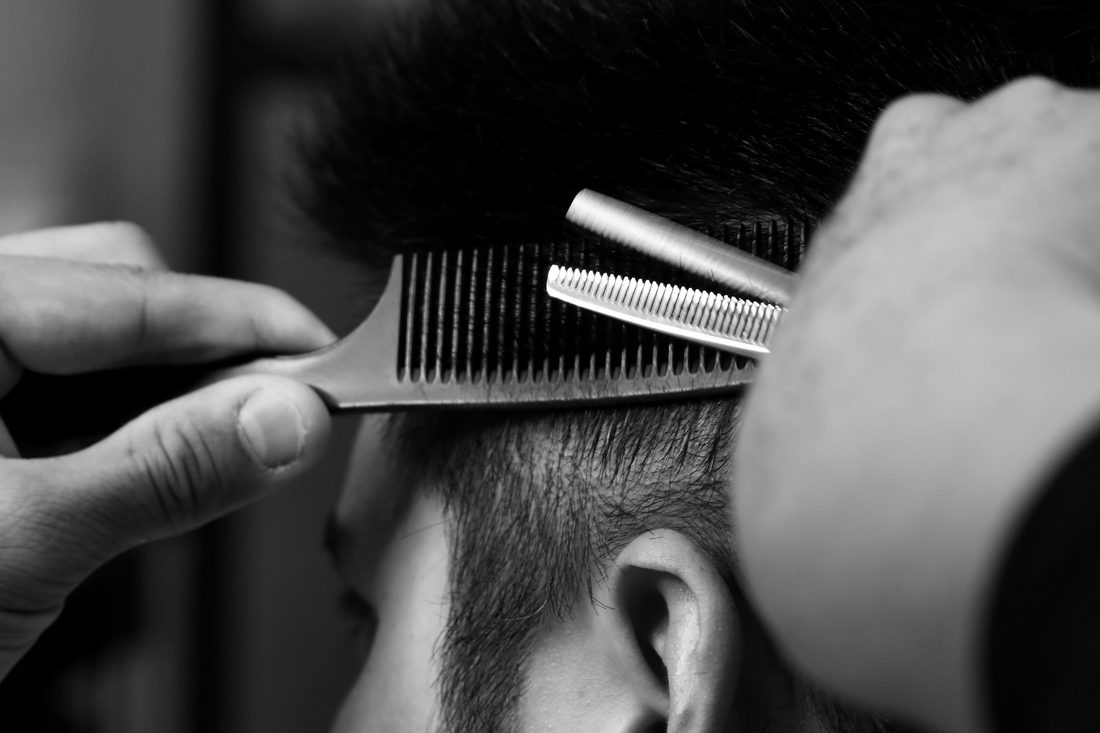
Most of these cuts get their shape from scissor work on top and clipper work on the sides. If you want to understand why, our post on scissor cuts vs. clipper cuts explains the difference.
Flying in? Buffalo Niagara International Airport to our shop
If you’re landing at Buffalo Niagara International Airport (4200 Genesee St) for a wedding, an interview or a meeting and want to look sharp before you get there, our Williamsville shop is about 12 minutes away. Can’t make it in? House Calls bring a barber to your hotel anywhere in WNY, by appointment, from $225.
Driving directions (about 12 minutes, 4.2 miles):
- Leave the airport on Holtz Dr.
- Continue on Aero Dr.
- Take S Youngs Rd toward Amherst.
- Turn into 6100 Main St — the shop is on the left.
Open these directions in Google Maps
A cut built for pomade, in Williamsville
Jonny the Barber Williamsville is at 6100 Main St., Williamsville, NY 14221, serving Williamsville, Amherst and Snyder. We’re open Tuesday through Friday 9AM–6PM and Saturday 8AM–12PM, closed Sunday and Monday. In the chairs: Jon Palmeri (owner, master barber), Dave Scolla (master barber), and licensed NYS barbers Michael Falzone and Bryan Castronova. Meet them on the barbers page.
Tell your barber which pomade style you’re after and how much time you’ll spend on it in the morning. A Classic cut — clippers, scissors, edger and straight razor — starts at $25 and takes about 30 minutes. A Hot Towel Shave starts at $25, and the rest of the menu is on the services page. You see each barber’s exact rate before you confirm. Getting the whole wedding party ready? Ask about groomsman packages and private parties.
Walk-ins are welcome when there is an open chair — appointments are encouraged, so call 716-389-0192 to confirm someone is free. Or Book online, or call 716-389-0192.