Texture powder has a reputation problem. Half the guys who try it decide it’s magic, use a fistful, and walk around looking like they lost a fight with a bag of flour. The other half shake a little onto damp hair, get a sticky mess, and swear it’s a scam. Neither group is right. Texture powder is a simple product that does one job well — it adds grip and lift at the root without shine — and almost every complaint about it comes from a myth about how it’s supposed to work.
So let’s take the myths one at a time. We’ll keep this honest: what the stuff is, what it isn’t, whether it’s hard on your hair, and then a numbered method you can follow tomorrow morning. If you want the bigger picture on every styling product for short hair, our guide to styling short hair lays out the whole lineup. This post is just about the powder.
First, what texture powder actually is
A texture powder — also sold as styling powder, hair styling powder or hair volume powder — is a fine, lightweight powder that comes in a small shaker bottle. Most formulas are built around a mineral or starch-type base that roughs up the surface of each hair strand a little, so the strands catch on each other instead of sliding flat. That friction is the whole trick. It’s what gives you volume at the root, a matte finish, and a "piecey" look that holds shape without looking wet or combed.
It is not a gel, a wax or a pomade. No shine, very little hold in the traditional sense. Think grip tape, not glue. If your hair looks better on day two after a wash, powder is basically day-two hair in a bottle.

Myth 1: "Texture powder is only for guys with thin hair"
Reality: It’s great for fine or thin hair, but that’s not the only use. Fine hair tends to lie flat and separate, and a hair volume powder gives it body without the weight of a cream or clay. That’s why it gets pitched that way. But guys with thick, straight hair use it too, mostly for the opposite reason — their hair is heavy and slick, and the powder breaks it up so it doesn’t look like a helmet. If you have thick hair and want to know which cuts take powder well, our post on haircuts for thick hair is a good place to start.
Where powder is less useful: tight curls and coily hair that already have plenty of texture, and hair buzzed under about an inch.
Myth 2: "More powder means more volume"
Reality: This is the big one, and it’s the source of the flour-bag look. Powder works at the root. Once you’ve got enough on the root to create friction, extra powder doesn’t lift anything — it just sits on the surface, turns the hair dull and gray-looking, and makes the scalp feel gritty. Two or three light shakes is normal for short hair. If you can see white dust on your part, your shoulders or your sink, you’ve used too much.
The fix for "not enough volume" is almost never more product. It’s technique, which the method below covers.
Myth 3: "You put it on wet hair, like gel"
Reality: Powder goes on dry hair. Fully dry. Put it on damp hair and the water dissolves the grip, and you get clumps that feel tacky and look stringy. If you just got out of the shower, towel off, blow-dry (even a rough dry with your fingers), and then reach for the powder. This is the single most common reason a guy decides his styling powder "doesn’t work."
Myth 4: "Powder replaces your other products"
Reality: Sometimes it does, sometimes it doesn’t. On a short, choppy cut — a textured crop, a messy French crop, a short quiff — powder alone is often enough. On longer hair or anything that needs to stay in a defined shape all day, powder works better as a base layer. You use powder at the root for lift, then a small amount of clay or paste on the ends for shape and hold. That combo gives you the volume of powder and the control of a cream.
What it doesn’t pair well with is a heavy, shiny pomade. You’d be adding grip and then smothering it. If slick and shiny is the look, skip the powder and read our post on how to use pomade instead. Curious how powder stacks up against salt spray? Our sea salt spray guide compares them side by side.
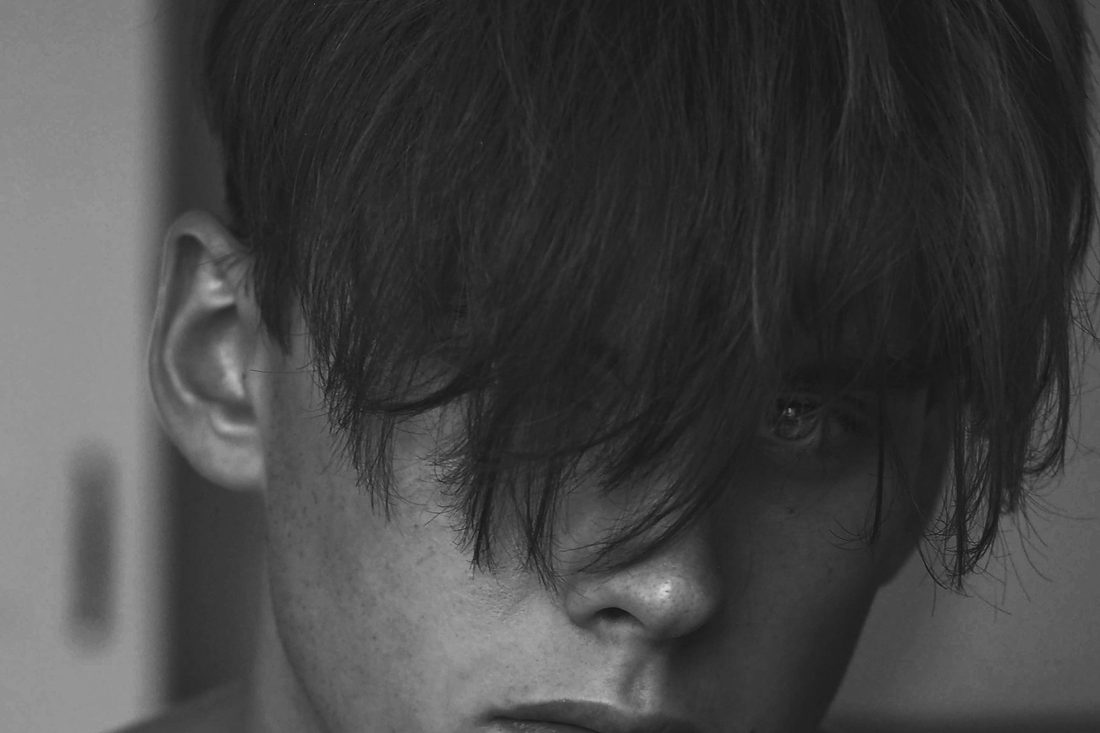
Myth 5: "Is texture powder bad for your hair? It must be — it’s basically dirt"
Reality: For most people, used in normal amounts and washed out regularly, texture powder isn’t bad for your hair. It sits on the outside of the strand; it doesn’t change the hair itself. The real-world problems we see are more boring than dangerous:
- Buildup. If you use powder every day and only rinse with water, it accumulates on the scalp and hair. Hair starts to feel coarse and dull, and the scalp can feel itchy or dry.
- Dryness. Powder is designed to absorb oil. That’s why it looks matte. On a scalp that’s already dry, daily use can make it feel drier.
- Irritation. Like any cosmetic, some formulas include fragrance or other ingredients that some people react to. Redness, itching or bumps after a new product are a signal to stop using it.
The answer to "is texture powder bad for your hair" is mostly about washing. Shampoo it out properly — a real shampoo, not just a rinse — at least every couple of days if you use it daily. If you’ve got a sensitive scalp, try a new product on a small area first. The FDA has a plain-language page on allergens in cosmetics worth a skim, and its overview of hair products explains how these products are regulated. For general scalp habits, the American Academy of Dermatology’s healthy hair tips are solid. And if your scalp is persistently itchy, flaky or sore, that’s a dermatologist question, not a styling one.
Myth 6: "It’ll make my hair look gray"
Reality: Only if you overdo it or don’t work it in. Most powders go on white and disappear once rubbed into the root. Seeing a cast on dark hair means too much product or too little massaging.
Myth 7: "Powder fixes any haircut"
Reality: Powder makes a good cut look better. It can’t make a bad cut into a good one. If your top is one length, blunt and heavy, powder will give it a little lift for an hour before the weight wins. Hair that’s cut with texture built in — point-cut ends, some layering, the bulk taken out — responds to powder dramatically better. That’s a conversation for the chair. Tell your barber you plan to style with powder and you want the top cut to take it. Not sure whether you need scissors or clippers on top for that? Our scissor cut vs. clipper cut post breaks it down.
Length matters too: roughly two to four inches on top is the sweet spot. Much longer, and the weight pulls it flat no matter what’s at the root.
How to use texture powder: the step-by-step method
Here’s how to use texture powder without the dust, the clumps or the helmet. It takes about two minutes once you’ve done it a few times.
- Start with clean, completely dry hair. Powder grips best on hair without old product on it. If you showered, dry it all the way. A quick blow-dry pushing the hair up and back gives you a head start on volume.
- Shake it into your fingertips, not onto your head. Two or three light shakes into the tips of your fingers. This is how you control the amount and avoid white patches. Some people prefer to shake directly onto the roots — fine, but hold the bottle close and go lightly.
- Part the hair and hit the roots. Use your other hand to lift sections of hair on top, and press the powder into the scalp area at the base. Front, crown and the middle of the top. Skip the sides if they’re short or faded — there’s nothing to lift there.
- Massage it in. Rub with your fingertips in small circles at the root for 15 to 20 seconds. You’ll feel the hair go from slippery to grippy. That’s it working. If you still see white, keep rubbing.
- Shape with your fingers. Push, twist and scrunch the hair into the shape you want. Powder works with your fingers, not a comb. A comb tends to flatten the texture you just built.
- Add a second, smaller round only if needed. Wait a minute and check the mirror. If an area is still flat, one more light shake at that spot. Then stop. Really — stop.
- Finish with a little clay or paste on the ends (optional). If you need the shape to last through a workday, rub a pea-sized amount of clay or paste between your palms until it’s warm and barely visible, then touch it to the ends — not the roots.
- Reset during the day without more product. Powder can be reactivated. If your hair falls flat in the afternoon, rub your fingers through the roots and it’ll lift again. That’s one of the best things about it.
- Wash it out properly. At the end of the day or the next morning, shampoo. Massage at the scalp, rinse well, condition the lengths. Daily users: don’t skip this step, or the buildup catches up with you.
Notice that half the steps are about restraint. The guys who love texture powder use less of it than they expected to.
Which hair powder for men should you pick?
We don’t recommend specific brands. But here’s what to look for on the label when you’re shopping for a hair powder for men:
- Hold level. Some powders are pure volume with almost no hold. Others are marketed as "volumizing and texturizing" with a bit more grip. Fine hair usually wants the lighter version; thick hair can handle more.
- Fragrance. If you have a sensitive scalp, an unscented formula is a smart start.
- Bottle design. A small shaker opening gives you better control. A wide opening is how people end up with half a bottle on their head.
- Finish. All powders are matte. If you want any shine at all, powder isn’t your product — look at a cream or a pomade.
Honestly, the easiest way to choose is to ask your barber which type suits your hair at your next cut.
When texture powder is the wrong answer
Being myth-busters means admitting the limits too. Skip the powder, or rethink it, if:
- Your scalp is already flaky, dry or irritated. Powder makes it worse. See a dermatologist if it doesn’t settle down.
- You want a slick, shiny finish. Wrong tool.
- Your top is under about an inch. A crew cut or buzz cut doesn’t need product.
- You’re not willing to wash it out. Daily powder plus water-only rinsing means a gritty scalp.
Getting a cut built for texture powder in Tonawanda
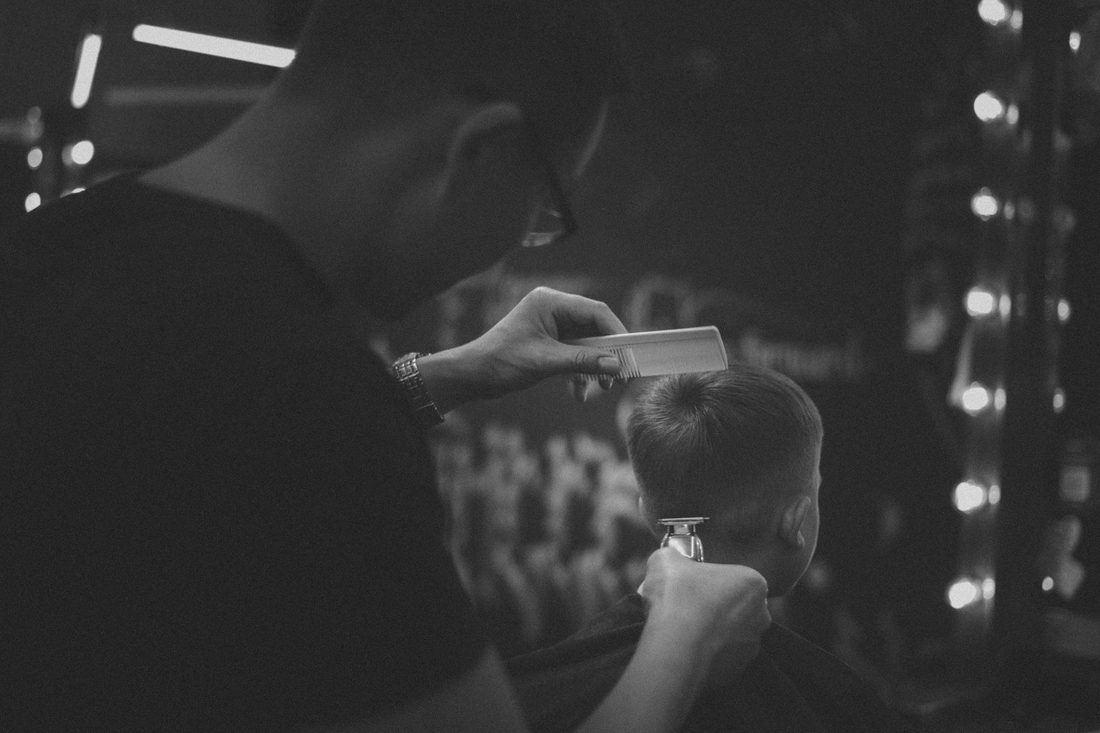
If you want the top cut to take powder well, come see us at our Tonawanda barbershop on Delaware Street. Dorian, Sam and Zaid can talk through length, texture and what product actually suits your hair. Most guys go with the Classic — clippers, scissors, edger and straight razor, about 30 minutes, starting at $25 — and you’ll see each barber’s exact rate before you confirm. You can browse the full menu on our services page and meet the team on our barbers page. We’re open Tuesday through Friday, 7AM to 7PM, and Saturday 8AM to 1PM; closed Sunday and Monday. Walk-ins are welcome when there is an open chair — appointments are encouraged, so call 716-389-0192 to confirm someone is free.
We cut for Tonawanda, North Tonawanda, Kenmore and North Buffalo. If you’re coming from across the canal, our post for North Tonawanda has more on the shop. And if you’re in Williamsville or Amherst, our locations page shows both shops.
Directions from the Herschell Carrousel Factory Museum
The Herschell Carrousel Factory Museum sits at 180 Thompson St. in North Tonawanda. If you’re over that way, the shop is about seven minutes and 2.1 miles away, mostly straight down Delaware Street.
- Head toward Thompson St.
- Turn right onto Thompson St. (0.1 mi)
- Turn left onto Oliver St. (0.3 mi)
- Turn right onto Goundry St. (0.2 mi)
- Turn left onto Main St. (0.2 mi)
- Continue onto Delaware St. (1.3 mi)
- Turn right into 578 Delaware St. — Jonny the Barber, Tonawanda.
Open these directions in Google Maps
Ready for a cut that actually takes product? Book online or call 716-389-0192. Bring your questions about texture powder — and maybe leave the shaker at home that morning so we can see what your hair does on its own.