The comb over fade is one of the easiest good haircuts to get and one of the easiest to get wrong, and almost every miss comes down to the order. "Short on the sides, comb over on top" leaves about six decisions to the person holding the clippers. This post is the order card: the exact words to use, the questions your barber will ask back, and how a low, mid or high fade changes the whole look. Pull it up on your phone in the chair if you want.
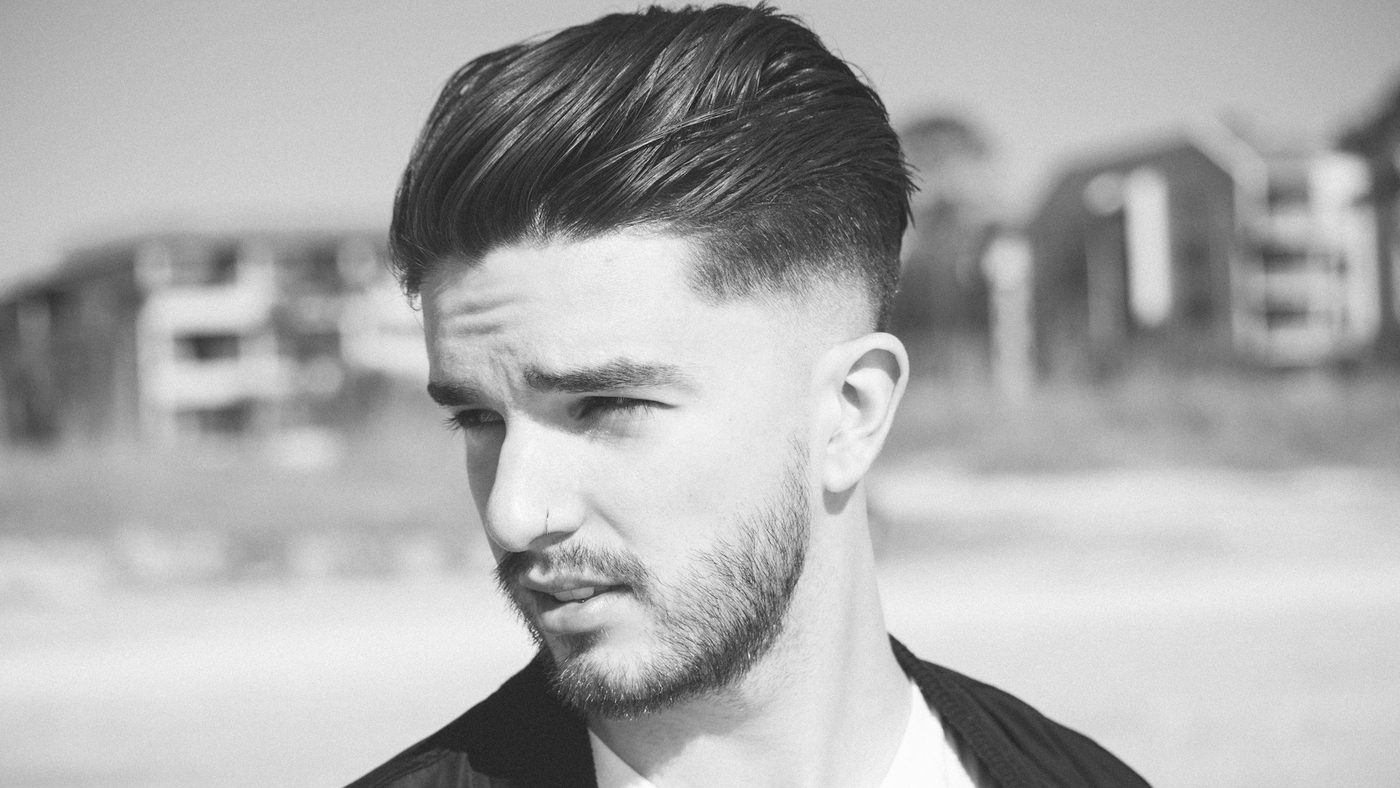
First, the thing everyone wants cleared up. The modern comb over is not the old move where a man grows one side long and drapes it across a bald spot. That’s a cover-up, and it fools nobody. Today’s comb over is a deliberate side-swept cut: a defined part, a top long enough to move, and sides taken down short with a fade or taper. It’s a style chosen on purpose, usually by guys with plenty of hair, and it’s been one of the steadiest comb over style haircuts in barbershops for years because it works at a job interview and at a wedding without any changes.
What a comb over fade actually is
Three parts, and you need to name all three in the chair:
- The top. Usually 2 to 4 inches, cut so it can be combed to one side. Longer gives you more sweep and movement; shorter is neater and faster to style.
- The part. Either a natural part combed in, or a "hard part" — a thin line shaved in with a trimmer or razor so the part stays put even when you skip the comb.
- The sides and back. Faded from very short (or skin) at the bottom up into the length on top. Where that fade starts — low, mid or high — is the biggest single decision.
If you’re fuzzy on whether you want a fade or a taper at all, read Fade vs. Taper first. Short version: a fade blends down to skin or close to it; a taper leaves more hair at the bottom and only cleans up the hairline. Both can sit under a comb over. A fade reads sharper, a taper reads softer and more conservative.
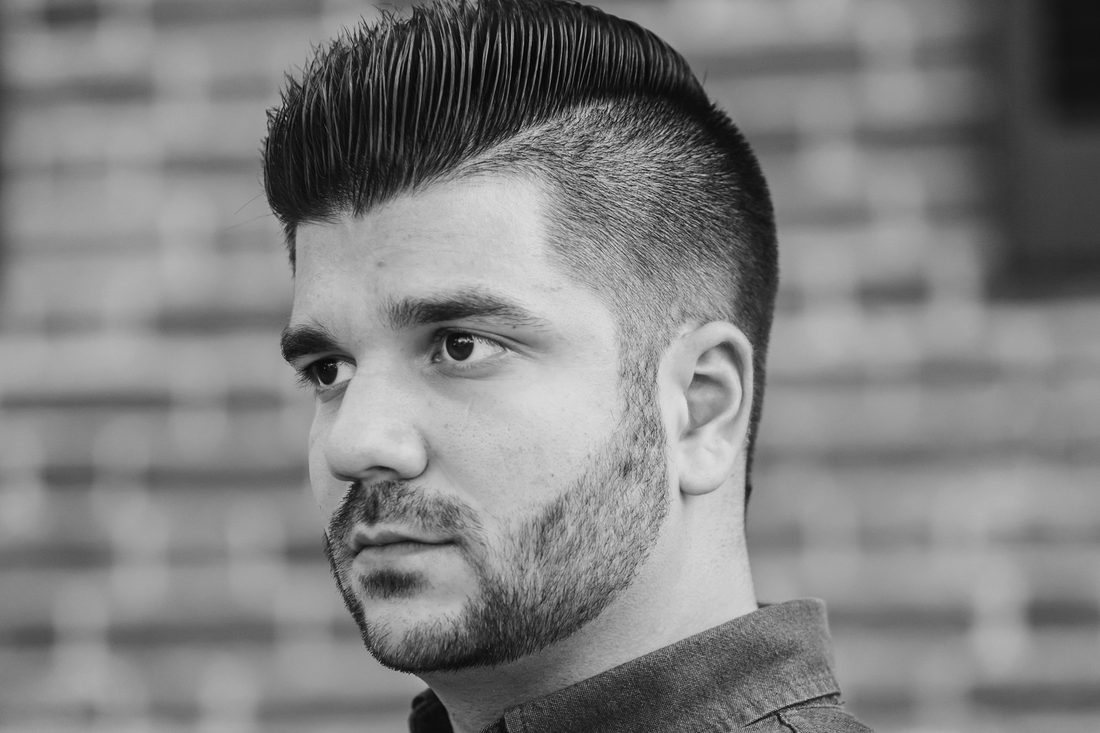
The order card
Here’s the card. Fill in the blanks before you sit down and you’ll get the cut you pictured.
- "Comb over fade, part on the ___ side." Most people already have a natural part from a cowlick or the way their hair falls. If you don’t know, say so, and your barber will find it by combing your hair wet and watching where it splits.
- "___ fade." Low, mid or high. More on that below.
- "Down to ___ at the bottom." Skin (bald), a 0, or a 1. If you’ve never had skin before and you work somewhere conservative, a 0.5 or a 1 is a safe first try.
- "Leave ___ inches on top." Show it with your fingers. Barbers think in inches and guard numbers; "a little longer" means different things to different people. Our guide to clipper guard sizes covers the numbers.
- "Hard part or natural part?" Decide before you sit. A hard part grows fuzzy in about two weeks and has to be re-lined to look right.
- "I style it with ___." Pomade, clay, nothing at all. This changes how the top gets cut.
How the conversation actually goes
Here’s roughly how the first minute in the chair sounds when the order is good. This is a composite, not a transcript, but every barber asks some version of these questions.
You: "Comb over fade. Part on the left. Mid fade, down to a 1 at the bottom. Leave about three inches on top."
Barber: "Hard part or natural?"
You: "Natural. I don’t want to come back every two weeks for the line."
Barber: "Okay. What do you put in it?"
You: "Pomade, most days. Sometimes nothing on weekends."
Barber: "Then I’ll keep a little weight on the part side so it falls over even when it’s dry. Want the neckline tapered or squared?"
You: "Tapered."
Barber: "Got it. Beard — want me to fade into it or leave it?"
You gave four answers up front, so the questions that came back were details — neckline, beard, product. That’s the sign of a good order.
Also mention a cowlick at the crown, or any job rule that limits how short you can go. Barbers would rather know up front.
Low vs. mid vs. high: the comb over fade comparison
The fade height decides how much contrast there is between the sides and the top. Same top, three different haircuts.
Low fade comb over
The fade starts just above the ear and drops along the hairline in back. Most of the sides keep some length, so the shape stays rounded and full. This is the most conservative choice and the easiest one to grow out. A low fade comb over is the right first try if you’re nervous, if you have a rounder head shape you don’t want to emphasize, or if you’re in a buttoned-up office. Upkeep: it looks fine for three to four weeks.
Mid fade comb over
The fade starts around the temple, roughly halfway up the side of the head. It’s the middle of the road for a reason: enough contrast to look clean and deliberate, not so much that the top looks like it’s sitting on a shaved head. If you don’t know which to choose, the mid fade comb over is the default to pick. If you like the idea but want it softer, look at a mid taper, which uses the same height with more hair left at the bottom. Upkeep: about three weeks before it starts to look fuzzy.
High fade comb over
The fade climbs up near the top of the head, so the sides are mostly skin or close to it and the top sits on its own. It’s the boldest version and the sharpest in photos. A high fade comb over suits guys with thick hair on top (the contrast hides nothing and shows off density), narrower faces, and anyone who likes a strong, squared look. It’s less forgiving: it grows out fast and the line between short and long shows every week. Upkeep: two weeks if you want it crisp.
Can’t decide? Point at where you want the short part to stop. Above the ear is low, the temple is mid, the corner of the head is high.
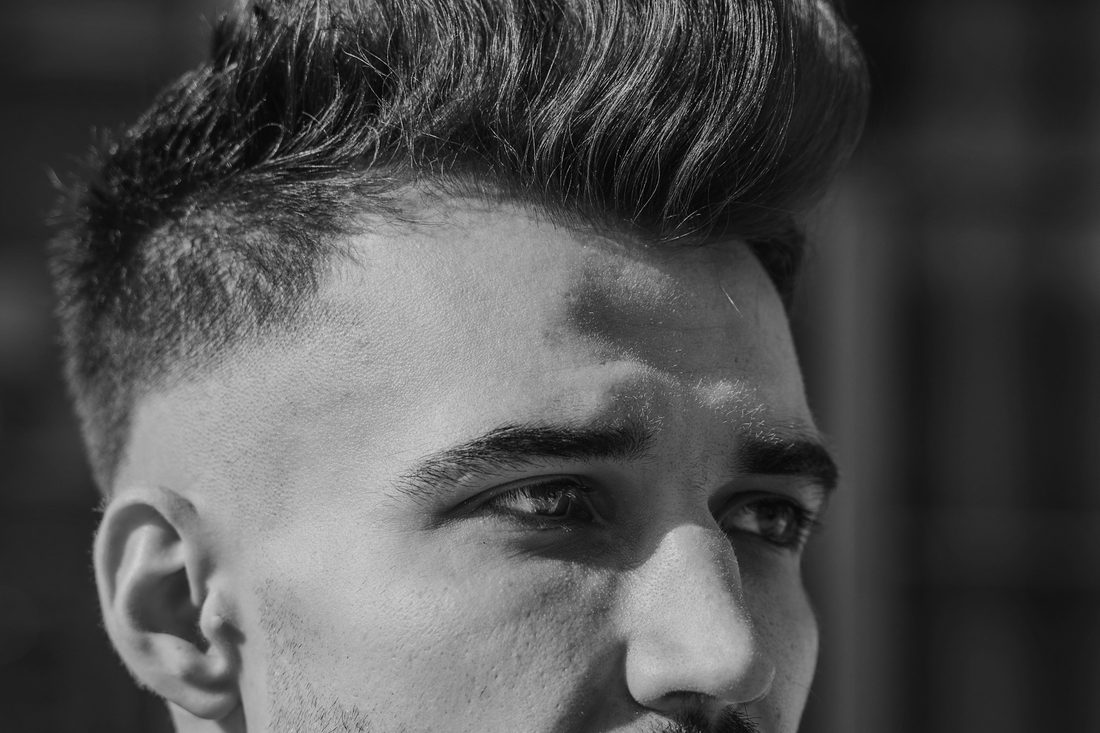
Is the comb over fade right for your hair?
Mostly yes, with a few honest caveats.
- Straight to slightly wavy hair: the ideal. It holds a part and lies flat when you want it to.
- Thick hair: great, but ask the barber to take weight out of the top so it doesn’t puff up into a helmet. More on that in haircuts for thick hair.
- Curly hair: it works, but the sweep becomes looser and more textured. Leave more length and use a lighter product.
- Fine or thinning hair: this is where the old cover-up reputation sneaks back in. A comb over fade on thinning hair can look great if the top stays short and the part is natural. What you want to avoid is growing it long to cover a gap. If your hairline is moving back, the honest move is in the best haircuts for a receding hairline. For the medical background on male-pattern loss, MedlinePlus has a plain-language page on androgenetic alopecia.
Face shape matters less than people think. A comb over adds a little height and asymmetry, which helps a round face and doesn’t hurt most others. If you have a long face, keep the top lower and choose a low or mid fade so you’re not stacking height on height.
The beard question
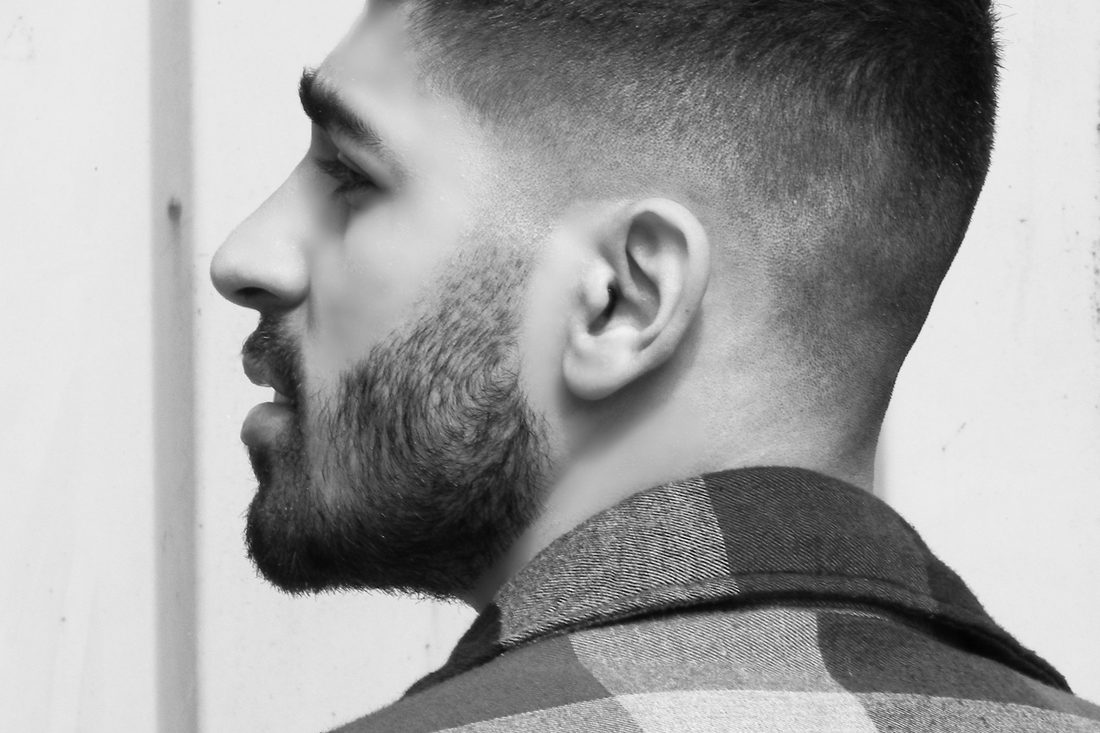
If you have a beard, the fade has a second job: connecting the sides of your head to your face. A comb over fade that goes to skin at the temple and then hits a full beard with no transition looks like two haircuts. Ask for the fade to run into the beard — a beard fade — so the sideburns blend from short to full. If you also want the beard shaped, that’s what the Classic & Beard service is for: full beard sculpting and line work on top of the haircut.
How to style it: comb over with pomade
A comb over fade can be worn with nothing in it, but most guys use something, and the classic answer is pomade. A pomade comb over has that combed, slightly shiny finish people picture when they hear the name. Here’s the short version; the long version is in our post on how to use pomade.
- Start with towel-dried hair, damp but not dripping, for water-based pomade. Oil-based pomade usually goes on dry hair.
- Take a pea-sized amount. Rub it between your palms until it’s warm and spread thin. Less than you think. You can always add.
- Work it in from the back forward so the roots get product, not just the surface.
- Comb the part. Use the edge of a fine-tooth comb along the line, then comb the long side across and slightly back.
- Comb the short side down. It should sit flat against the fade.
- Finish with your fingers if you want it less sharp. Run them through the top once to break up the comb lines.
Want more of a matte, textured look? Swap the pomade for a clay or paste and use your fingers instead of the comb. Want it flat and formal? A little more pomade and a full comb-through. Our post on how to style short hair walks through which product types do what.
One product note: if your scalp gets itchy or red after a new product, stop using it. The American Academy of Dermatology has practical tips for healthy hair, including not overloading it with styling products. Wash heavy pomade out every few days so it doesn’t build up.
Upkeep: how often to come back
The comb over fade has two clocks running. The top grows slowly enough that you won’t notice for a month. The fade grows fast enough that you will. A high fade looks grown-in at about two weeks, a mid fade at about three, a low fade at three to four. A hard part blurs in roughly two weeks no matter what.
That’s why some guys alternate: a full cut every four weeks and a quick cleanup in between. Our Edge Up service (10 to 15 minutes, edging and a neck shave) handles the hairline and neck between full cuts, though it doesn’t redo the fade itself. For the general question of cut frequency, see how often should you get a haircut.
Between visits, comb the part the same way every day so the hair learns where to fall, and don’t trim the fade yourself. Fixing a home-clipper notch usually means going shorter.
What it costs and how long it takes
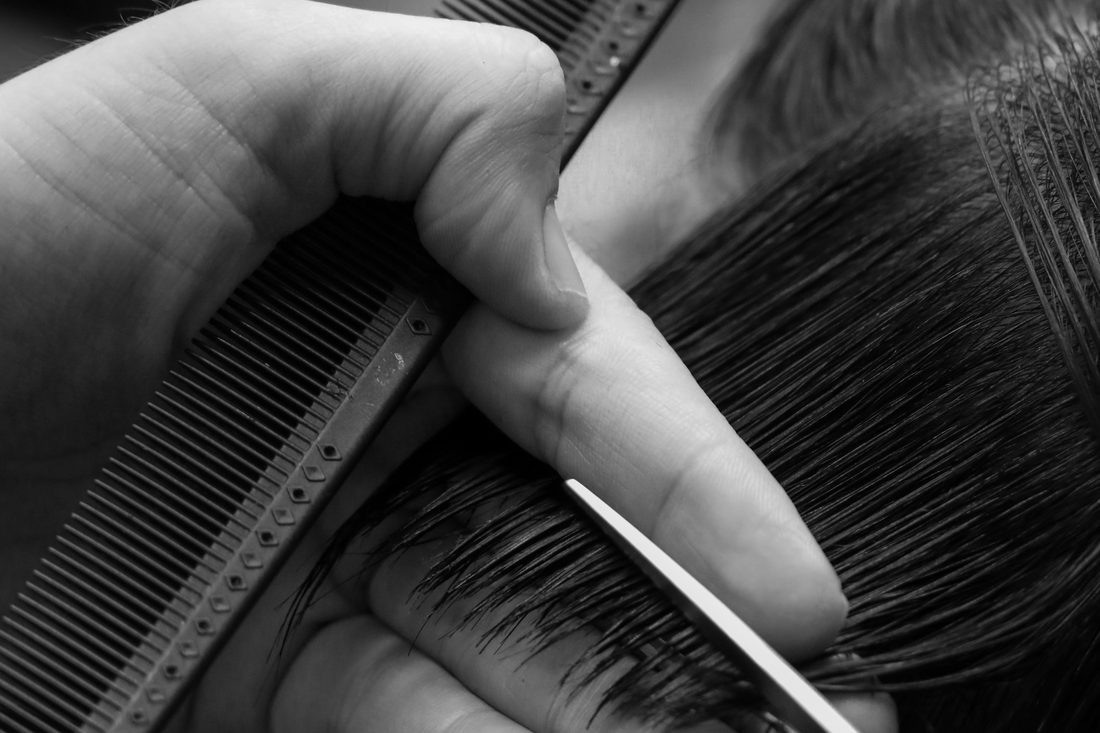
A comb over fade is a Classic cut on our menu: about 30 minutes, starting at $25 depending on the barber, done with clippers, scissors, an edger and a straight razor for the neckline. Add a beard and it’s the Classic & Beard, starting at $35. When you book online you see each barber’s exact rate before you confirm, so there are no surprises. Every barber in the shop is licensed — you can look up what New York requires through the NY Department of State. Meet the team on the barbers page, or see the full services menu.
Finding the shop from the Williamsville Water Mill
If you know the village, you know the Williamsville Water Mill at 56 E Spring St., the historic mill on Ellicott Creek. It’s a few minutes from our shop, which makes it an easy reference point. More about the village itself is on the Village of Williamsville site.
From the Water Mill (about 5 minutes, 1.3 miles via Main St):
- Head toward Rock St (0.1 mi).
- Turn left onto N Cayuga Rd (about 300 ft).
- Turn left onto Main St (1.1 mi).
- Turn left into 6100 Main St — the shop is on the left.
Open these directions in Google Maps
Jonny the Barber, Williamsville
Our Williamsville shop is at 6100 Main St., Williamsville, NY 14221, open Tuesday through Friday 9AM to 6PM and Saturday 8AM to 12PM, closed Sunday and Monday. The chairs are Jon Palmeri (owner, master barber), Dave Scolla (master barber), and licensed NYS barbers Michael Falzone and Bryan Castronova. We cut for Williamsville, Amherst and Snyder, and if you’re comparing shops, choosing a barber shop in Williamsville lays out what to look for. Closer to Tonawanda? Check both locations.
Walk-ins are welcome when there is an open chair — appointments are encouraged, so call 716-389-0192 to confirm someone is free. Or call 716-389-0192, or book online and bring your order card. Six blanks, filled in. That’s the whole trick.