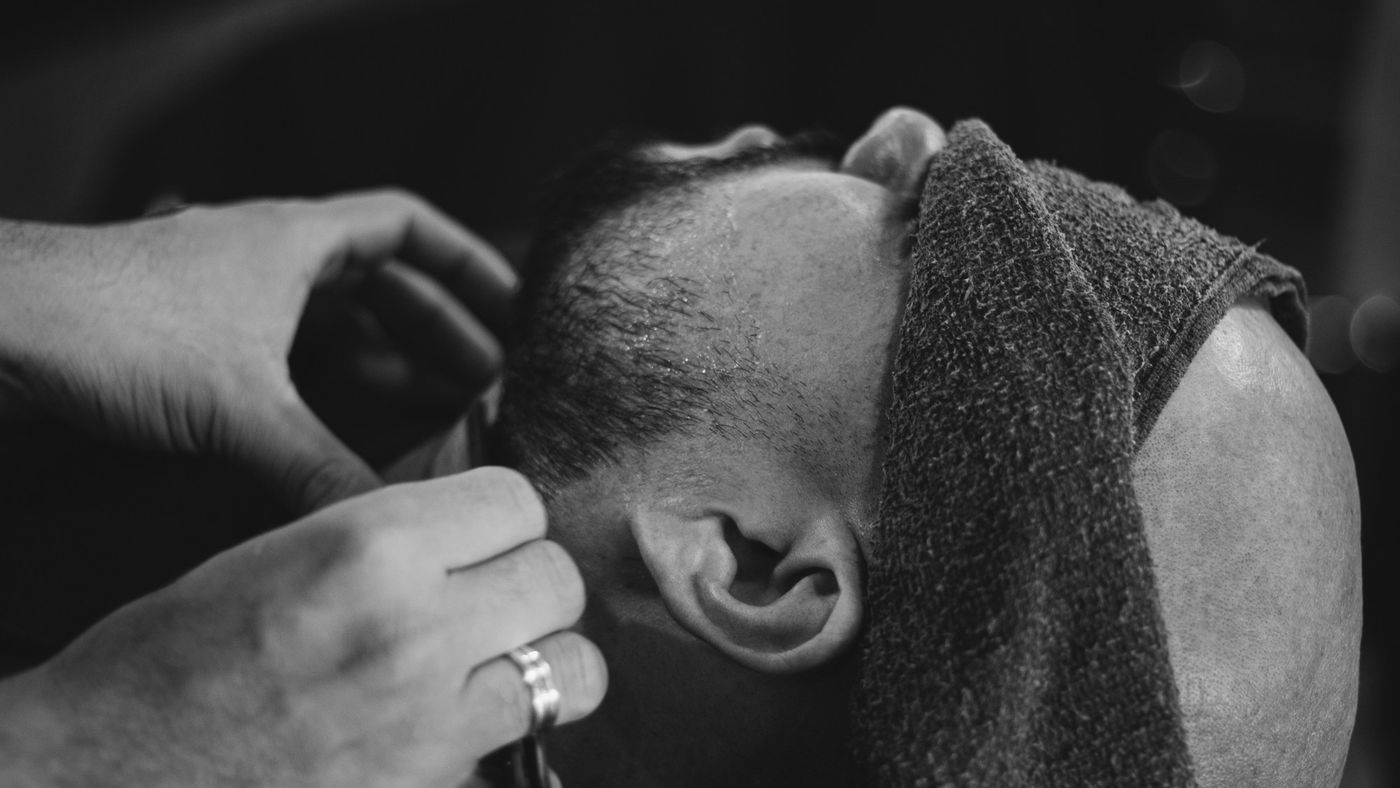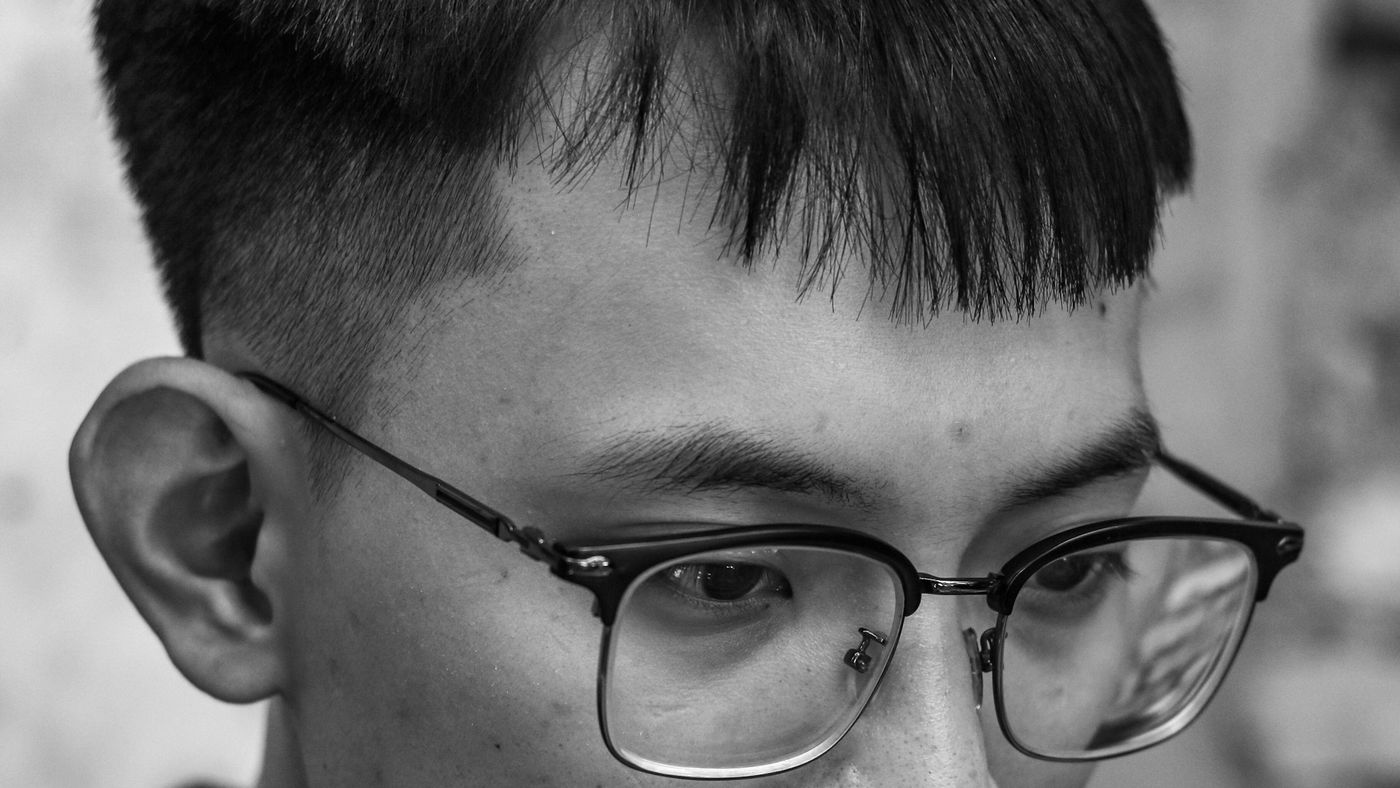
Some haircuts are trends. The French crop is one of the ones that keeps coming back. Short sides. A short, textured top. Everything pushed forward to a neat line of bangs across the forehead. It has been worn for decades, cycled in and out of fashion, and right now it is one of the most requested short cuts in barbershops.
The reason is simple: it looks deliberate, it suits a lot of faces, and it needs almost no styling.
What it is
- Sides and back: short, usually tapered or faded. A mid taper or a low-to-mid fade is typical.
- Top: short, usually one to two inches, cut with texture.
- Front: pushed forward into short bangs. The bangs can be a straight, blunt line or choppy and textured.
That forward direction is what defines it. A regular crop can go up or forward; a French crop always comes forward.
A little history
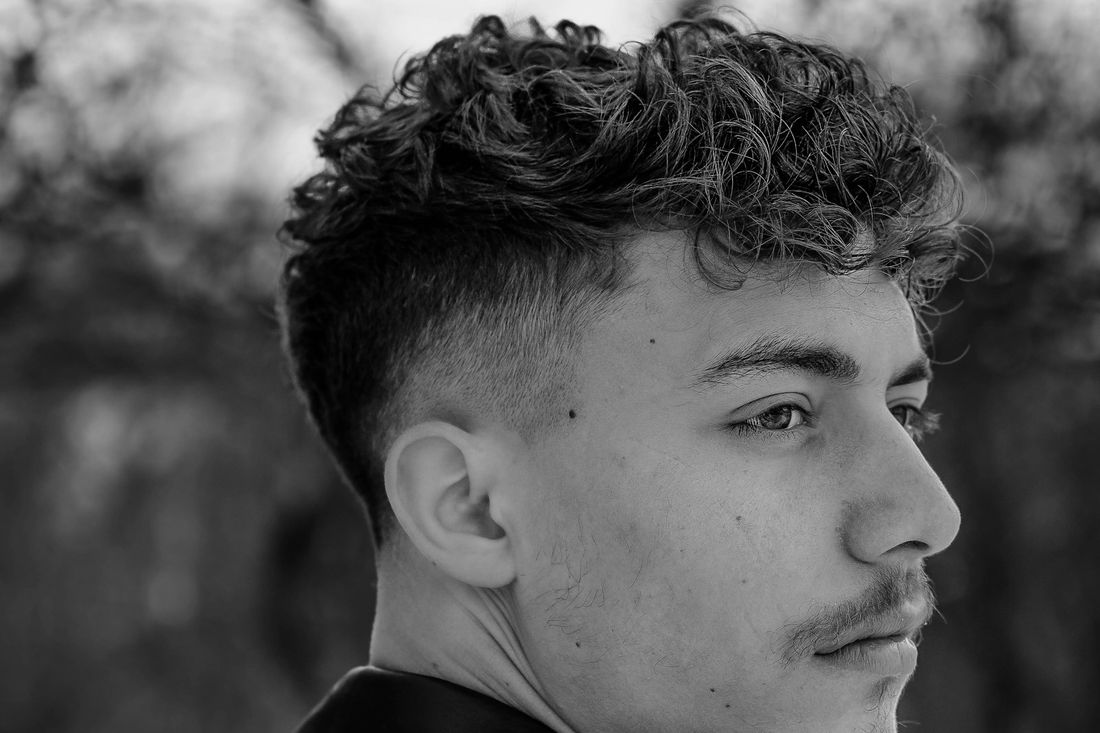
Short, forward-styled cuts like this have been around for a very long time — the Caesar cut, with its short forward bangs, is an ancient relative. The French crop as most barbers describe it today took off as a modern, textured take on that idea, with sharper sides and more texture on top. It rose in popularity in the 2010s and has stayed in heavy rotation since, especially paired with skin fades.
The variations
Classic French crop
Tapered sides, a short textured top, bangs cut to a neat line. Clean and timeless.
French crop with a skin fade
Sides faded to skin for strong contrast. The most popular modern version. Needs upkeep every two to three weeks.
Textured French crop
Choppy, messy top with uneven bangs. Relaxed and very low-effort.
Blunt French crop
A heavier top with a sharp, straight line of bangs. Bold and graphic.
Curly French crop
Curls on top pushed forward, tight sides. Looks great on curly and coily hair. Our curly hair guide covers how curls should be cut.
Who it suits
- Oval faces: almost any version works.
- Long faces and big foreheads: the forward bangs shorten the face. One of the best choices. Our guide to haircuts for a big forehead explains why.
- Receding hairlines: the forward top softens the temples. See our receding hairline guide.
- Thick hair: holds texture well and does not puff with short sides.
- Curly hair: forward curls with tight sides look sharp.
Who should think twice
- Round faces, if the bangs are heavy and straight. A textured version with a little lift at the front is kinder. Our round face guide explains.
- Very fine, flat hair can look thin as a forward crop. Ask for more texture and a little more length.
- Strong forward cowlicks can make bangs difficult. Your barber can tell you in the chair.
By hair type
- Thick, straight hair: perfect. Holds texture without product fighting it.
- Fine hair: ask for a bit more length on top and lots of texture. A light clay adds thickness.
- Wavy hair: the waves add movement to the bangs, which looks great.
- Curly hair: a curly French crop is one of the sharpest looks around. Keep the sides tight.
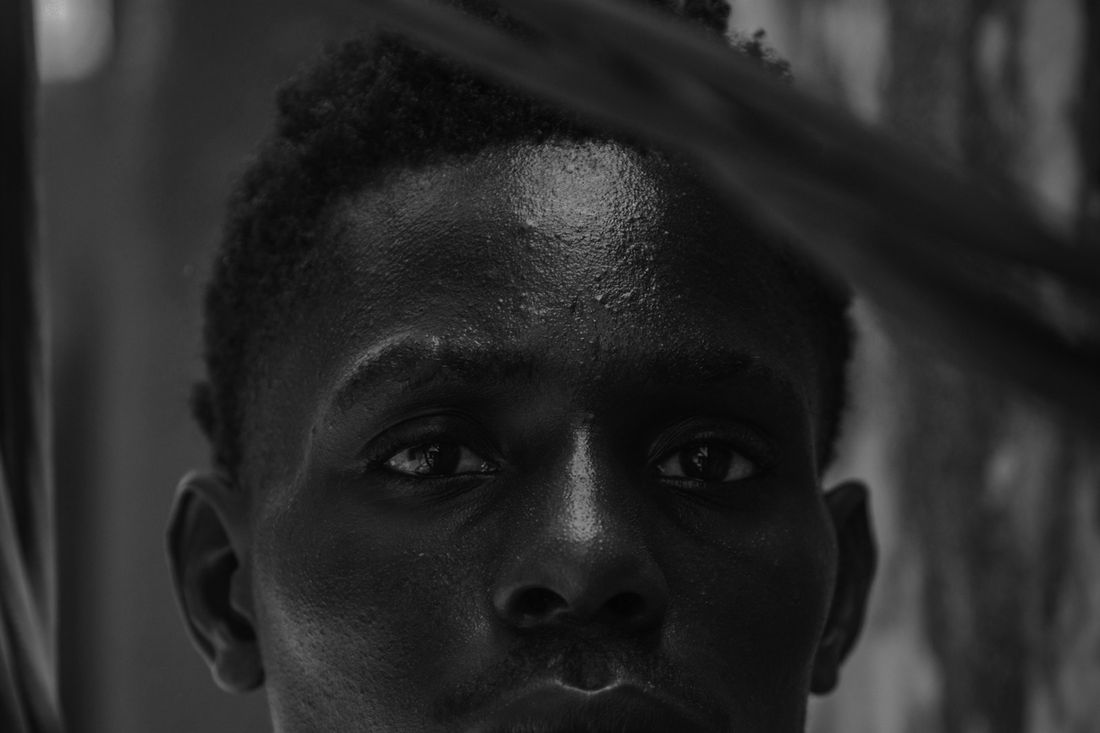
- Coily hair: a short, textured forward top with a crisp line-up and a skin fade.
- A strong cowlick at the front: ask your barber whether bangs will sit. Sometimes a slightly longer, textured front works better.
Styling it
This is the good news. A French crop needs about thirty seconds:
- Towel-dry until damp.
- A small amount of matte clay or paste, rubbed between your palms.
- Work it in from the crown forward, pushing everything toward the front.
- Pinch and twist a few pieces for texture.
- Done.
For curly French crops, use a curl cream on damp hair instead and let it air-dry. Our styling guide compares every product.
The bangs, in detail
The bangs are what make a French crop, and small changes there change the whole look:
- Length: mid-forehead is classic; just above the eyebrows is more modern. Any longer and it starts to become a different cut.
- Line: a straight, blunt line looks bold and graphic. A choppy, point-cut line looks softer and more relaxed.
- Shape: straight across is traditional. A slight curve following the brow looks more natural on most faces.
- Density: heavy bangs make a statement; thinned bangs move more and are easier to style.
If you are unsure, start choppy, just above the eyebrows. It is the most forgiving version.
Upkeep
- With a skin fade: every two to three weeks.
- With a taper: every three to four weeks.
- The bangs: once they reach your eyebrows, it is time.
Between cuts, an Edge Up (from $12) keeps the outline crisp.
How to ask your barber
- Sides: “Mid skin fade” or “taper down to a #2.”
- Top: “About an inch and a half, lots of texture.”
- Bangs: “Push it forward, cut the bangs choppy, just above the eyebrows” — or “a straight line” if you want it blunt.
If you know your clipper numbers, use them. Our clipper guard chart explains them.

What it costs to keep
A French crop is a Classic at our shops, from $25. With a skin fade, budget for a visit every two to three weeks; with a taper, every three to four. Add an Edge Up (from $12) in between if the neckline is what bugs you. Our guide on how often to get a haircut has a full schedule by style.
French crop vs. Caesar cut vs. textured crop
- Caesar cut: very short all over with a short, straight line of bangs. Shorter and more uniform than a French crop.
- French crop: a bit more length and texture on top, sides usually shorter than the top.
- Textured crop: a broader term for any short, choppy top; can be styled up or forward.
French crop through the year
- Summer: shorter top, shorter sides, maybe a skin fade. Cool and easy.
- Fall and winter: a little more length on top for warmth, with a taper instead of a skin fade so it grows out softer.
- Under a hat: a French crop survives hats better than most cuts. A quick ruffle with your fingers brings it back.
A note for curly-haired readers
If your hair is curly, ask for the bangs to be cut dry, in their natural curl. Curls shrink a lot when they dry, and bangs cut wet can end up much shorter than planned. A curly French crop with a crisp skin fade is one of the best-looking short cuts there is.
With a beard
A French crop pairs well with stubble or a short, tidy beard. Keep the beard neat so it matches the precision of the haircut, and ask for the sideburns to be blended in. At our shops, that is Classic & Beard (from $35). Our beard trim styles guide shows the options.
Common French crop mistakes
- Bangs cut wet and too short. Hair springs up shorter when dry. A good barber checks the bangs dry.
- No texture. A French crop without texture looks like a bowl cut.
- Sides too long. The contrast is what makes it work.
- Too much product. A French crop is supposed to look effortless. A small amount of matte product is plenty.
- Waiting too long between cuts. Once the bangs reach your eyes, the look is gone.
For teens
The French crop is a favorite with teenage boys, and it survives a school morning with zero effort. Kids’ cuts at our shops cost the same as an adult cut and take about thirty minutes. We do not cut girls’ hair at the barbershop; for girls, Three Palms Salon is in our building at 6100 Main St.

The cheat sheet
- Sides: taper or skin fade.
- Top: one to two inches, heavily textured.
- Bangs: forward, choppy or blunt, just above the brows.
- Styling: thirty seconds with matte clay, pushed forward.
- Upkeep: two to four weeks.
- Best for: big foreheads, long faces, receding temples, thick or curly hair.
At the Williamsville shop
A French crop is a Classic at our shops — clippers, scissors, edger and straight razor, about thirty minutes, from $25. Jon Palmeri (owner and master barber), Dave Scolla (master barber), and Michael Falzone and Bryan Castronova (licensed New York State barbers) cut them every day. We are at 6100 Main St., Williamsville, NY 14221, open Tuesday through Friday 9AM to 6PM and Saturday 8AM to noon, closed Sunday and Monday. Walk-ins are welcome when there is an open chair — appointments are encouraged, so call 716-389-0192 to confirm someone is free.
Book online. Bring a photo if you have one. A French crop is easy to describe, but every version looks a little different, and a picture saves a lot of words.