The textured crop is one of the most requested short haircuts of the last few years, and for good reason: it is short, it hides a multitude of sins at the hairline, and it looks deliberate even when you rolled out of bed eight minutes ago. A textured crop haircut is a short, choppy top — cut so the ends break up instead of sitting flat — pushed forward into a short bangs line, usually over faded or tapered sides. That’s the whole idea. The rest of this post is the parts list.
We’re treating it like any assembly: components, measurements, tolerances, service interval. Want the one-sentence version to read off your phone in the chair? Skip to the "order form." Want to know why your last crop turned into a mushroom by week five? Read the whole thing.
What a textured crop is (and what it isn’t)
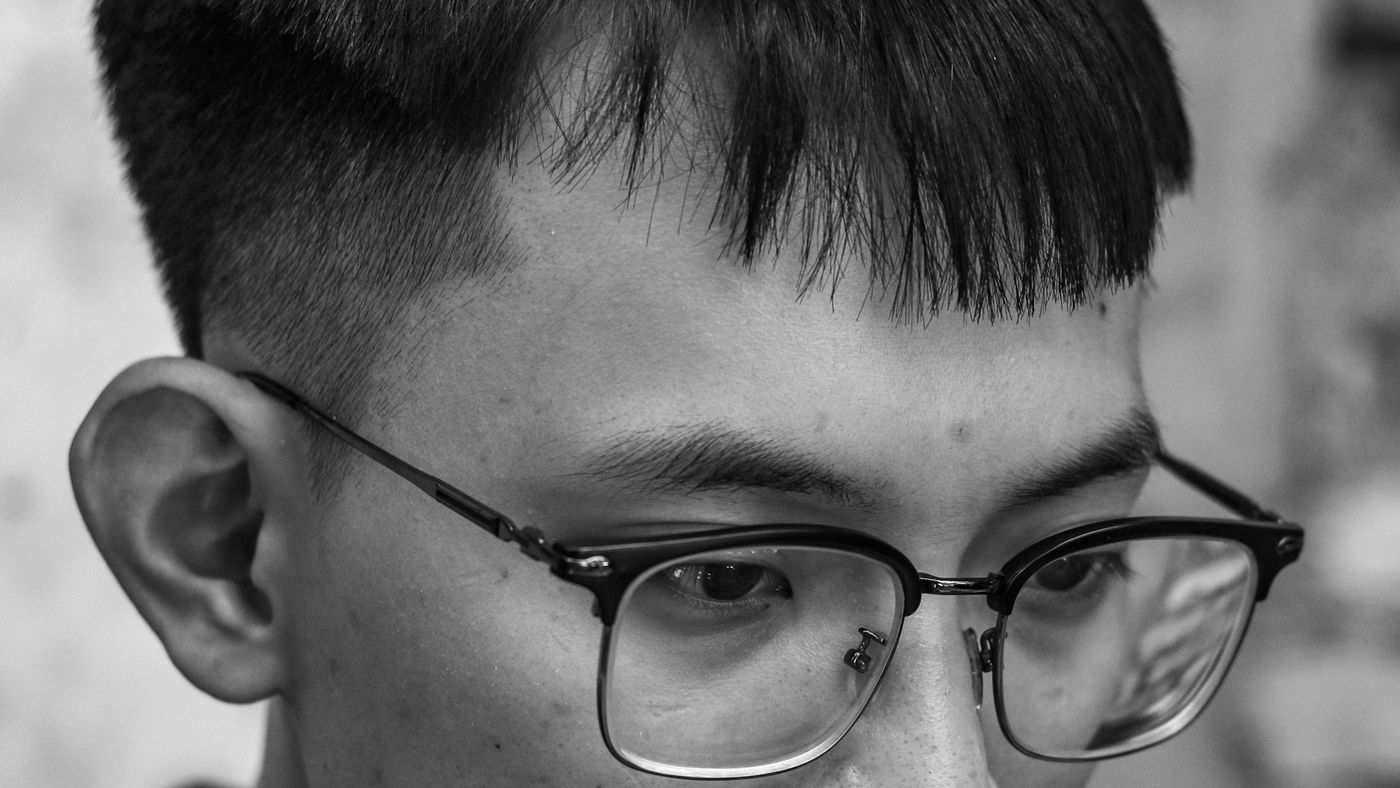
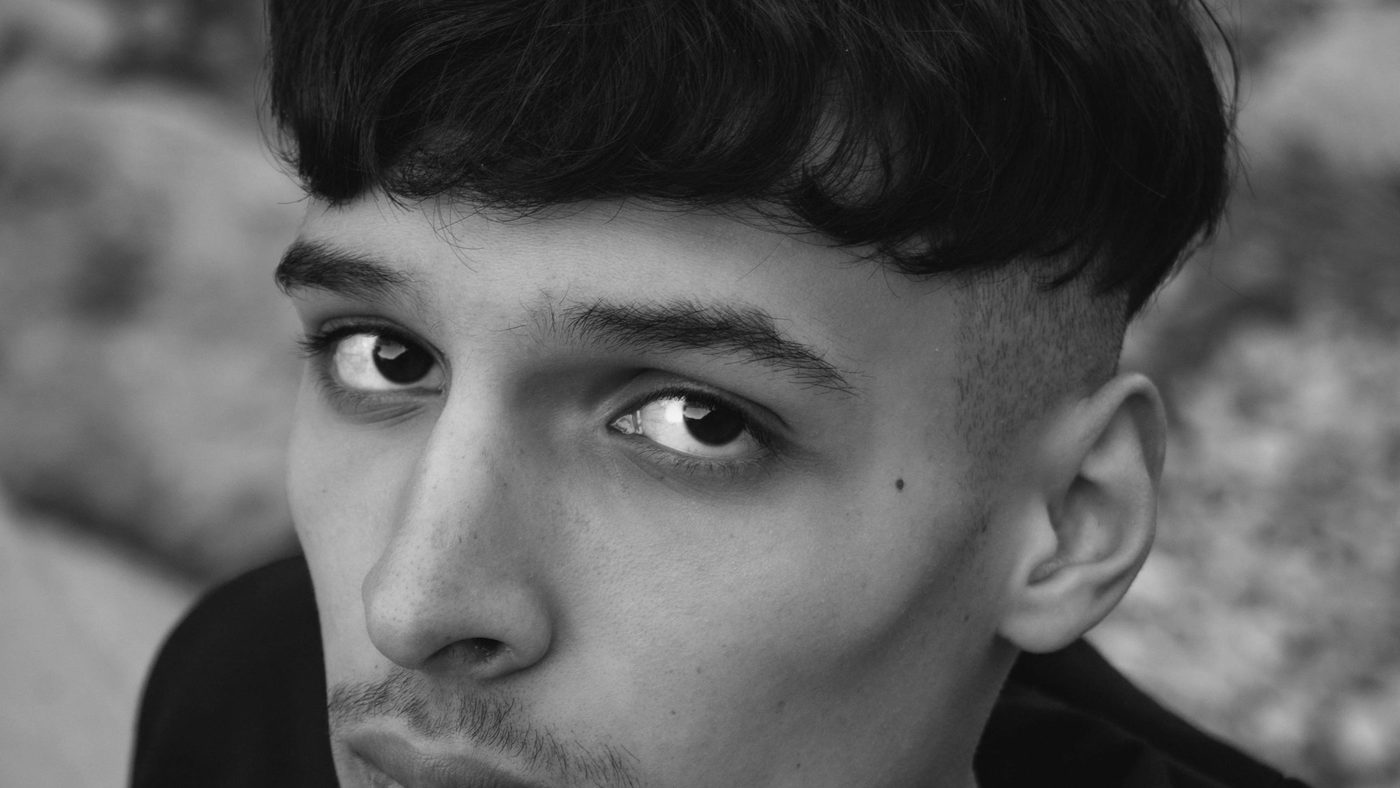
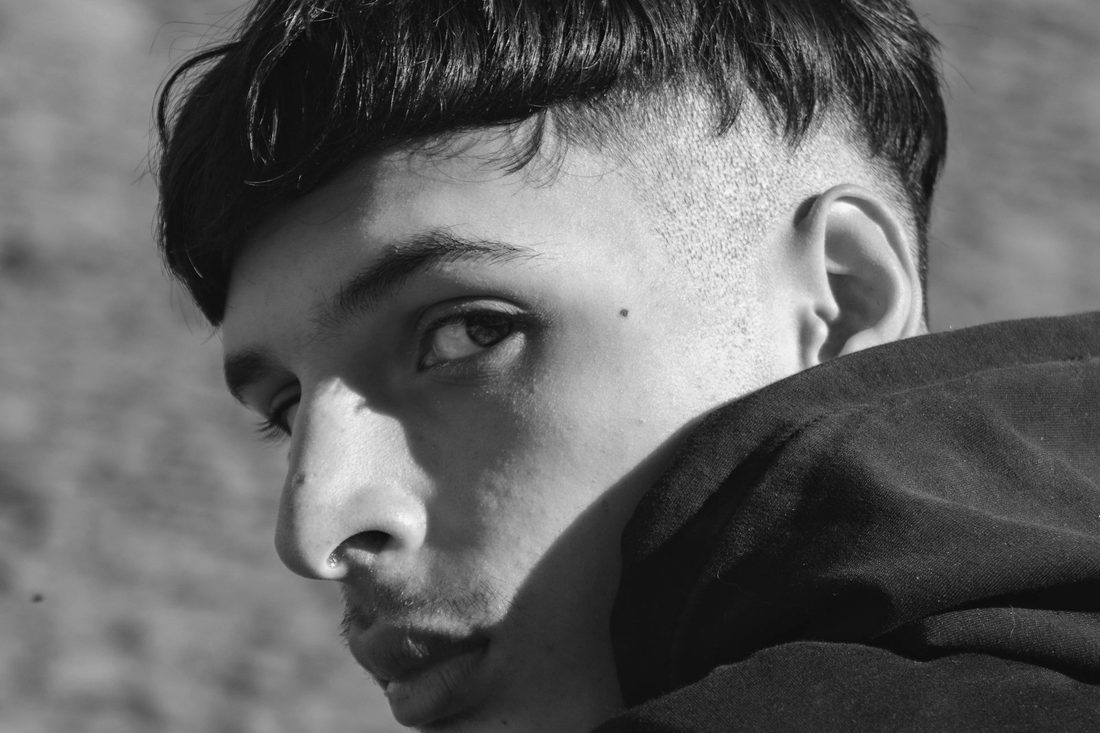
First, the family tree. The textured crop is a descendant of the French crop. The French crop is the older design: a short top combed forward to a blunt, straight bangs line, often with a fairly conservative taper on the sides. Think clean edges and a solid shape. The modern textured crop keeps the forward direction and the short top, but swaps the blunt finish for broken-up texture — point cutting, slide cutting, sometimes a texturizing blade — and it almost always comes with a fade.
Put simply:
- French crop: blunt bangs, smoother top, the edge is the feature.
- Textured crop: choppy top, softer or jagged bangs, the texture is the feature.
- Caesar: very short all over, straight horizontal bangs, usually no real texture work. The textured crop’s shorter, stricter cousin.
None of these are wrong. If you’ve been asking for a "crop" and getting something that looks like a helmet, the missing word was probably "textured."
Component 1: The top
The top is the main load-bearing part of the haircut. Get it wrong and nothing downstream can save it.
Length: roughly 1 to 2.5 inches at the crown, shortening slightly toward the front. Under about an inch, there isn’t enough material to show texture — it starts reading as a buzz with ambition. Over about 3 inches, it stops being a crop and starts being a longer, grown-out style that needs a blow dryer to behave.
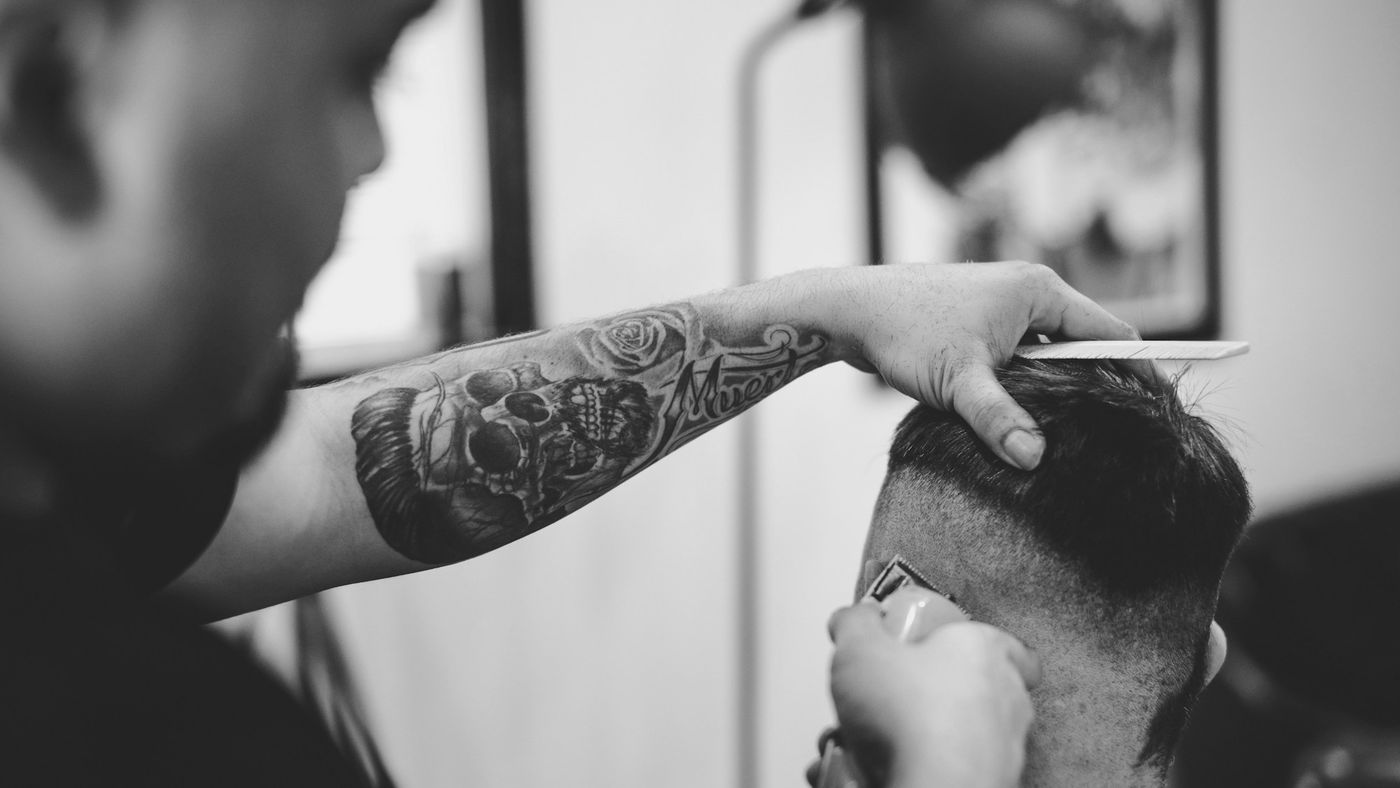
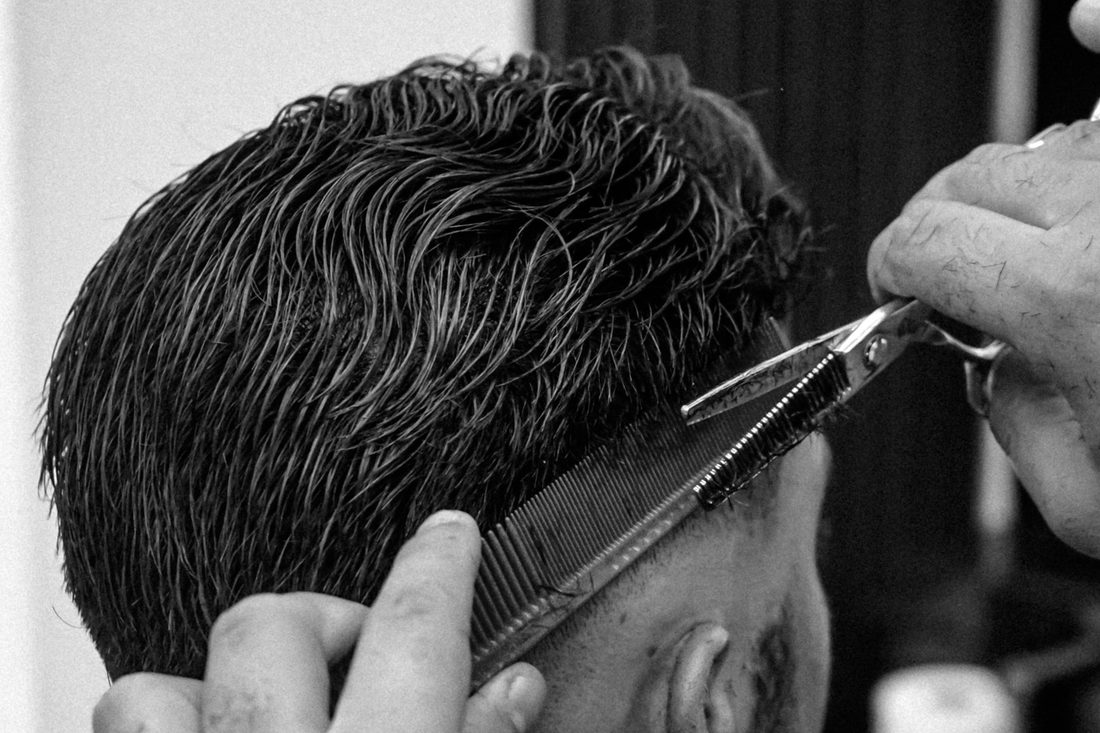
Method: the barber will usually cut the top with scissors over comb or by hand, then go back in and point cut — snipping into the ends vertically instead of straight across. This creates uneven lengths at the tips, which is exactly the goal. If you want the long version of why scissors and clippers behave differently up here, we wrote about it in scissor cut vs. clipper cut.
Tolerance: about a quarter inch either way. The top is forgiving. A bit long looks fuller; a bit short grows back in ten days.
Hair type notes:
- Thick, straight hair: the ideal candidate. Lots of bulk to remove, which means lots of texture to create. See also haircuts for thick hair.
- Wavy hair: excellent. The waves do half the texturizing for you. Leave the top a little longer so the wave has room to form.
- Curly hair: works well as a curly crop — the barber cuts the curls into shape rather than chopping texture in. Our curly hair guide covers how much length curls need.
- Fine or thin hair: still a good choice, arguably one of the best, because pushing the hair forward hides a lot. The barber should remove less bulk, not more. Fine hair doesn’t have bulk to spare.
Component 2: The bangs
The bangs are the user interface. They’re what people actually look at.
Placement: on a classic textured crop, the bangs land somewhere between the top of the eyebrow and about an inch above it. A longer bangs line covers more forehead; a shorter one opens up the face.
Finish options:
- Choppy: point cut so the line is jagged. The default for a textured crop.
- Blunt: a straight line cut across. This pulls the cut back toward French crop territory. Some guys like a blunt line with a textured top, and that’s a perfectly fine hybrid.
- Disconnected or swept: left slightly longer on one side and pushed off at an angle. Less common, a little more fashion.
Tolerance: tighter than the top. A quarter inch at the bangs is very visible because it’s right on your face. If you’re unsure, ask for it a little longer — you can always take more off at the next visit, or ask for a quick clean-up.
Forehead math: if you have a tall forehead, the forward bangs of a crop are basically free real estate. If you have a receding hairline at the temples, the crop is one of the better ways to work with it rather than against it. We go into both cases in haircuts for a big forehead and haircuts for a receding hairline.
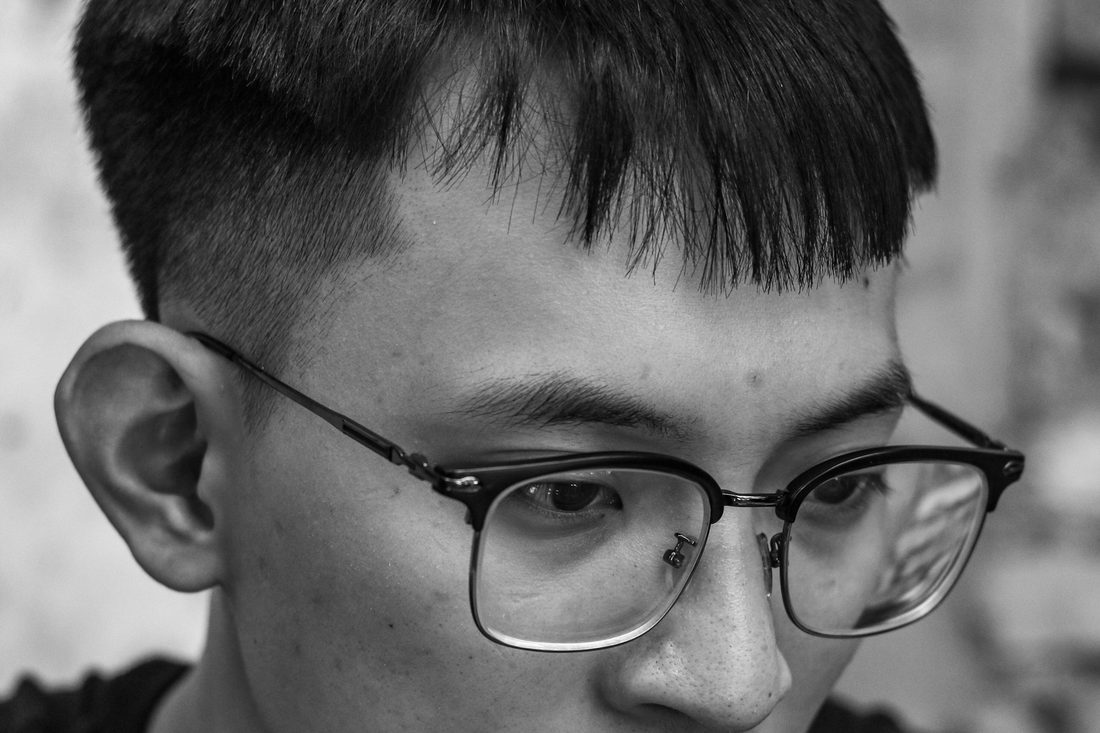
Glasses wearers: your frames are already a horizontal line across your face. Ask for the bangs a bit higher so some forehead shows between the two.
Component 3: The sides
The sides are where the textured crop picks up most of its personality. Three standard configurations:
- Low fade: the shortest part sits just above the ear and along the bottom of the hairline. Conservative, office-friendly, grows out gently.
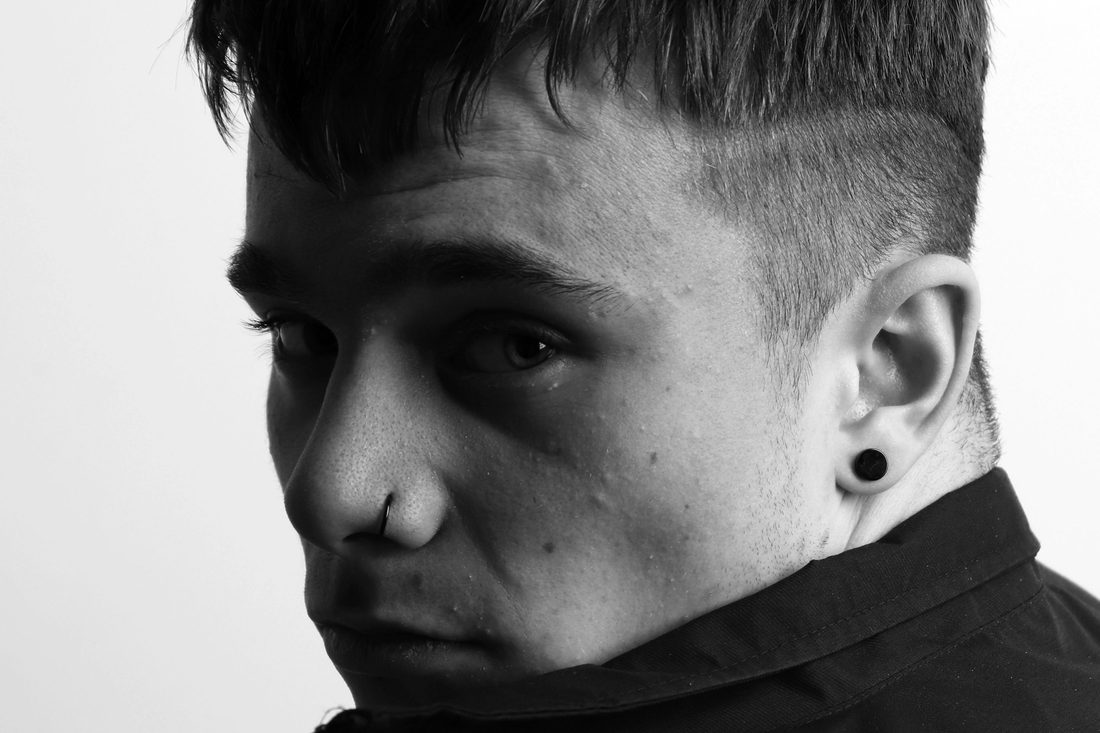
- Mid fade: the transition starts around the temple. This is the most common pairing with a textured crop — enough contrast to make the top pop without looking severe.
- High fade: the short part climbs up near the top of the head. High contrast, high maintenance. Looks sharp for about 10 days, then starts to fuzz.
Not sure whether you want a fade or a taper? A taper only shortens the hair around the edges — sideburns and nape — while a fade blends the whole side down. Our fade vs. taper post has the side-by-side, and the mid taper is a good option for guys who want a softer finish.
Guard numbers: a typical textured crop fade runs from a skin or #0 at the bottom, through a #1 and #2, up to a #3 or #4 where the sides meet the top. A softer version might start at a #1 and top out at a #4. If those numbers mean nothing to you, our chart of clipper guard sizes converts each one to inches. For quick reference: a #1 is 1/8 inch, a #2 is 1/4 inch, a #3 is 3/8 inch and a #4 is 1/2 inch.
Tolerance: very tight. A fade is a gradient, and the eye picks up any banding or a line that wanders. This is the part of the cut where the barber’s skill shows most, and the part that wears out fastest.
Component 4: The nape and edges
The nape is the bottom of the haircut at the back of your neck. It’s the part you never see and everyone behind you in line does.
Options: tapered (faded out naturally), blocked (squared-off line), or rounded. On a textured crop with a fade, tapered is the standard: it grows out the cleanest. A blocked nape looks sharp on day one and fuzzy by day eight.
Edges: the front hairline and temples can be left natural or cleaned up with a light edge. Most textured crops look better with a soft, natural front — a hard razor line at the temples fights with the choppy top. Around the ears and neck, the barber will usually finish with an edger and a neck shave. If you like the edges crisp between full cuts, an edge up is a 10-to-15-minute fix.
The order form: what to say in the chair
Here’s a short, unambiguous request. Adjust the numbers to taste:
"Textured crop. About an inch and a half on top, point cut so it’s choppy, pushed forward. Bangs about a half inch above my eyebrows, choppy, not blunt. Mid skin fade on the sides up to a #3 where it meets the top. Tapered neckline, natural front."
Bring a photo. "Short" and "textured" mean different things to different people; a photo settles it in two seconds. Bring one you like and one you don’t — the second one sets the limits.
At our Tonawanda shop, this falls under the Classic cut on our services menu — about 30 minutes, starting at $25, done with clippers, scissors, edger and straight razor. Final price depends on the barber; you’ll see each barber’s exact rate before you confirm when you book online. You can see who’s cutting on the barbers page.
Styling the textured crop: the operating procedure
The textured crop is low maintenance on a daily basis, which is the main selling point. The full procedure takes under two minutes.
- Start with towel-dried or fully dry hair. Damp is fine for some products; soaking wet is not.
- Pick a matte product. A textured crop wants a dry, matte finish. Shine works against the choppy look. The usual options are texture powder for volume and grip on fine hair, a clay or paste for medium hold, or sea salt spray on damp hair before drying for a looser, beachier version. Ask your barber which one suits your hair — it depends on density more than anything.
- Use less than you think. A fingertip’s worth of paste or clay. Rub it out until your palms are almost dry-looking before it touches your hair.
- Work it in from the back toward the front. Fingers through the crown first, then forward.
- Push forward, then twist. Push the top forward toward your forehead, then pinch and twist small sections to separate them. This is where the texture shows up.
- Leave the bangs alone-ish. A light pinch to separate, then stop. Overworking the bangs makes them clump.
More detail on each product type lives in how to style short hair. The short version: if your crop looks greasy, you used too much or you picked a product with shine. If it looks flat by noon, you need more grip, not more product.
Maintenance intervals
Every component wears out at a different rate. Here’s the service schedule:
- Fade (high or mid): starts to blur around 10 to 14 days. A high skin fade is noticeably grown in by week two.
- Fade (low) or taper: holds up for roughly 3 weeks.
- Bangs: start hitting the eyebrows or eyes at about 3 to 4 weeks, depending on starting length.
- Top texture: the choppiness fades as the ends grow out evenly — usually 4 to 5 weeks before the top starts looking "soft" instead of textured. That’s the mushroom phase.
Practical recommendation: every 3 to 4 weeks for most guys, every 2 to 3 weeks if you’re running a high skin fade and you care what it looks like. Between visits, a quick edge up can buy you another week. We cover the general rule in how often should you get a haircut.
Known failure modes
Every design has them. The common ones on a textured crop:
- The mushroom: the top grows out evenly, the fade grows in, and you end up with a dome. Fix: stay on schedule, or ask for a slightly longer fade transition so the grow-out is gentler.
- The helmet: not enough texture removed, so the top sits as one solid piece. Fix: ask for more point cutting, or more bulk taken out with thinning shears on thick hair.
- The see-through top: too much texture removed on fine hair, so the scalp shows. Fix: leave more length, remove less bulk. Fine hair needs weight to look full.
- The shelf: a visible ridge where the fade meets the top. Fix: ask for a better blend at the parietal ridge (the widest part of your head), usually with a #3 or #4 and some scissor work.
If you’re dealing with one of these right now, how to fix a bad haircut walks through what can and can’t be rescued in one visit.
Getting here from Gateway Harbor
If you’re down at Gateway Harbor (1 Young St, Tonawanda), you’re on the Erie Canal waterfront where the City of Tonawanda meets North Tonawanda. The shop is about a four-minute drive away — 1.3 miles via Grove St:
- Head toward the Empire State Trail (0.2 mi).
- Slight left onto Grove St (0.8 mi).
- Turn right onto Delaware St (0.3 mi).
- Turn right into 578 Delaware St.
Prefer one road? You can also take Delaware St the whole way — about 1.5 miles. Open these directions in Google Maps.
Our Tonawanda shop is at 578 Delaware St., open Tuesday through Friday 7AM to 7PM and Saturday 8AM to 1PM, closed Sunday and Monday. It serves Tonawanda, North Tonawanda, Kenmore and North Buffalo — if you’re coming from the other side of the canal, our page for North Tonawanda has the details. Dorian Mayham (master barber), Sam Balesteri and Zaid Blasiny (both licensed NYS barbers through the NY Department of State) are on the chairs. Walk-ins are welcome when there is an open chair — appointments are encouraged, so call 716-389-0192 to confirm someone is free. Or skip the guesswork and book online, or call 716-389-0192. Bring the photo.