
Knowing how to apply beard oil is a small skill that makes a visible difference. Most guys who tell us beard oil "doesn’t do anything" are using too little, too much, or putting it only on the surface of the hair, where it never reaches the skin that’s actually itching. This post is written like a recipe card: what you’ll need, how much to use, the steps in order, and what to do when it goes wrong. Then we’ll answer the question everyone eventually asks — does beard oil make your beard grow? — honestly.
No brands here. We’ll talk about types of oil and how to use them. If you want help picking one for your skin and beard, ask your barber which one suits you.
What is beard oil used for?
Before the method, the purpose. Beard oil is a blend of light plant oils, sometimes with added fragrance. It’s used for two things, and they’re equally important:
- The skin under the beard. Facial hair wicks oil away from the skin and traps dryness underneath. A little oil on the skin can ease the tight, itchy, flaky feeling that comes with a growing beard, especially in a Western New York winter with cold air outside and dry heat inside.
- The beard hair itself. Beard hair is coarser than most scalp hair. Oil softens it, adds a little shine, tames flyaways and makes it easier to comb.
What it doesn’t do is hold a shape. That’s what balm and wax are for. If you’re deciding between the two, our post on beard oil vs. beard balm lays out the difference.
You’ll need
- A beard oil, usually in a dropper bottle.
- A towel.
- A beard brush (best for short beards) or a beard comb (best for longer ones). Not sure which? Our comb vs. brush breakdown settles it by beard length.
- About two minutes.

Measurements: how many drops for your beard length
This is where most people go wrong. Start low. You can always add another drop; you can’t take one back without washing your face. These are starting points, not rules — thick or coarse beards may need a little more, fine or sparse beards a little less.
- Stubble to about half an inch: 2 to 3 drops.
- Half an inch to about 2 inches: 4 to 6 drops.
- Longer than 2 inches: 6 to 10 drops, and more for a very long or full beard.
A good test: after you’ve worked it in, your beard should feel soft and look healthy, not wet or shiny. If your fingers come away slick, you used too much.
How to apply beard oil, step by step
Here’s the method. The order matters more than the oil you buy.
- Start with a clean, slightly damp beard. The best time is right after a shower or after washing your face. Warm water opens things up and a damp beard spreads oil more evenly. Pat it with a towel so it’s damp, not dripping.
- Dispense into your palm. Put your drops into one palm — not directly onto your face, where it will run.
- Warm it. Rub your palms together for a few seconds so the oil coats both hands and fingertips.
- Skin first. Push your fingertips through the beard and work the oil into the skin underneath. Go against the grain, from the neck up toward the chin and from the jaw up toward the cheeks. Don’t forget the skin under the jawline and below the chin, where a lot of itch lives.
- Then the hair. Smooth what’s left on your hands down through the beard, in the direction it grows. Cover the sides, the chin and the mustache — lightly on the mustache, since it’s right under your nose and any fragrance will be strong.
- Comb or brush it through. Use a brush on shorter beards to push oil down to the skin and spread it evenly. Use a comb on longer beards to carry it to the ends and detangle. This step is what separates "oiled" from "greasy in patches."
- Shape and finish. Brush or comb the beard into the shape you want. If you need hold, add a small amount of balm after the oil.
Total time: about two minutes once you’ve done it a few times.

How often to apply it
Once a day is the usual routine, typically in the morning after a shower. Some guys with very dry skin or long beards use a few drops again at night. In winter you may need it daily; in a humid summer every other day might be plenty. Let your skin tell you. If the itch and flakes are gone and your beard feels soft, you’ve found the right frequency. If your face feels oily or you’re breaking out, cut back.
Common mistakes
- Only oiling the surface. Oil sitting on top of the beard looks shiny but does nothing for the skin. Get your fingertips all the way down.
- Using too much. Too much oil makes the beard look greasy and can weigh down a shorter beard. Back off a drop or two.
- Applying it to a dirty beard. Oil on top of sweat, food and old product just mixes with it. Wash first. Two to a few times a week with a gentle cleanser is a common routine; daily harsh soap can strip the skin and make dryness worse.
- Skipping the comb or brush. Without it, oil collects in patches.
- Expecting it to fix a skin condition. If you have flakes that won’t go away, redness or itching that keeps coming back, oil alone may not cut it. See our guides on beard itch and beard dandruff, and see a dermatologist if it’s persistent, painful or spreading.
Carrier oils, explained plainly
Most beard oils are built from one or more "carrier" oils — the base oils that make up most of the bottle — sometimes with a small amount of essential oil or fragrance for scent. You’ll often see these on labels:
- Jojoba. Technically a liquid wax. Light, absorbs well, and often described as similar to the skin’s own oil. A common base.
- Argan. Light to medium weight, popular for softening coarse hair.
- Grapeseed and sunflower. Very light, absorb quickly, good if you hate a greasy feel.
- Sweet almond. Medium weight and softening. Skip it if you have a tree-nut allergy.
- Coconut. Heavier. Some guys love it; others find it feels greasy or may contribute to clogged pores on acne-prone skin.
- Castor. Thick and sticky, usually a small part of a blend rather than the base.
Lighter oils suit oily skin and short beards. Richer blends suit dry skin and long beards. Unscented oils are the safest bet for sensitive skin.
Does beard oil work for growth? An honest answer
Here’s the aside we promised. Search "castor oil for beard growth" or "beard oil increase growth" and you’ll find plenty of confident claims. We don’t make them, and here’s why.
Beard oil — castor oil included — conditions the hair and the skin. It doesn’t change how your hair follicles work, and there isn’t good evidence that rubbing oil on your face makes new hair grow or fills in patches. How full your beard gets, and how fast, depends largely on genetics, along with age and hormones. Some men fill in by their early twenties; some take longer; some will always have patchy cheeks. That’s normal.
Where the confusion comes from is fair enough: a conditioned beard looks fuller. Softer hair lies better, breaks less and doesn’t frizz as much, so a well-oiled beard can look denser than a dry one even though the number of hairs hasn’t changed. So does beard oil work? Yes — at what it’s actually for.
For realistic expectations on timing, read our guide on how long it takes to grow a beard. The American Academy of Dermatology has a short page of tips for a healthy beard that’s worth a look, and its guide to common beard problems covers itch, ingrowns and dandruff. If you’re concerned about hair loss or sudden patchy loss in your beard, that’s a question for a dermatologist, not a bottle of oil.
Patch test first
Plant oils and fragrances can cause skin reactions in some people. Before you use a new oil on your whole face, try a patch test:
- Put a drop on a small area of skin, like the inside of your forearm or just below your jaw.
- Leave it for a day or two.
- If you see redness, itching, bumps or swelling, wash it off and don’t use it.
Read the ingredient list for anything you know you react to, including nut oils and fragrance. The FDA’s page on allergens in cosmetics explains how allergic reactions to cosmetic products happen and what to look for.
Where your barber fits in
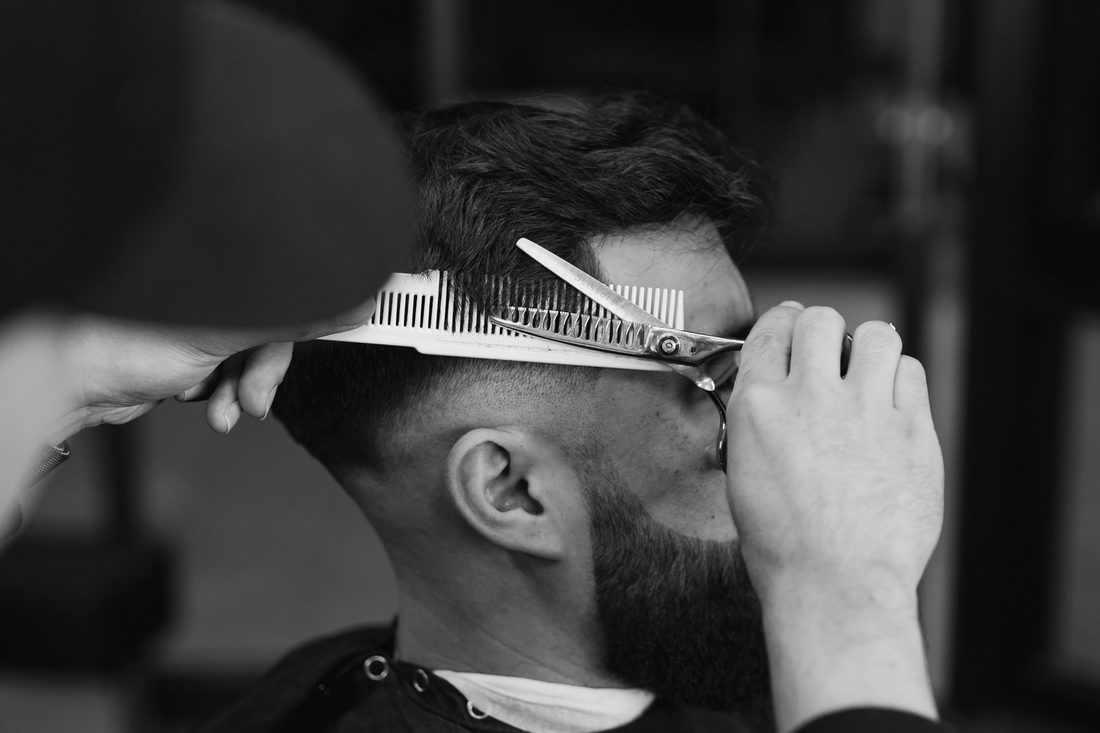
Oil keeps a beard healthy between visits. A trim keeps it shaped. A clean neckline, even cheek lines and trimmed split ends make the oil look better and spread more evenly. Our Classic & Beard (30 minutes, starting at $35) includes a cut plus full beard sculpting and line work, and the Edge Up (10–15 minutes, starting at $12) handles edging and a neck shave between cuts. Full menu and starting rates are on our services page, and you’ll see each barber’s exact rate before you confirm. If you want to know how many drops your beard needs or which type of oil suits your skin, ask in the chair.
Two quick reads if you’re shaping the beard yourself between visits: our guide to where your beard neckline should be, and our roundup of beard trim styles for ideas on length and shape. A beard with a defined outline needs less oil to look finished, because the edges aren’t frayed and the shape does half the work. And if you’re still figuring out how to apply beard oil around a fresh trim, the method is the same — just go lighter for the first day or two, since freshly cut ends and newly shaved skin along the neck can be a little sensitive.
Directions from the Buffalo Zoo
For our North Buffalo clients: the Buffalo Zoo is at 300 Parkside Ave in North Buffalo, by Delaware Park. From there, the shop is about 18 minutes and 10.7 miles away via I-190 N and I-290 E.
- Take Parkside Ave to NY-198 W (0.6 mi).
- Follow NY-198 W, I-190 N and I-290 E and take exit 1 toward Knoche Rd in the Town of Tonawanda (9.2 mi).
- Follow Knoche Rd and Delaware Ave to 578 Delaware St. — Jonny the Barber, Tonawanda (1.0 mi).
Traffic can change the best route, so check the live directions before you leave: Open these directions in Google Maps
Beard trims at our Tonawanda shop
Our Tonawanda barbershop is at 578 Delaware St. Dorian Mayham, Sam Balesteri and Zaid Blasiny are on the chairs — meet them on our barbers page. We’re open Tuesday through Friday 7AM to 7PM and Saturday 8AM to 1PM, closed Sunday and Monday. We cut for Tonawanda, North Tonawanda, Kenmore and North Buffalo. Walk-ins are welcome when there is an open chair — appointments are encouraged, so call 716-389-0192 to confirm someone is free.
Get the shape right, then let the oil do its job. Book online or call 716-389-0192.